Operations | Monitoring | ITSM | DevOps | Cloud

How we built data-driven AI Golden Paths at Datadog

As teams rush to adopt AI, they often find themselves with conflicting workflows unique to each individual developer. To manage costs and promote good development practices, organizations need to establish Golden Paths around AI usage. AI Golden Paths are standardized flows that help developers work with agents more reliably and effectively. But how do you sift through all the possible workflows to decide what these Golden Paths should be?

McKinsey Says Agentic Enterprises Need "Automated Guardrails." Here's What That Means

TLDR/: McKinsey’s new research on AI transformation, published August 28, 2026, studied 20 companies that have created real economic value from AI and found that only a small number have reached “Stage 3: Agentic AI enterprise.” The capability that separates Stage 3 from Stage 2, per McKinsey’s own maturity framework, is orchestration layers and automated guardrails: the ability to govern agent actions automatically, in real time, rather than reviewing them after the fact.

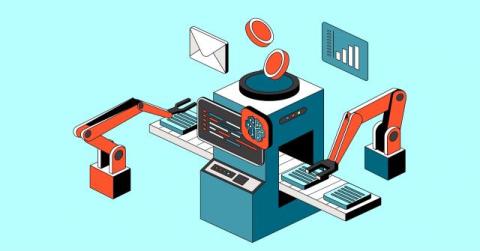
n8n pricing in 2026: every plan, the execution math, and what AI agents change

n8n pricing runs €24 per month for 2,500 workflow executions (Starter), €60 for 10,000 (Pro), and €800 for 40,000 (Business), with 17 percent off on annual billing and custom Enterprise pricing above that. Every plan includes unlimited users and unlimited workflows. The self-hosted Community Edition is free with unlimited executions; you pay only for your server.

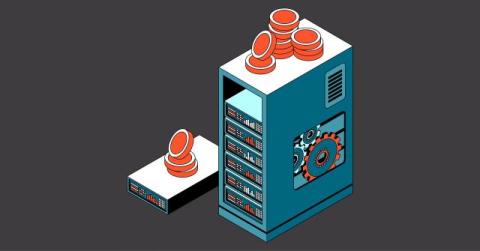
CoreWeave pricing in 2026: every GPU rate and what a node really costs

CoreWeave, a GPU cloud provider, prices start at $6.16 per GPU hour for an Nvidia H100 and reaches $8.60 for a B200, sold as fixed multi-GPU nodes: an 8x H100 node lists at $49.24 per hour on demand. Spot rates run up to 60 percent below on demand, reserved contracts discount up to 60 percent, and egress is free.

The VM Boom For AI Agents | David Crawshaw Co-Founder & CEO, exe.dev

What happens when AI agents stop simply answering questions and start using computers of their own? It could create an entirely new boom in virtual machines. In this episode of Uplink, David Crawshaw, Co-Founder and CEO of exe.dev, joins host Michael Reid to explore the infrastructure behind the rapidly emerging world of AI agents. As agents become capable of writing code, running applications, operating tools, maintaining state, and working independently, they need more than access to an AI model. They need computing environments where they can actually get work done.


From idea to working software: what the full development lifecycle needs to look like

GitHub's research found that developers using Copilot completed tasks 55% faster than those who didn't. Tools like GitHub Copilot and Cursor, powered by large language models such as Claude or GPT, are designed to automate the tedious parts of programming so engineers can focus on harder, more creative problems. With this. new repos spin up every week. The promise is being kept. But where are the products?

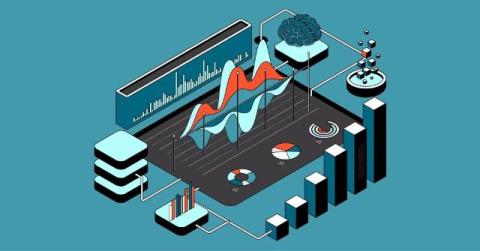
Your AI Economics Pulse for September 2026

Across a same-store panel of 430 CloudZero customer organizations, AI reached 2.66% of the median company's cloud bill in August 2026, up from 2.61% in July and roughly four times its level a year ago. The 75th percentile crossed 11%. The share of organizations with at least 10% of cloud spend attributed to AI jumped to 28.2% from 23.9%, the largest one-month move that tier has posted. Two-thirds of the panel now spends at least $1,000 a month on AI. The typical bill barely shifted.

AI Agents on Kubernetes 101: From Laptop Script to Production Pod

In short, this is a beginner’s guide to deploying an AI agent on Kubernetes. You will containerize an agent, store its API key as a Kubernetes secret, write a deployment with health probes and resource limits, expose it with a service, and lock down its network egress, in that order, with a working manifest at every step. On a local kind cluster the whole walkthrough takes about an hour.

How to Build an HR PTO AI Agent with Resolve Agent Lab

See how to build an HR PTO agent with Resolve Agent Lab. In this Resolve Reels demo, we create a purpose-built AI agent by adding automation skills, instructions, conversation starters, and guardrails. The agent can answer PTO questions, check balances, account for calendar conflicts, and submit requests through systems like Workday or ADP. See how Resolve helps teams build AI agents that take action across enterprise systems.