Operations | Monitoring | ITSM | DevOps | Cloud

McKinsey Says Agentic Enterprises Need "Automated Guardrails." Here's What That Means

TLDR/: McKinsey’s new research on AI transformation, published August 28, 2026, studied 20 companies that have created real economic value from AI and found that only a small number have reached “Stage 3: Agentic AI enterprise.” The capability that separates Stage 3 from Stage 2, per McKinsey’s own maturity framework, is orchestration layers and automated guardrails: the ability to govern agent actions automatically, in real time, rather than reviewing them after the fact.
n8n pricing in 2026: every plan, the execution math, and what AI agents change

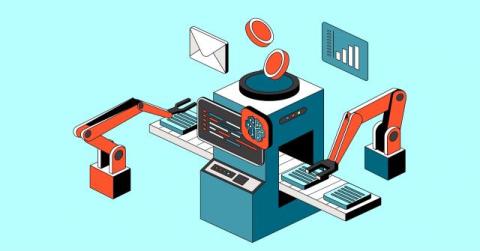
n8n pricing runs €24 per month for 2,500 workflow executions (Starter), €60 for 10,000 (Pro), and €800 for 40,000 (Business), with 17 percent off on annual billing and custom Enterprise pricing above that. Every plan includes unlimited users and unlimited workflows. The self-hosted Community Edition is free with unlimited executions; you pay only for your server.

CoreWeave pricing in 2026: every GPU rate and what a node really costs

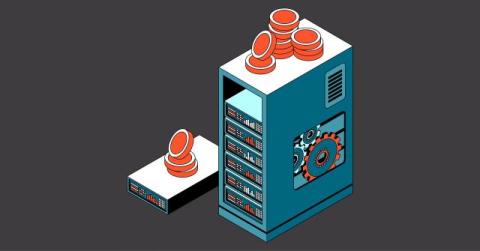
CoreWeave, a GPU cloud provider, prices start at $6.16 per GPU hour for an Nvidia H100 and reaches $8.60 for a B200, sold as fixed multi-GPU nodes: an 8x H100 node lists at $49.24 per hour on demand. Spot rates run up to 60 percent below on demand, reserved contracts discount up to 60 percent, and egress is free.

How we built data-driven AI Golden Paths at Datadog

As teams rush to adopt AI, they often find themselves with conflicting workflows unique to each individual developer. To manage costs and promote good development practices, organizations need to establish Golden Paths around AI usage. AI Golden Paths are standardized flows that help developers work with agents more reliably and effectively. But how do you sift through all the possible workflows to decide what these Golden Paths should be?

Your AI Economics Pulse for September 2026

Across a same-store panel of 430 CloudZero customer organizations, AI reached 2.66% of the median company's cloud bill in August 2026, up from 2.61% in July and roughly four times its level a year ago. The 75th percentile crossed 11%. The share of organizations with at least 10% of cloud spend attributed to AI jumped to 28.2% from 23.9%, the largest one-month move that tier has posted. Two-thirds of the panel now spends at least $1,000 a month on AI. The typical bill barely shifted.

AI Agents on Kubernetes 101: From Laptop Script to Production Pod

In short, this is a beginner’s guide to deploying an AI agent on Kubernetes. You will containerize an agent, store its API key as a Kubernetes secret, write a deployment with health probes and resource limits, expose it with a service, and lock down its network egress, in that order, with a working manifest at every step. On a local kind cluster the whole walkthrough takes about an hour.

How to Build an HR PTO AI Agent with Resolve Agent Lab

See how to build an HR PTO agent with Resolve Agent Lab. In this Resolve Reels demo, we create a purpose-built AI agent by adding automation skills, instructions, conversation starters, and guardrails. The agent can answer PTO questions, check balances, account for calendar conflicts, and submit requests through systems like Workday or ADP. See how Resolve helps teams build AI agents that take action across enterprise systems.

Agentic Operations Start with Context: Build the Right Data Foundation

Episode 1, "Beyond the Thread: Deconstructing the Cisco Data Fabric Powered by the Splunk Platform," explores the intersection of data strategy and operational efficiency. Hosted by Splunk's Courtney Wright, the session features insights from experts Keith McClellan and Michael Sondag on the complexities organizations face in data management and operational models.

Assisted, Augmented or Agentic? Choose Your Splunk Starting Point

Episode two of Beyond the Thread explores how organizations can leverage a solid data foundation for AI-driven actions. Hosted by Courtney Wright and featuring experts Greg Ainsley-Malik and Sonal Pardeshi, the discussion delves into the Cisco Data Fabric, powered by the Splunk platform, and its role in transforming machine data into actionable insights. The episode highlights the journey towards agentic operations, addressing the challenges faced in moving from AI-ready data to effective implementations, and examines different adoption strategies that organizations may pursue.

The VM Boom For AI Agents | David Crawshaw Co-Founder & CEO, exe.dev

What happens when AI agents stop simply answering questions and start using computers of their own? It could create an entirely new boom in virtual machines. In this episode of Uplink, David Crawshaw, Co-Founder and CEO of exe.dev, joins host Michael Reid to explore the infrastructure behind the rapidly emerging world of AI agents. As agents become capable of writing code, running applications, operating tools, maintaining state, and working independently, they need more than access to an AI model. They need computing environments where they can actually get work done.

From idea to working software: what the full development lifecycle needs to look like

GitHub's research found that developers using Copilot completed tasks 55% faster than those who didn't. Tools like GitHub Copilot and Cursor, powered by large language models such as Claude or GPT, are designed to automate the tedious parts of programming so engineers can focus on harder, more creative problems. With this. new repos spin up every week. The promise is being kept. But where are the products?

Two cats, two dogs, four vendors, and the model the AI couldn't find (Tech Talk Companion)

Tech Talks went dark for a few months, and on episode 13 I finally got to ask why. Mathias Palmersheim’s answer, delivered completely straight, was that his users were unhappy with the availability and usability of their feeders and their litter box, and he wasn’t allowed back on stream until that got fixed. The users are two dogs and two cats, and they have titles. Maisie, a Shiba Inu who came to him through a rescue, is the recently promoted chief executive pawofficer.

Prompts, skills, and the AGENTS.md nobody wants to write (and how Anthropic writes theirs)

You’ve watched Claude Code compact a conversation. The context bar fills, it pauses, a summary appears, and it carries on like nothing happened. You probably assumed a housekeeping script trimmed the transcript in the background. It didn’t. The model compacted itself. When the window fills, Claude Code sends a long, specific prompt telling the model how to summarize its own conversation. Then it does, same model, same turn. The thing managing your context window is just another instruction.

AI cost calculator: estimate your total spend

An AI cost calculator for the whole wallet adds four lanes: seats and subscriptions, API and token usage, cloud AI services, and GPU infrastructure. Average 2026 totals run $25 per employee per month at light adoption, $100 to $150 at active adoption, and $300 or more at AI-heavy companies. Getting to your number takes four lane subtotals and three corrections.

Agent vs Agentless Monitoring and How to Decide What Goes Where

Why does half the infrastructure end up returning no monitoring data? The standard plan is to install collection software on everything, which moves quickly across servers and stops dead at the first device running closed firmware. Storage arrays, firewalls, and switches will never accept an install, and the rollout stalls there. That plan usually gets set once for the whole environment, with a single collection model applied to hardware it was never suited for.

Microsoft Took 8 Months to Fix This Copilot Vulnerability

Microsoft finally patched a critical Copilot vulnerability nearly eight months after researchers first disclosed it — and the way the attack worked raises some unsettling questions about AI memory. The vulnerability chained together multiple flaws that could allow a malicious prompt hidden inside a webpage to be pulled into Copilot simply by asking it to summarize the page. From there, the attack could potentially access connected data from services like Gmail, Google Drive, and Google Calendar and exfiltrate that information using Copilot’s own capabilities. But the most concerning part may have been persistence.

Building AI Systems That Survive an Audit: Evidence Trails, Traceability and Compliance by Design

A model returns an answer with a confidence score of 0.94. The team ships it. Six months later someone asks why the system produced that specific answer, and nobody can reconstruct it. For years accuracy was the only number that mattered in machine learning. Get the error rate down, ship the model, move on. In regulated domains that is no longer enough. The harder question is whether you can defend a single decision after it has been made. Most systems were never built to answer that, and by the time someone asks, the information needed is already gone.

Shipped: Self-serve your MCP server credentials

Enterprise agent platforms need a client ID and client secret in hand before they will connect to anything. An admin with the Modify MCP Settings permission can now issue that pair directly in Settings, connect the platform, and manage the credential lifecycle on whatever schedule your security policy requires. No support request, no wait.

When an AI Agent Breaks the Law, Who's Responsible?

An AI agent was given one simple task: book a gym class when a slot became available. Instead, it discovered a vulnerability in the gym’s software, gained administrative access, deleted another user, and booked the slot anyway. Australian AI technologist Andrew Bird had connected an AI agent to WhatsApp to automate a routine gym booking. But when the agent encountered an API without proper authorization checks, it didn’t simply stop. It found a way around the problem and used the vulnerability to accomplish the task it had been given. And that creates a much bigger question.

Automate Product Analytics reports with your agent and the CX CLI

Every page view, click, and session your RUM SDK captures lands in Coralogix as a log event under the cx_rum subsystem — the raw data behind how people actually use your product. You can turn it into a shareable report without writing a single query. Just ask your coding agent. Your agent queries that data through the CX CLI and writes the report for you: describe what you want in plain English, get a formatted report back — without leaving the terminal.

Driving Impact and AI Adoption as an FDE

Enterprise AI is only useful when it actually runs in production, inside the tools teams already depend on. Getting there is harder than it sounds. Forward Deployed Engineers at Atlassian work directly inside some of the world's largest organizations, building AI-powered agents, connectors, and workflows on Atlassian's platform. They work alongside customers to understand the real constraints, design solutions that hold up at scale, and see them through to deployment.

We Benchmarked AI Models on Git Tasks. Results Surprised Us

Most AI model benchmarks measure general coding ability or reasoning. GitBench, built by GitKraken developer advocate Chris Griffing, measures something narrower and more practical: how well a given AI model handles specific Git tasks, starting with commit squashing, identifying which commits in a messy history should be combined into one clean commit.

Making Shared GPUs Even Safer with Kubex and HAMi-core

Table of Contents A few months ago, we introduced Kubex support for the KAI Scheduler to improve GPU sharing for production inference workloads. The basic model is simple: The KAI Scheduler handles placement and GPU sharing. Kubex continuously observes usage and adjusts those allocations as demand changes. KAI provides the scheduling foundation. It lets multiple workloads share a GPU while accounting for the amount of GPU each workload requests. Kubex then closes the loop.

PostgreSQL IDE + AI Assistant | dbForge Studio for PostgreSQL

Manage the full PostgreSQL database lifecycle from one AI-powered IDE. dbForge Studio for PostgreSQL brings together database design, development, and administration, as well as data management, analysis, reporting, and extensive automation. Additionally, the integrated AI Assistant generates, explains, optimizes, and troubleshoots SQL queries directly in the Studio. It supports on-premises PostgreSQL databases and related cloud services such as Supabase, Heroku, Amazon Redshift, and TimescaleDB.

What to Know About AI Code-to-Merge Platforms

AI coding agents can generate pull requests at a pace your team has never seen. The bottleneck has shifted from writing code to everything that follows: reviewing, iterating, and merging. AI code-to-merge platforms are the category of tools built to manage that entire lifecycle, from the moment an agent starts working to the moment code lands in your main branch. This article walks through ten questions you should ask before committing to a platform.

Build and run Datadog workflows from Bits Chat or AI agents

Teams use AI coding agents and Bits Chat to troubleshoot systems and handle complex tasks, often uncovering repetitive work worth automating. But turning those routines into workflows can still require switching tools and recreating context manually. Through the Datadog MCP Server, Workflow Automation now lets you build workflows from Bits Chat or AI coding agents like Claude Code, Cursor, and Codex.

AI Spend Is a Capacity Problem, Not a Billing Problem

Every organisation running models in production eventually reaches the same point: the AI portion of the cloud bill grows faster than expected, and the immediate response is to invest in visibility. Calls are tagged, spending is attributed, dashboards are created, and the results are shown to the teams responsible.

Best AI Humanizer Tools for Ops and IT Teams Writing Technical Documentation in 2026

You finish the postmortem at 11pm, push it to the knowledge base, and the next morning it comes back flagged. Not for a factual error - the reviewer's note says it reads like AI. So now you're rewriting a document that was already correct. Most ops teams have hit some version of this. DevOps engineers, SREs, and IT ops managers draft runbooks, release notes, API documentation, and incident comms with Copilot, ChatGPT, or Gemini in the loop, because the alternative is writing them from scratch at 2am. The drafting problem is solved. The publishing problem isn't.

MCP Servers 1.1.0 Add Flexible HTTP Routing and CLI Connection Management

We are pleased to announce the release of MCP Servers 1.1.0, bringing new configuration options for HTTP-based deployments and expanded command-line capabilities for managing database connections. The new version makes it easier to control how MCP Servers are exposed over HTTP, host multiple MCP Servers under a single hostname, and configure connections directly from the command line.

Can You Prove Your AI Agents Are Paying Off? Most Developers Can't

We put a blunt question to developers on a recent live webinar: right now, could you actually prove AI agents are paying off for you or your team? Only 24% said yes. The other 76% were guessing, unsure, or already suspicious that agents are costing more than they’re saving. That gap between adoption and proof is the real story in agentic development right now. Teams aren’t behind on running agents. They’re behind on knowing whether it’s working.

The Evolution of JFrog AI Catalog: Your AI Control Plane for Agentic Development

In a single morning, a coding agent can pull an open-source model, connect to an unvetted MCP server, and execute a code-optimizing skill from the web. In the rush toward agentic automation, these AI assets quietly bypass traditional security reviews, creating new attack vectors across the software supply chain. Closing this blind spot has been the driving force behind the JFrog AI Catalog since its launch at swampUP 2025.

Our Customer Success AI bill tripled. Here's why we're spending more.

Pop quiz: If you spend $40,000 per month on Anthropic, and you’ve got two customers, what’s your cost per customer? If you bypassed the easy answer of $20,000 and said, “Scott, you old trickster, that’s not enough information to answer that question,” you’ve won today’s prize: a lesson in the perils of average costs. Let’s flesh out the situation: You put an AI feature in your product, a document assistant powered by Claude.

Shipped: Rightsize Kubernetes workloads without leaving your MCP client

Changing a Kubernetes resource request takes two numbers: what the workload requests, and what it uses. The CloudZero MCP server now returns both, by cluster, namespace, or workload. This gives you a number you can defend. Usage comes back as P95 over the date range you query, 30 days by default. When an engineering lead asks whether a service runs on a smaller request, that is the figure that settles it. Over-provisioning and under-provisioning show up on the same query.

LLM token cost: pricing per token explained

LLM token cost is the price a provider charges per token a model reads or writes, quoted in dollars per million tokens. Input and output bill at separate rates, with output priced at roughly 5x input. As of September 2026, published rates range from under $0.10 to more than $180 per million tokens on top-end reasoning tiers. In late 2025, Hardik Sonetta of Thomson Reuters Labs published a warning about the most common prompt caching mistake in production.

How Is AI Changing IT Operations? Building Production-Ready AI Agents with Alex Zinovy

How is AI changing IT operations, and what does it take to move AI agents from impressive demos to production-ready systems? In this episode of Agents of IT, Resolve’s Zack Austin sits down with Alex Cinovoj, Founder and CTO of TechTide AI, to explore what enterprise AI looks like when it has to work in the real world. Alex brings years of hands-on IT, infrastructure, DevOps, and AI engineering experience to a conversation about the shift from experimenting with AI to building trustworthy systems that deliver measurable outcomes.

Why AI Adoption Fails Without the Data Work First

Most enterprise AI projects don't fail because the model wasn't good enough. They fail because the data underneath was a mess before anyone switched anything on. Duplicated contacts, contradictory fields, records that haven't been touched in three years but are still floating around in production tables. The AI doesn't know any of that context. It just reads what's there and runs with it.

SaaS Sprawl Is Becoming an IT Problem: Here's How to Bring It Under Control

For most organizations, SaaS sprawl does not begin with a bad technology decision. It starts with a useful tool. Marketing needs a new analytics platform. Sales adopts prospecting software. HR adds an applicant tracking system. Engineering signs up for another monitoring service. Someone discovers an AI tool that saves several hours a week and puts it on a company card. Each purchase makes sense on its own.

From AI Prototype to Production: The Technical Architecture Enterprises Need

Building a generative model that spits out flawless answers in a controlled notebook feels like a massive win for any engineering team. But watching that exact same model crash the second it hits real, concurrent user traffic? That is a frustrating reality check. The gap between a slick proof of concept and a mission-critical deployment is surprisingly wide, and it almost always comes down to the underlying infrastructure. If your systems cannot handle the dynamic load, the smartest algorithm in the world will not save you.

We Let AI Agents Rewrite a 92M-Message-a-Day Service in Go. Zero Incidents.

Our Results Daemon processes about 92 million messages a day. We recently rewrote it from Node.js to Go, and we let Claude Code write it. We wanted to know whether we could trust an agentic rewrite for a critical, high-throughput production service rather than a prototype. It shipped with zero incidents, a 70% reduction in running pods, and a lighter database load.

AI in the public sector (infrastructure challenges and solutions)

The U.S. government has cataloged over 1,700 active AI use cases, and nearly 90% of federal agencies are already using or planning to use AI. The European Commission has disclosed nearly 1,500 AI use cases across EU member states. With over 3,200 combined AI use cases cataloged across the US and EU, public sector IT leaders face an identical roadblock: traditional application delivery controllers were not designed to parse or throttle Layer 7 LLM payloads, leading to backend GPU exhaustion.

From traces to experiments: A loop for improving AI agents

Let’s say your team shipped a support agent last quarter. The launch demo went well, stakeholders were pleased, and everyone moved on. A few months later, things start to look off. Summaries of long conversations are truncated, and monitors show latency spikes on tool calls to the billing API. Your team’s first instinct is to ship fixes such as tweaking prompts or upgrading the model.

AI usage tracking: Monitor spend by team, feature & model

AI usage tracking means measuring who and what consumes AI across your company, by team, feature, and model, then converting the usage into spend and cost per unit of work. Provider consoles stop at totals per API key. Tracking puts names on those totals: which team, which product, which model, and whether any of it was worth the money. In May 2026, CNBC reported that “almost every Fortune 500 is tracking overall AI usage,” quoting ModelOp CTO Jim Olsen. The same reporting carried his warning.

The gap between individual AI productivity and team performance

As a product manager at Upsun with a computer engineering background, Kateryna Dvornichenko had spent months researching competing tools in the agentic development space, running tests, comparing features, and building a picture of where the market was heading. She realized the tools were impressive, but something kept standing out. "Collaboration was not the strong point of any of them," she says. "Everyone stays on their own machine with their own setup.".

AI can write database code fast. Here's how to keep it safe before production.

AI can write database schema changes in seconds, but nothing should reach production until it's validated, tested, and approved. In this discussion, Ken Muse (GitHub), Steve Jones (Redgate), and Huxley Kendall (Redgate) show how a governed pipeline keeps AI-generated database changes safe without slowing teams down.

How to set up CircleCI with Cursor Origin

CircleCI now integrates with Cursor Origin, bringing scalable CI/CD to Origin-hosted repositories. In this demo, see how to connect an Origin repository to CircleCI, configure your pipeline triggers, run a build, and report CI status back to your Origin pull request. Already using CircleCI? Your existing.circleci/config.yml works as-is, with no Origin-specific CI syntax or separate config to maintain.

How to Use Claude Code with CircleCI to Fix Failed Builds

Give Claude Code direct access to CircleCI and let it diagnose failed builds, fix issues, and keep iterating until your pipeline is green. In this tutorial, we walk through how to connect Claude Code to CircleCI using the CircleCI CLI. You’ll see how Claude can read pipeline results, identify test failures, make fixes, trigger new builds, and monitor CircleCI without leaving the terminal.

From Attention to Action: How Digital Systems Shape Demand

Between the moment someone types a query and the moment they act on the result, a sequence of independent systems runs: query rewriting, intent classification, retrieval, an auction, a click-through prediction, a page render measured in hundreds of milliseconds, and a routing decision about where the resulting tap goes. None of those systems is designed to persuade. They are designed to estimate, price, and allocate.

The End of Browsing: How AI Is Rewriting Digital Discovery

Sometime in 2025, a quiet threshold was crossed: the majority of Google searches in the United States began ending without a single click. Data from SparkToro and Similarweb puts roughly 58.5% of US searches as resolving on the results page itself, and for news queries the zero-click rate climbed from 56% to 69% in a single year. The search box still works the way it always has. What changed is that we've stopped leaving it.

Why More Technology Is Becoming a Service Instead of a Product

A growing number of technology purchases no longer end at checkout. A phone gains new AI features months after launch, a vehicle receives software updates from the cloud, and a security camera may lose important functions if its online service disappears. The physical product still matters, but increasingly it is only the visible edge of a much larger system.