Operations | Monitoring | ITSM | DevOps | Cloud

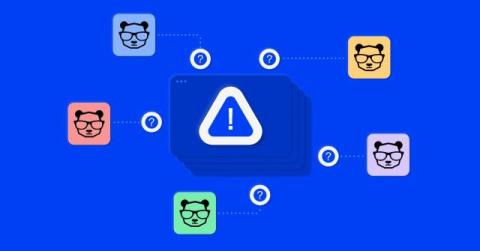
When five agents are looking at the same IT incident, which one makes the decisions?

It’s 2:14 am, and checkout latency at your largest retail store has tripled. Your observability platform’s agent has already posted to Slack that there is a connection pool exhaustion on the orders database, with a link to the trace. Your cloud provider’s agent reports a degraded network path in one availability zone. The AI SRE tool one of your product teams adopted last spring points to a deploy that went out at 1:50.
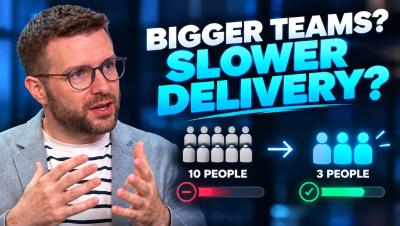
AI Is Writing More Code. So Why Are Teams Getting Smaller?

AI Is Writing More Code. So Why Aren't Teams Moving Faster? AI can generate 10x, 100x, or even 1,000x more code. But there's a problem: companies aren't necessarily delivering software any faster. As AI accelerates development, it's exposing the bottlenecks, technical debt, and outdated processes that have been slowing engineering teams down all along. So what happens when the solution isn't more developers or better AI tools, but actually smaller teams?

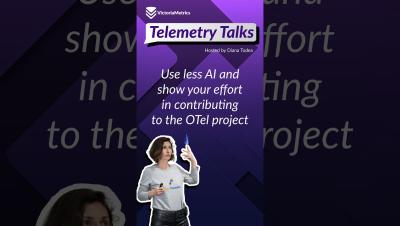
Use less AI and show your effort in contributing to the OTel project

Using more AI and adding lots of contributions, but not understanding the project, will not scale long-term. OpenTelemetry, like other OSS and cloud native projects, is looking for contributors who care about the ecosystem and genuinely want to learn and support the project. Resources for Further Learning.

Introducing Aiven AI Gateway

At home I run fully automated coding loops on a few side projects. They use more than 100-million tokens a day. At Claude Opus 5.5 prices, that costs more than $5,300 a month. For hobby projects. The same usage on DeepSeek V4.1 Flash cost about $330 a month, one sixteenth of the price. If we want to keep scaling how much we use AI, most of those tokens have to run on open models, period.

What is The Spark? Why Civo is building Britain's sovereign AI infrastructure

Every age has had its spark, the moment an idea stops being an idea and becomes something a whole country can build on. Steam, electricity and the web all began with people who could see what was possible, but each one only changed the world once someone built the infrastructure to make it real. Britain has never been short of those people. Our universities produce world-leading AI research, our engineers are among the best anywhere, and our founders build companies the rest of the world wants to buy.

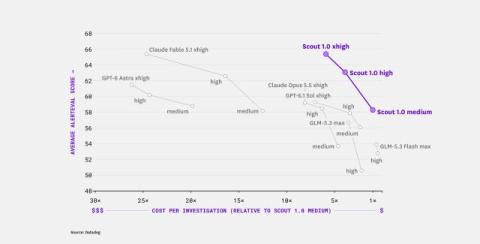
Introducing Scout 1.0: A new SRE model powering Bits AI with frontier performance at a fraction of the cost

Today, we’re introducing Scout 1.0, Datadog’s first AI model specialized for investigating production issues. Scout powers Bits Investigation, our AI SRE. We trained Scout to reduce inference cost so that investigations are cheap enough to run an order of magnitude more often and earlier in an incident’s lifecycle. Key highlights include: Close dialog.

How Kubernetes DRA can improve GPU utilization and cut costs

Organizations are spending more on GPUs as they move AI workloads into production, and improving GPU utilization is a key priority. But Kubernetes’s legacy device plugin model can limit those improvements because it constrains how workloads request and consume GPU resources. Teams must configure GPU partitioning before workloads are scheduled. Resource requests cannot distinguish GPUs by capability, and a workload can reserve an entire GPU while using only part of its capacity.

What Are AI Agents? How They Work, Why They Matter and Why They Need Governance

An AI agent doesn’t just answer questions—it takes actions in real systems. As teams across the enterprise build their own agents, governance can’t be an afterthought. Learn how agents work, why they create new risks, and what controls are needed before they act, not after.

Best AI Observability Tools of 2026: Monitoring the AI You Build and the AI That Runs Your Ops

TL;DR “AI observability” now describes two different jobs. One is watching the LLM apps and AI agents your team ships: prompts, tool calls, token spend, and output quality. The other is putting AI agents to work on your production telemetry so incidents are already being investigated by the time an engineer logs in. Most engineering orgs in 2026 need both, and very few tools cover the two well.