The latest News and Information on DevOps, CI/CD, Automation and related technologies.
Data center automation is expected to rapidly change the data center industry. Look at any data center industry publication, website, or event and there will be plenty of content predicting what data center automation is going to look like. Data center professionals are curious on how automation is going to change their jobs and data center management. The truth is that we already know.
Whether you’ve heard of or fully jumped on the DevOps or SRE bandwagon, you may have also wondered how the two relate. What’s the difference? Are they really just different ways of looking at the same problem? The term DevOps hit the market first, but SRE wasn’t too far behind. And though they have different origin stories, they both focus on autonomy, automation, and iteration. So why do these paradigms exist? And why do we need both? Let’s look at this further.
Amazon Elastic Kubernetes Service (EKS) is a managed container service designed to deploy and scale cloud-based or on-premise Kubernetes applications. AWS released EKS Blueprints to provide customers with a framework for creating internal development platforms on EKS.
When your service is undergoing performance issues, it is essential to address them in a timely and frictionless manner. With access to more telemetry and insights, the APM Service Page provides a comprehensive overview of your service and helps you quickly drill down under the hood to diagnose and investigate issues.
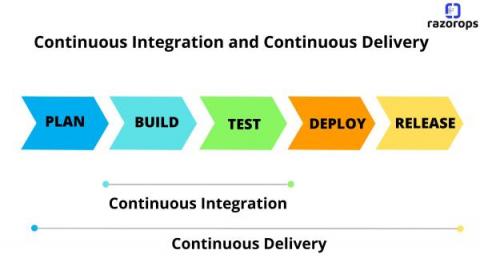
Before continuous integration was invented, developers had to work on code separately before merging it into the end product. This technique had a high chance of error. If something was left out, it took time to determine the problem. Furthermore, communication between team members became difficult as the project grew. The larger the project, the more developers, engineers, and project owners were supposed to be faithful to each other’s schedules.
Containers are great for developers, but containers are also an excellent way to create reproducible, secure, and portable applications. Applications can be deployed reliably and migrated to multiple computing environments quickly using containers. It could be the developer's laptop to the testing environment or staging to the production environment. To use Dockers, Kubernetes, etc., it has been necessary to build containers.
It was clear that reality had begun to shift, and that what once would have been horrifying — the outpouring of rage against a backdrop of constant, low-grade mistrust — had become the new normal. This is how the author of the New York Times described the stories of the irate customer behaviour that started showing in the time of pandemic.