Operations | Monitoring | ITSM | DevOps | Cloud


The latest News and Information on DevOps, CI/CD, Automation and related technologies.

How Datadog's Technical Solutions team uses RUM, Session Replay, and Error Tracking to resolve customer issues
Organizations across a wide range of industries share a common goal: deploy stable applications that support their customers’ needs. Many of these organizations rely on the Datadog platform to get complete visibility into the health and performance of their applications, and we understand how important it is that our services are reliable. That’s why we leverage our own products to ensure that the platform works as expected.
Datadog & Speedscale: Improve Kubernetes App Performance
By combining traffic replay capabilities from Speedscale with observability from Datadog, SRE Teams can deploy with confidence. It makes sense to centralize your monitoring data into as few silos as possible. With this integration, Speedscale will push the results of various traffic replay conditions into Datadog so it can be combined with the other observability data. Being able to preview application performance by simulating production conditions allows better release decisions. Moreover, a baseline to compare production metrics can provide even earlier signals on degradation and scale problems. Speedscale joined the Datadog Marketplace so customers can shift-left the discovery of performance issues.

Why Your Legacy Cloud Cost Tools Aren't Cutting It
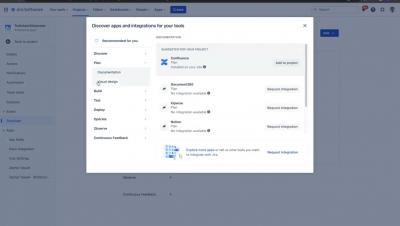
Open DevOps toolchain page: installing, connecting, and configuring integrations to Jira Software

How Sleuth measures Deployment Frequency
We've made it even easier to manage your FireHydrant configuration with Terraform
Many of our customers use FireHydrant’s verified Terraform provider to track configuration changes, ensure consistency, and automate repetitive configuration tasks. Back in March we streamlined our Terraform provider support for service catalog configuration. Today we are releasing extensive Terraform provider improvements for configuring runbooks, task lists, service dependencies, incident roles, and more.

How to Create a Multi-container Pod - Civo Academy

Why it makes sense to invest in a hybrid cloud future
A cloud-first strategy is increasingly seen as the standard way to achieve efficient business operations. As the favoured approach of new start-ups and expanding businesses wanting to benefit from the flexibility and resilience of the cloud, it’s little wonder that foundational cloud services saw a revenue growth of 38.5% in 2021 according to IDC. It looks like a fantastic package from the outside.

Technical debt does not disappear
Cloud is currently seen by some of the clients I speak with, as the answer to associated technical debt. Technical debt is like any other debt – growing year-on-year, month-by-month. Simply relocating a workload from your dated compute stack to someone else’s system or service is not a panacea to every business-led postponement.