Operations | Monitoring | ITSM | DevOps | Cloud

The latest News and Information on Incident Management, On-Call, Incident Response and related technologies.

Moogsoft AIOps Science with Dr. Robert Harper

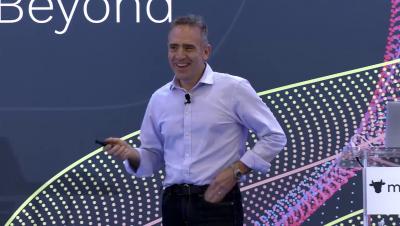
Moogsoft has over 50 mathematical patents and counting. Our AI is not an add-on feature -- it's core to our platform. In this session at the recent Moogsoft User Conference, Dr. Robert Harper, Moogsoft’s Chief Science Officer & VP of Engineering for Advanced Algorithms, explains how our algorithmic suite, and algorithmic and AI techniques offer our customers the true benefits of AIOps. By delivering deep contextual insights, Moogsoft AIOps enables IT Ops and DevOps teams to solve IT problems faster than products that rely on rules-based approaches.

Postmortems vs. Retrospectives: When (and How) to Use Each Effectively

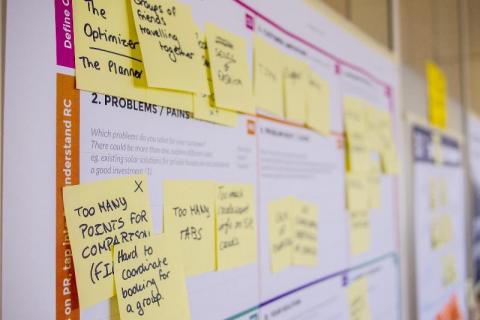
When we announced the launch of our Retrospectives Guide, we wrote about the value of scaling the continuous improvement mindset to beyond Product Development at PagerDuty by establishing the RetroDuty community. In this installment of our blog post series on retrospectives, I highlight the differences between postmortems and retrospectives. You might have heard of postmortems and/or retrospectives before reading our guides.

OnPage's New Two-Way Dispatcher and User Communications Feature

OnPage is pleased to announce a new, innovative two-way dispatcher and user communications feature launching next month, allowing system administrators to communicate with on-call healthcare providers. OnPage wanted to launch a feature, where a console dispatcher can initiate and send secure messages to the right providers. After receiving a dispatcher message, on-call providers can reply back to the message. This new feature converts one-way communications into two-way threaded exchanges.

Severity Matrix Updates

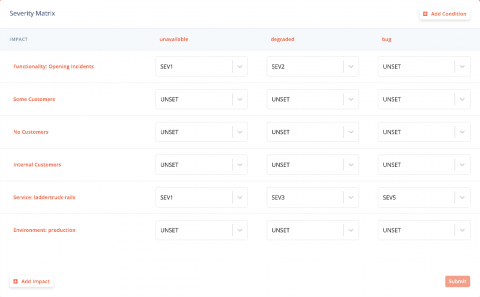
We’re on a mission to make responding to incidents a bit less chaotic. One of the best features we offer (we’re definitely not biased, no way) is a simple way to define how a severity gets determined when you open an incident. We call it the severity matrix, and today it has a new look. Previously, we had a preset list of conditions and impact that allowed you to pick a severity that matched them.

From Mayhem to Modernization: The Evolution of Critical Incident Management

Let’s face it, managing a critical incident has never been a walk in the park. Even, in the “good old days,” before the great cloud revolution and the onslaught of digital transformations, an incident often meant mayhem. Processes were manual, time consuming, difficult to execute, document, and learn from. Getting all the right people in the “same room” at the right time – was nearly impossible. Lots of time was wasted chasing down the right folks.

Smart SLO Alerting With Wavefront

Back in the good old days of monolithic applications, most developers and application owners relied on tribal knowledge for what performance to expect. Although applications could be incredibly complex, the understanding of their inner workings usually resided within a relative few in the organization. Application performance was managed informally and measured casually. However, this model falls apart in a microservices world.

The State of Unplanned Work: Key Findings

It’s a new world order: Skynet has taken over. Just kidding. But it sometimes feels that way, doesn’t it? In the words of Marc Andreessen, software is eating the world, and technology problems are now business problems. This means developers are now the architects of the digital experience and, by extension, the customer experience—and when said developers are unable to innovate quickly, companies are more exposed to competitive threats.

Why Escalations are Important to Clinical Communications

Unexpected events make the healthcare profession one of the most challenging industries to navigate and plan for. Sudden, abrupt patient situations tend to occur, increasing the workload of healthcare providers. Similar, process efficiencies and productivity are a reflection of the care team’s ability to communicate. When teams are on the same page, patient wait times are significantly reduced and results are improved.