Operations | Monitoring | ITSM | DevOps | Cloud

Making Testing Smarter: How AI in testing automation Supports Continuous Change

Selecting a freight forwarder in 2026 is no longer just about getting goods from point A to point B. You now need a partner that can handle customs clearance, protect delivery timelines, provide transparent shipment updates, and help you understand how sustainable your supply chain is. It matters when disruption to supplies, expectations of customers, and reporting on the environmental impact of operations all sit with one team managing operations.
The Three Pillars Were Built for Humans

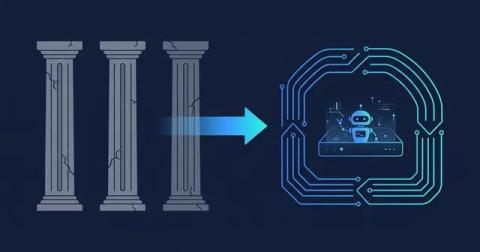
It was 2am and I was paying for the privilege. Something was on fire in production, and I’d done the modern thing: I pointed an AI agent at it. It ingested the dashboards. It read the logs. It walked the traces. Then it handed me back a beautifully formatted paragraph that said, in effect, “latency is elevated on the checkout path.” I knew that. The page told me that.

The Journey to Achieving Hyperscale Availability with AI-Driven Prediction

At hyperscale, a regional cloud outage is not merely a technical disruption—for Samsung Account, which serves 2.1 billion users across three global regions, it is an immediate global service crisis. Fragmented, region-siloed monitoring creates blind spots that make early detection nearly impossible, leaving SRE teams perpetually reactive rather than predictive. The path to proactive reliability requires both a philosophical shift and a foundational change in how observability data is collected, unified, and reasoned over.

From a $28,000 AI Bill to $0.60 Per Ticket

Engineering teams are burning through AI budgets with nothing to show for it — $100M across 10,000 engineers and no cost per run, no cost per outcome, just a number that keeps climbing. When it runs dry, your infrastructure upgrade gets cut. Harness ties every AI token to the outcome it created: cost per run, cost per resolved ticket, and anomaly detection before the invoice hits. One customer went from a $28,000 black box bill to $0.60 per ticket.

The hard part of AI root cause analysis is no longer the model

Every few weeks someone tells me root cause analysis is a solved problem now: pipe your telemetry into an LLM, let it tell you what broke. I wish it were that easy. After years on this, I think "can AI do RCA?" is the wrong question, because doing RCA with an LLM is really two separate jobs, and the answer is different for each. They break in completely different ways, so it's worth pulling them apart.

Transform Endpoint Management with AIDriven Automation

In just two minutes, learn how our AI-powered platform unifies control across Windows, Mac, Linux, Mobile, and even VR/XR headsets. Discover how to eliminate tedious tasks with automated patching, zero-touch onboarding, and self-healing capabilities—allowing your team to focus on strategy instead of firefighting. What you’ll see in this video.

Autonomous Worker Agents: AI Agents in Your Pipelines | Harness Blog

AI is writing more of the code. Software delivery, the work between writing code and running it in production, is where most of the day still goes. Building, testing, scanning, deploying, remediating, and operating still require the same, if not more, effort as before AI. Today, we're introducing Autonomous Worker Agents for software delivery: the platform for enterprises to build and safely run AI agents that handle the work between writing code and shipping it to production.

6 Ways to Use the Hyperping MCP Server

When something goes down, the last thing you want is to alt-tab between a monitoring dashboard, your on-call tool, and three Slack threads to figure out what is happening and who owns it. That context is usually all there. It is just scattered. The Hyperping MCP server fixes that by putting your monitoring data inside the AI tools you already work in. Your agent can read monitor state, outage timelines, SLAs, and on-call schedules, and answer the questions you would normally chase across tabs.