Operations | Monitoring | ITSM | DevOps | Cloud

MSP Dashboards That Deliver: HaloPSA + SquaredUp in Action

In this webinar HaloPSA and SquaredUp come together to show MSPs how to unlock real-time visibility, streamline reporting, and deliver dashboards that drive client satisfaction and operational efficiency. In this session, you’ll hear directly from both Halo and SquaredUp teams as they: Whether you're already using HaloPSA or exploring smarter ways to surface your service desk data, this webinar will give you the insights and tools to take your MSP reporting to the next level.

Prometheus native histograms in Grafana Cloud: Get more precision from your Grafana visualizations

In May, we announced the public preview of Prometheus native histograms in Grafana Cloud, unlocking greater precision, ease of use, and compatibility for analyzing latency, duration, and other distributions. Since then, we’ve seen incredible adoption across industries—from financial services companies to e-commerce platforms. Last week, during PromCon EU 2025, the Prometheus developers announced that native histograms are now stable, after three years of intense testing and improvements.

How to Monitor Kubernetes With Grafana OSS or Grafana Cloud | Ask the Experts | Grafana Labs

Wondering how to monitor Kubernetes with Grafana? In this “Ask the Experts” episode, Coleman walks through the easiest setup — from Grafana Cloud’s built-in Kubernetes Monitoring plugin to open source Grafana with Mixins and Helm. One command, and your cluster data comes alive.

Deploying Loki on Kubernetes via Helm (Loki Community Call - October 2025)

This Loki Community Call is about deploying Loki on Kubernetes via Helm charts. We talk about why you might want to use Helm to deploy on Kubernetes, best practices for deployment, and which Helm chart you should use! We are Jay Clifford and Nicole van der Hoeven, Developer Advocates at Grafana Labs, and we have invited Grafana Champion and Loki Helm Maintainer Jan-Otto Kröpke, Principal Cloud Architect at QualityOperations GmbH, to talk about the state of the Loki Helm Chart.

SQL expressions in Grafana: Combine and manipulate data from multiple sources

One of Grafana’s greatest strengths is its ability to provide a consistent monitoring experience for all your data sources. But not everyone wants to go through the process of transforming that data and setting up a data warehouse to make that happen, especially for complex analyses.

Faster, more collaborative data exploration: Introducing saved queries in Grafana Cloud

Writing queries is one of Grafana’s most powerful features, but it can also be one of the most time-consuming. Whether you’re exploring logs or building new dashboards, you often find yourself and your team rewriting the same queries over and over again. This is why we rolled out saved queries, a feature that makes it easy for everyone on your team to save, share, and reuse queries, eliminating the need to start from scratch each time.

Webinar Snippet: How to Add Obkio's Visual Traceroutes in A Dashboard

Obkio recently launched the brand-new Visual Traceroute Tool. In this snippet from the feature release webinar, Solution Architect, Sam, shows you how to integrate Visual Traceroutes directly into your custom dashboards for even more powerful network visibility. See how easy it is to add traceroute widgets to your monitoring dashboards, giving your team instant access to hop-by-hop analysis alongside your other key graphs and network metrics.

Don't count integrations, count dashboards and alerts

Vendors often compete by saying how many extensions or quick start packs they have. The implicit promise is: more integrations equals better observability. But that misses the point. What really matters is the quality and coverage of dashboards and alerts that you actually use to maintain system health, prevent outages and improve user experience. At Coralogix we believe that what you do with integrations is far more important than how many you have.

How Atlassian built a smarter observability system with Grafana and OpenTelemetry

Discover how Atlassian built OpsDeck, an observability platform powered by Grafana, to automate incident detection, improve response time, and reduce troubleshooting from one hour to under a minute. Hear how the Observability Insights team scaled OpenTelemetry, broke silos, and built smarter workflows for both engineers and support.

Declarative Configuration in OTel (Grafana OpenTelemetry Community Call #1)

We’re kicking off a brand-new Grafana OpenTelemetry Community Call! Join us as we dive into getting observability into your apps and infrastructure with Grafana, powered by OpenTelemetry. In this session, we’ll dive into Declarative Config — the new way to make OpenTelemetry onboarding simple and powerful. Instead of juggling environment variables or boilerplate in your startup code, declarative config gives you a clean, language-agnostic approach that works across SDKs and unlocks future possibilities like remote configuration. Join us with Marylia Gutierrez (OTel JavaScript approver & core contributor) to explore.

Grafana and Grafana Cloud release cycle: An end-of-year update

With the end of the year fast approaching, we want to let you know about some important dates for our upcoming release freezes. Our annual release freeze helps ensure stability for everyone during the holiday season, which is a critical time for many of our customers. This pause helps us protect our on-call teams and maintain a smooth experience for you.

Grafana Tempo 2.9 release: MCP server support, TraceQL metrics sampling, and more

Grafana Tempo 2.9 is now available, delivering MCP server support, TraceQL performance improvements, and more. Watch the video below to see the Tempo MCP server in action and learn how to speed up TraceQL metrics queries, or continue reading to get a quick overview of these and other updates. The Grafana Tempo 2.9 release notes and changelog provide more in-depth details and include all of the changes that came with this release.

Making logs work smarter: Evolving your observability strategy

When you start building an observability stack, it’s natural to reach for logs first. They’re familiar, easy to generate, and often already part of a developer’s workflow. And sending logs to a centralized system feels like a quick win, too. Simply add a log shipper, and voila, your application is observable.

Get started with Grafana Alerting: Route alerts using dynamic labels

In this tutorial you will learn how to configure notification policies for dynamic routing based on query values Don't miss the rest of the "Get started with Grafana Alerting" series! Each part dives into a different feature to help you get the most out of alerting in Grafana.

Show me the (meeting) money: How to monitor the real-time costs of a meeting in Grafana

This meeting could’ve been an email. It’s a phrase most of us have said (or at least thought) at some point in our careers. For me, that realization hit years ago while working for a government organization. I’d frequently sit through long, agendaless meetings that seemingly went nowhere. I wasn’t sure why I was there. And because I’m an engineer at heart, I started to wonder: what were these meetings actually costing the organization?

From pillars to rings: How interconnected observability in Grafana Cloud optimizes performance and reduces telemetry waste

In observability, we’ve traditionally been taught to think in terms of pillars, namely logs, metrics, and traces (and more recently, profiles). But pillars are rigid and disconnected. They don’t reflect how modern systems actually work or how we troubleshoot in real time. So let’s change that.

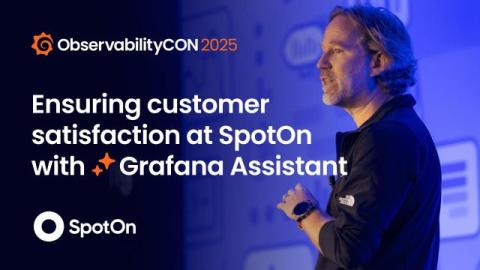
Baking in site reliability with observability and AI: How SpotOn uses Grafana Assistant to keep restaurants running

When you operate a restaurant, the last thing you want to do is shut your doors and turn away guests and staff because of some technology failure. And if you’re the one providing that tech, it’s your job to make sure that doesn’t happen. “For us, observability is about a lot more than just dashboards and alerts.

Managing observability costs at scale: A look at the latest cost management features in Grafana Cloud

The benefits of observability are clear: deep visibility into system health, faster troubleshooting, and improved reliability (to name a few). But what’s equally clear is that, as organizations scale and evolve their observability strategies, they need a way to tap into these benefits without runaway costs. According to Grafana Labs’ 2025 Observability Survey, 74% of respondents say cost is a top priority for selecting tools.

From Data to Dashboards: Building Streamlit Applications with InfluxDB 3

Python developers often reach for Streamlit when they need to construct compelling web applications quickly. It provides a fast way to transform Python scripts into interactive applications without complex web frameworks. When paired with InfluxDB 3 Core, the leading time series database, engineers can build powerful real-time analytics dashboards entirely in Python.

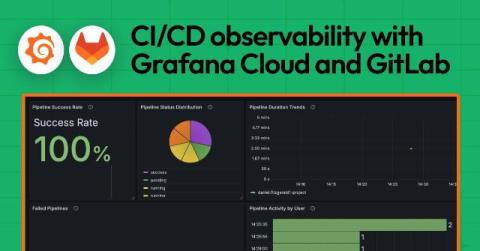
A serverless approach to CI/CD observability with GitLab and Grafana

In today’s fast-paced development environment, it’s critical that you understand what’s happening in your CI/CD pipeline. And yet, many teams struggle with fragmented tooling that makes it difficult to get a holistic view of their dev lifecycle. For example, if you’re using GitLab for CI/CD and Grafana for observability, you’ve probably faced this challenge: how do you bring your GitLab events into your existing observability and alerting infrastructure?

Keynote: Clarity from chaos: turning data sprawl into operational intelligence

Join us as we explore how to cut through the chaos and transform fragmented data into a single source of truth. Discover how SquaredUp helps you visualize the bigger picture, connect the dots, and unlock operational intelligence that drives smarter, faster decisions.

Optimize your end user computing with M365 reports

Unlock the full potential of your end user computing with SquaredUp’s unified M365 dashboards—designed to empower you to make smarter, faster decisions. This session highlights the challenges of fragmented reporting across the M365 suite and discover how SquaredUp’s native M365 plugin leverages the power of MS Graph API to deliver unified dashboards.

Dashboarding OCI costs: A guide to building a usage API with OCI functions and SquaredUp

Oracle Cloud Infrastructure (OCI) provides powerful tools for managing your cloud resources, but getting a clear, real-time view of your usage and costs can sometimes feel locked away behind complex reports. What if you could build beautiful, shareable dashboards that show you exactly what you're spending, where you're spending it, and how it trends over time? In this guide, we'll walk you through deploying a simple, secure OCI Function that acts as a proxy to OCI's Usage API.

Maximize data value and cut costs: Adaptive Telemetry for metrics, logs, traces, and profiles in Grafana Cloud

When it comes to observability, more data doesn’t always mean more clarity. In fact, as telemetry volumes grow, it only becomes more difficult to discern the signals from the noise and to keep overall costs in check. This is exactly why we built Adaptive Telemetry, a suite of features in Grafana Cloud that analyzes how your telemetry is used and then automatically recommends actions like aggregating, sampling, dropping, or reducing low-value data.

AI-powered observability: Resolve incidents faster, reduce alert fatigue, and expand access

When an incident lands in your lap, you’ll often start with a lot of questions: Why is latency so high? What’s causing this outage? How much money are we losing at this very moment? The uncertainty—and the pressure to quickly find answers—has always been one of the more nerve wracking parts of being an on-call engineer, but it doesn’t have to be that way any more.

ObservabilityCON 2025: A guide to all the announcements from Grafana Labs

Today at ObservabilityCON 2025 in London, we unveiled a number of exciting announcements and updates to Grafana Cloud that reimagine SaaS economics, simplify the complexity of running your observability stack at scale, and provide AI tooling that’s actually useful. (Root cause analysis via chatbot? Yes, please!) Check out the keynote to learn more about how we’re helping you do more with the open observability cloud, and read on for a quick recap of all the news from ObservabilityCON 2025.

ObservabilityCON 2025 Keynote: Grafana Assistant GA and Full-Stack Observability in Grafana Cloud

Join Grafana Labs CEO Raj Dutt, CTO Tom Wilkie, and engineering leaders to kick off ObservabilityCON 2025 with the latest in AI-powered observability in Grafana Cloud. See how Grafana is making observability smarter, simpler, and more scalable. This ObservabilityCON 2025 keynote unveils: AI-powered observability → Grafana Assistant (GA) and Assistant Investigations (Public Preview). Observability at scale → The Adaptive Telemetry suite is now complete (Traces GA, Adaptive Profiles in Private Preview) plus BYOC for flexible, cost-efficient cloud deployment.

The observability maturity curve: How IT leaders are shifting from tools to outcomes

Observability has come a long way from its origins in monitoring logs and metrics. Today, it sits on a maturity curve: Organizations move from fragmented tool stacks to unified platforms to proactive engineering practices that tie reliability to business outcomes. To better understand where IT leaders are on this curve, Grafana Labs surveyed 150 decision-makers across industries in advance of ObservabilityCON 2025.

How to automate sending SquaredUp dashboards to Slack with the Notification API

SquaredUp's existing notifications fire when monitors change state. With Notification API, you control the trigger. Send dashboards on a schedule, before meetings, or on-demand through chat commands. In this step-by-step guide, you’ll learn how to automate sending SquaredUp dashboards to Slack. I’ll use Power Automate as the example, but the same approach works with other automation tools such as Zapier, Make, n8n, or even a custom script, as long as it can send an HTTP request.

New Dashboards and Reports for Kubernetes Monitoring

This is just a quick blog to draw attention to some new and enhanced monitoring dashboards and reports we have added to eG Enterprise in our latest release (v7.5) to provide quick and powerful overviews when monitoring a range of Kubernetes technologies. As with all our dashboards, color-coded overlays provide guided drilldown for help desk operators and administrators.

A closer look at Grafana k6 browser: alignment with Playwright, modern features for frontend testing, and what's next

Over the years, we’ve seen our community embrace Grafana k6 browser as a key component of their frontend testing strategies. By helping collect frontend web vitals, capture custom metrics, and simulate user actions like clicking buttons or completing forms, the module offers teams a deeper understanding of performance and availability from their end users’ point of view.

Observability - Not Just Dashboards and Alerts | Why Teams Like Uber & Salesforce Use Grafana Cloud

Grafana Cloud is a fully managed observability platform built on open source and open standards. From Fitbits to power grids, it helps teams monitor systems, cut through noise, and act faster. With 150+ integrations, Grafana Cloud unifies logs, metrics, and traces, giving visibility from backend to frontend. AI-powered guidance accelerates root cause analysis and simplifies on-call, while customers like Citigroup, Salesforce, Uber, and ASOS scale with confidence.