Operations | Monitoring | ITSM | DevOps | Cloud

Now you see me, now you don't: feature-flagging with LaunchDarkly at incident.io

At incident.io, we ship fast. We're talking multiple times a day, every day (yes, including Fridays). Once I merge a pull request (PR), my changes rocket their way into production without me lifting a finger. 💅 It's when we tackle larger projects that this becomes a bit more complicated. We recently launched Announcement Rules, which let you configure which channels incident announcements are posted in depending on criteria you define.
Pepperdata Lets AWS Auto Scaling Execute More Big Data Workloads

Here at Pepperdata, we continuously work to improve our products and better serve our customers. Whether it’s executing more big data workloads or ensuring their resource consumption remains optimal, we want our customers to get the best value and tangible benefits from our products while not overshooting their big data cloud budgets. Today, we’re bringing you the data to back up our claims that all of this is possible.

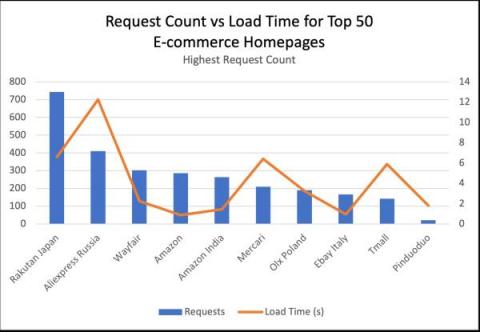
Web Performance of the Top 50 E-commerce/Retail Sites in 2021

Many factors have led to the massive increase of online retail sales in 2020 and 2021, including the increasing reliance of online activities from COVID-19. To put the growth into perspective: in 2017 when we last reported on web performance for the world’s leading retail sites, the industry generated around $2.2 trillion in revenue. In 2021, global e-commerce sales are expected to hit $4.921 trillion.

Unboxing BusyBox - 14 new vulnerabilities uncovered by Claroty and JFrog

Embedded devices with limited memory and storage resources are likely to leverage a tool such as BusyBox, which is marketed as the Swiss Army Knife of embedded Linux. BusyBox is a software suite of many useful Unix utilities, known as applets, that are packaged as a single executable file. Within BusyBox you can find a full-fledged shell, a DHCP client/server, and small utilities such as cp, ls, grep, and others.

New report: Ransomware continues to rise. Here's how to get ahead of it.

Ransomware experienced a stunning surge in prevalence and sophistication throughout the pandemic. Threat actors capitalized on a frequently shaky transition to a remote, digital business landscape. With so many businesses prioritizing basic functionality over proactive security, vulnerabilities have been unprecedented – and very much exploited.

AWS Database Types - Aurora vs DynamoDB vs RDS - How do they compare?

In this blog, we describe the different types of AWS’ managed databases and their various features and merits. By the end of the blog, you should have better information to choose the right AWS database that would match your application’s needs.

How to choose between AWS RDS and EC2 Hosted Database?

You’ve decided to migrate your applications from on-premises to AWS and are considering what cloud services are available that suit your needs the best. When you are migrating an application that uses a relational database backend (RDBMS) such as Oracle, MySQL or SQL Server to the cloud, the question of RDS vs EC2 will inevitably surface.

Game Launches Should Be Exciting for Your Players, Not for Your LiveOps Team

The moment of launching something new at a game studio (titles, experiences, features, subscriptions) is a blockbuster moment that hangs in the balance. The architecture—distributed and complex, designed by a multitude of teams, to be played across a variety of devices in every corner of the world—is about to meet a frenzy of audience anticipation, along with the sky-high expectations of players, executives, and investors.

Kubernetes Application-Level API

The Kubernetes API is the front end of the Kubernetes control plane and is how users can interact with their clusters. In essence, it’s the interface used to manage, create, and configure the cluster and the state of objects. Using a standard API, Kubernetes allowed teams to focus on constructs and consume infrastructure across different providers.

What do Top-Performing IT Organizations do Differently Than the Rest of Us?

The whole point of monitoring and managing your IT services is to ensure that they’re able to keep business services available and responsive to customer demands. But how do you actually quantify the return on investment you get from your IT performance management solutions? Digital Enterprise Journal set out to answer that question in its new research study, The Total Business Impact of IT Performance.