Statuspage PagerDuty integration
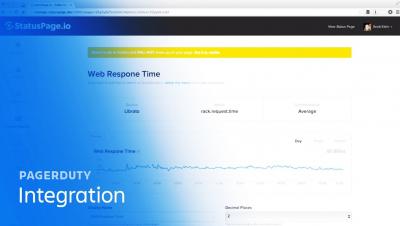
Statuspage.io integrates with PagerDuty by parsing the webhooks that are sent when PagerDuty incidents are triggered, acknowledged, resolved, or otherwise updated.


The latest News and Information on Incident Management, On-Call, Incident Response and related technologies.
PagerDuty is known as the platform for driving real-time work, and with the current global spread of COVID-19, many of our customers have been asking how we leverage PagerDuty internally to intelligently coordinate a response to emergency situations (such as this) as they arise. PagerDuty customers primarily leverage our platform for coordinating an incident response process when technical issues happen, such as a bad deployment, network degradation or failed hardware.
Information technology (IT) never slows to a standstill. Technological change disrupts current processes or operations, requiring organizations to make alterations to IT spending. Deviating from legacy technology to 21st century advancements isn’t an option, it’s a requirement! Through automation and powerful integrations, organizations can breathe freely.
As we are all adjusting to this new reality of living and working in the time of COVID-19, the coronavirus, there is so much that we need to take into consideration. Clearly, the health and safety of our family and colleagues is priority number one – and the local authorities have provided guidance on how to maximize protection.
As reported cases of novel coronavirus (COVID-19) continue to rise around the world, many companies are increasingly shifting to using remote work as a way of minimizing exposure for their workforce. But even if some of these companies have been remote-friendly in the past, many organizations are currently struggling to figure out how to shift their operations to becoming entirely remote.
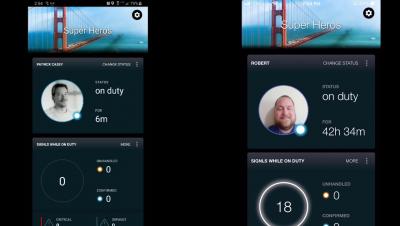
“Servcies&Systems” category subscriptions provide a highly flexible way of routing alerts to specific user groups. This can for instance be used to route alerts based on responsibilities or skills. But other scenarios are possible too as the category subscription mechanism is extremely powerful. SIGNL4 currently provides two fundamental ways of routing alerts. The first layer is the routing of alerts based on the “on duty” status.
As COVID-19 (novel coronavirus) cases start to challenge norms around what makes a healthy and safe workplace, more and more companies are leaning in or fully jumping in to embracing remote work. At PagerDuty, over 20% of our workforce is remote—so we are well set up to distribute if the time comes. Beyond the logistical aspects, we also have a strong culture of inclusivity when it comes to remote colleagues.
What is AIOps? Are you confused by all the different explanations out there? Regardless of the mixed messages, there is a correct definition and approach for AIOps.