Operations | Monitoring | ITSM | DevOps | Cloud

AI SRE Agent Debugs a Lambda Timeout with the AWS MCP Server: AURA

A scheduled Lambda quietly stops completing and nothing pages you. AURA finds the function, reads its logs, and comes back with a three-second timeout. The usual path is opening the console, tracking down the right log group, and reading CloudWatch by hand. Here AURA connects to AWS through the MCP proxy AWS publishes, run locally with uvx against an AWS CLI that is already configured, so there are no new credentials to issue.

An 80% AI Adoption Rate Is Like an 80% Gym Membership Rate. It Doesn't Prove Anyone Got Stronger.

Leadership has stopped asking whether your team is using AI. They’re asking what you’re delivering with it. That’s a harder question, because most of the numbers teams have been reporting, adoption rate, seats activated, prompts run, don’t actually answer it.

The Great Telemetry Debate: Why AI-Ready Operations Require a True Data Fabric

If you are leading technology strategy today, you face consequential choices about how to manage your enterprise telemetry. Your decisions determine not only where logs, metrics, traces, and events are stored, but also who controls how operational data is collected, shaped, governed, and put to work in an optimal way for the security, observability, analytics, and AI systems that power your business.

5 Ways IT Leaders Are Using AI to Improve Operations in 2026

As the world is racing to plug AI into nearly every part of business, especially software engineering, the stakes to maintain operational integrity have never been higher. AI-generated code and AI-agents ship faster than human SREs can prepare for, which can create costly issues down the line: incidents get harder to predict and more expensive to recover from.

Resolve Now Fixes Your Errors, Not Just Diagnoses Them

Your error monitoring tool found a bug. Now what? For most teams, the answer is the same thing it has been for years: copy the stack trace, find the file, read the code, build a mental model of what went wrong, write the fix, write or update a test, push, and wait for CI. That process hasn’t changed much since error tracking became a category. The tools got better at telling you something broke. They never got better at fixing it.

What the Platform Team Actually Does When Everyone is an AI-Assisted Builder

An AI model can write a fully functioning microservice in about fifteen seconds. If you hook it up to a pull request pipeline, it can generate migrations, write unit tests, and suggest refactors before your lead engineer has finished their first cup of coffee. We are entering an era of unprecedented code velocity. But code is not an application, and shipping is not operating.

AI can't correlate what was never standardized

Steve Flanders (Senior Director of Engineering, Splunk) makes the case that AI can't save an observability stack that never agreed on a standard. Mix formats across metrics and logs, and AI stops correlating and starts guessing, which means you either make the wrong call or miss the answer you actually needed. OpenTelemetry is one fix, but Prometheus and Fluentd work too. The standard matters more than which one you pick.

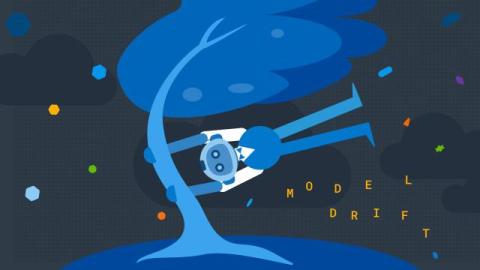
AI Model Drift: How to Keep Models Reliable

AI model drift is when an AI system's performance and accuracy degrades over time because the data, user behavior, or business environment has changed since the model was trained or evaluated. Even if latency, uptime, and infrastructure metrics remain healthy, model quality can quietly decline, leading to less accurate predictions, inconsistent responses, and reduced user trust.

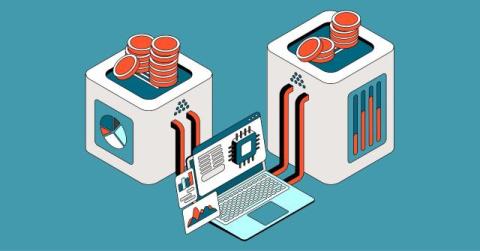
AI agent cost: what agents really cost to run

AI agent cost in 2026 is mostly a consumption bill, not a subscription. Running an agent costs anywhere from fractions of a cent for a simple routed task to $5 or more for a complex multi-step job, because one request can trigger 3 to 10 model calls behind the scenes. Average production deployments land between $3,200 and $13,000 per month in operational spend. Here is where that money actually goes.