Operations | Monitoring | ITSM | DevOps | Cloud

Cortex | Workflows Run API

Cortex Workflows can now be triggered externally via the Workflows Run API (beta). In this video, Solutions Architect Jeff Schnitter walks through how to trigger a workflow from the Cortex CLI, pass context via a JSON file, and run synchronously or asynchronously. Requires CLI v1.15.0+ and the "runnable via API" toggle enabled on the workflow. To enable the Workflows Run API in your workspace, contact your CSM.
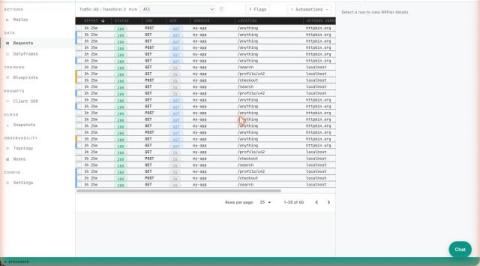
The Kubeshark Workflow That Doesn't Stop at the Dashboard

The Observability Gap shows up the moment you try to reproduce a production bug locally. Your traces tell you a request was slow. Your logs tell you which line printed. Neither tells you what was actually on the wire: the headers, the JSON body, the surprise field your client started sending last Tuesday. Until now, closing that gap meant SSHing to a node, attaching a debugger, or shipping a sidecar through change review.

Instant Java Client SDK, no spec required!

Learn how to generate a client SDK for a production service when you have no documentation, no OpenAPI spec, and no remaining team knowledge of the original Ruby code. This demo shows you how to capture real production data from a running app and transform it into a functional Java client library in minutes. Visit proxymock.io OR speedscale.com to learn more.

WireMock alternatives: pick the one that fits your problem

Picture this. You’re standing up a new service. Cursor or Claude Code wrote most of the controller, and it calls a payment API your team doesn’t own. Now you need tests. The agent is gamely inventing the response shape from whatever OpenAPI doc you fed it (which is a year stale), and the WireMock stubs it just generated are guesses dressed up as JSON. Three weeks later production breaks, the test suite was green the whole time, and nobody knows where to start looking.

How to Set Up an API Server

NinjaOne Field CTO Jeff Hunter shows how to set up an API server. An API server is a framework for securely integrating data from other services into NinjaOne. One example (and next week's video) would be retrieving current CVE data from a third-party vulnerability scanner and regularly importing that CVE data into NinjaOne for visibility and remediation. Chapter Markers.

The Checkly Playwright Reporter: Live Demo, Rocky AI RCA & Production Monitoring

Your Playwright tests catch bugs. The hard part is figuring out what actually broke — and sharing that context with your team. This session shows exactly how the Checkly Playwright Reporter solves that: one shared home for all your test runs, AI-powered root cause analysis, and a direct path from failing test to production monitor. María de Antón, PM for Playwright features at Checkly, runs a live demo on a real app with real failures.

Multiple API Keys Are Here - More Keys, Better Control, Stronger Security

Today we're rolling out a major upgrade to API Keys in Bindplane. You can now create up to 25 API keys per project, give each one a description, set an expiration date, and delete keys you no longer need. Under the hood, every key is now hashed with Argon2, the modern standard for credential storage. If you've been working around the old single-key limit by sharing one key across CI jobs, scripts, and teammates, this release is for you.

Building Automated Document-to-Video Workflows for Enterprise Operations

In enterprise environments, the volume of documentation is staggering. An average Fortune 500 company maintains hundreds of thousands of documents across HR policies, engineering specifications, sales playbooks, compliance guidelines, and customer support knowledge bases. This content represents a massive investment in institutional knowledge, but its impact is limited by a persistent delivery problem: people do not read documents.

From Traffic Context to Confirmed Fix in 3 Minutes

We’ve been building an AI agent that can take a production bug, find the root cause in captured traffic, write a fix, and validate it before a human reviews it. We call it Agent Factory. Last week we ran it on ourselves, against a real bug in our own production service. The first thing we did was get the workflow wrong.

Anatomy of the AI Software Factory: The Context Layer

This is Part 2 of the AI Software Factory series. In Part 1, we established that the Agile methodology is buckling under the weight of “elastic code.” When AI agents can generate functionality in seconds, two-week sprints and manual task management become organizational bottlenecks. We introduced the concept of the AI Software Factory: a shift from managing human tasks to managing business intent through a “Funnel of Increasing Trust.” But a factory requires infrastructure.

Web API: your complete guide for custom integrations

Data is almost always scattered across too many tools. Usually, if you want to see it all in one place, you're stuck building messy pipelines or paying for a warehouse you don't really want. SquaredUp is a window into all those tools. It lets you see what’s happening across your entire stack in real time without moving any of the data. Think of it as a universal translator that lets your tools talk to each other so you can stop the manual digging and just see the big picture.

The "Free" AI Tool That Will Ruin Your Code#speedscale #aiagents #aicoding #devops #softwareengineer

Relying on AI and interns to build custom traffic replay tools is a scalability nightmare that introduces security risks, brittle code, and massive maintenance costs...use Speedscale instead. Learn more: speedscale.com.
Sponsored Post

Replay Real Customer API Sessions as Datadog Synthetics Tests

A customer pings support: "I tried to check out twice this morning and got a 500 each time, but it works fine for everyone else." The session ID is in the email. You have full request/response capture in your environment, you have Datadog Synthetics already running browser checks against the same flow, and you still spend the next two hours grepping logs because none of those tools let you say "show me just this user's requests, in order, and re-run them."

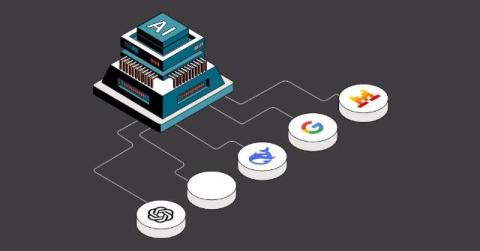
LLM API Pricing Comparison In 2026: Every Major Model, Ranked By Cost

Compare LLM API pricing across OpenAI, Anthropic, Google, DeepSeek, and Mistral in 2026. Full pricing tables, hidden cost breakdowns, and proven strategies to cut AI spend. Written for engineering leads, platform teams, and FinOps practitioners evaluating or optimizing production AI costs.

What Architecture Ensures Long-Term Scalability in a Rails-Based B2B Platform?

Scalability is not a feature you add later; it is a choice made at the architectural level from day one. A Rails-based B2B platform that handles growing clients, data, and transactions without slowdowns or costly rewrites is built on a modular design, clear domain boundaries, background job processing, caching, and a database strategy that supports load distribution and horizontal scale. Get these foundations right, and you stay in control of growth instead of reacting to problems after they appear.

How a Marketing Intern Ended Up Running Claude in a Terminal

Before I ever ran Claude in my terminal, I thought I already understood AI tools pretty well. Like most people, I had used ChatGPT, Google Gemini, and Perplexity for everyday tasks. Such as helping with schoolwork, organizing ideas, summarizing information, or getting through something faster when time was tight. They were useful, but they still felt separate from how real work happened.

Monitoring from Private Locations

Not everything worth monitoring is on the public internet. In this 30-minute hands-on session, Daniel Paulus deploys four Checkly private location agents on AWS EKS with Terraform, then uses a coding agent to scaffold 200 internal checks in seconds — uptime, TCP, DNS, ICMP, and Playwright browser checks against legacy apps that never leave the firewall.