Operations | Monitoring | ITSM | DevOps | Cloud

What Is Network Operations Center (NOC)

Quick Answer A Network Operations Center (NOC) — pronounced “knock” — is a centralized physical or virtual facility where IT professionals monitor, manage, and maintain an organization’s network infrastructure on a 24/7/365 basis. The NOC serves as the nerve center for detecting incidents, coordinating responses, and ensuring maximum network availability and performance.

Nzo product demo

This on‑demand product demo shows how N‑zo supports MSPs looking to simplify operations and scale more efficiently. Watch to see how N‑zo brings key workflows together, reduces operational friction, and helps teams gain better insight into their business. The demo highlights practical scenarios designed to support growth, consistency, and operational clarity without added complexity. Ideal for MSP leaders and operations teams who want a clearer, more streamlined way to manage their business.

Meet Auvik AI: Bringing Practical Intelligence to IT Operations

Across the IT industry, AI is being positioned as the next evolution of operations. But for many IT teams, AI still feels disconnected from the tools they rely on every day. Dashboards get smarter. Reports get faster. But workflows stay the same. Stuck in vendor silos or a CLI, IT teams have been looking for ways to bolt AI into workflows, but what often comes out is a Frankenstein-like web of APIs and MCP hosts. AI is meant to make life easier for IT teams – not make it more difficult.

How Auvik AI Solves the Biggest Challenges in IT Operations

Modern IT operations aren’t short on tools. Monitoring tools. Ticketing systems. Alerting platforms. Documentation repositories. Dashboards. Scripts. Runbooks. And yet, when something breaks, the workflow still looks strangely familiar: Somewhere along the way you’re asking yourself: Is the problem even here? This is the everyday friction of IT operations. Not the big outages. Its the constant small mysteries that take far longer to solve than they should.

Optical Freedom as a Design Principle: How Ribbon Enables Choice and Supply Chain Resiliency

Pandemic-era shortages are still fresh in many minds. As consumers, we remember empty shelves and long lines driven by panic buying and stockpiling. In telecom, the story played out differently but with the same root cause: factory shutdowns interrupted chip fabrication just as demand for networking and optical equipment surged.

Demo - Selector Platform NOC Operator Workflow

See how Selector transforms NOC operations in real time. This demo walks through a typical workflow - from ingesting massive volumes of network and system data to automatically detecting anomalies, correlating events, and pinpointing true root cause. Instead of chasing alerts across siloed tools, Selector delivers a single, intelligent view - reducing noise, highlighting impact, and accelerating resolution.

Certificate Discovery, Monitoring and Reporting | WhatsUp Gold 2026.0

Discover how WhatsUp Gold helps you identify and monitor certificates to reduce security risks, stay compliant, and avoid outages caused by expired or improperly configured certificates, featuring the latest reporting enhancements available in WhatsUp Gold version 2026.0.

What Every IT Operations Team Should Know About Managing IPv4 in 2026

IPv4 was supposed to be a temporary problem. Address exhaustion was meant to push the entire internet toward IPv6 within a decade, and operations teams could simply manage the transition and move on. That hasn't happened. Most enterprise networks still run dual-stack configurations, customer-facing services still depend heavily on IPv4, and the secondary market for addresses has become a permanent fixture of modern infrastructure planning.

What are operational maturity levels (OMLs) for MSPs?

Service Leadership, a leading company that works to measure IT and managed service provider (MSP) performance, defines the five levels of operational maturity for solution providers. Often referred to simply as operational maturity levels (OMLs), OMLs help managed service providers (MSPs) measure how consistently, intentionally, and effectively they run their businesses.

That's Not a Job for an LLM: The Right Way to Apply AI to Network Operations

LLMs have sucked all the oxygen out of the AI conversation — but AI is much more than just LLMs, and network engineers have been using AI techniques (machine learning, statistics, fuzzy logic, expert systems, neural networks) for decades. So what should LLMs be doing in network operations, what shouldn't they be doing, and how do agentic AI architectures fit in?

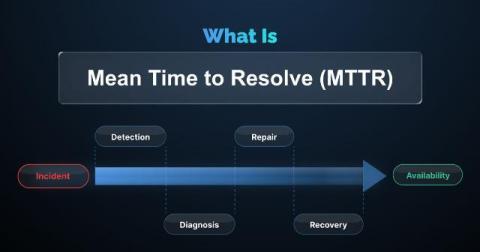
What Is Mean Time to Resolve (MTTR)? (And How to Improve It)

Every minute a network incident goes unresolved costs your company money. Lost productivity, missed SLAs, degraded user experience, and, in other cases, direct revenue loss. For IT teams and network admins, the pressure to resolve incidents fast isn't just operational, it's existential.

A Bettter Way to Run Network Operations: How Actionable Correlation Eliminates Alert Chaos

Anyone who has spent time in a NOC knows how quickly a routine issue can turn into a scramble. A user in a branch office reports that a critical application is unavailable. Slack starts lighting up, dashboards begin to fill with warnings, and before long several teams are trying to answer the same basic question at once: what exactly is broken, where is it broken, and who owns the next move?

13 Best Incident Management Software Compared in 2026

Every minute of downtime costs your organization money. Sometimes a lot of money. Gartner puts the average cost of IT downtime at roughly $5,600 per minute, and that number climbs fast when a major incident hits and your team is still scrambling to figure out who owns the problem. That’s where incident management software earns its keep. When something breaks at 2 a.m., you don’t want to be hunting through email threads figuring out who’s on call.

How the Internet Technology Has Improved Over the Years

The internet has gone from a slow, noisy dial-up connection to a fast, always-on utility that powers nearly every part of modern life. What once took minutes can now happen in seconds. What once felt like a luxury is now essential for work, entertainment, and communication. Understanding how internet technology has evolved helps explain why today's connections feel so different, and why newer options continue to raise expectations for speed and reliability.

Setting the Bar for Agentic NetOps

AI has quickly become part of the language of network observability. Many vendors across the observability landscape can describe, summarize, correlate, or explain some data or situation, leveraging basic LLM capabilities. At a distance, many of these offerings sound similar. They promise faster insight, efficient operations, and a more intelligent path through rising complexity. But the industry has reached a point where surface-level similarity is creating noise, not value.

Test network paths with TCP, UDP, and ICMP in Datadog

When developers and SREs design application tests, they often prioritize user workflows and API availability. Extending that suite with network tests that match your app’s traffic protocols can reveal whether issues originate in the network or application layer. In this post, we’ll explore how you can design effective network tests using the Transmission Control Protocol (TCP), User Datagram Protocol (UDP), or Internet Control Message Protocol (ICMP), including.

N-Sight Quarterly Roundup - Q1 2026

In this short roundup, Mike Adler, Chief Technology and Product Officer at N-able covers the key N-sight updates delivered in Q1 and what is on the way in Q2, including: Script Hub public preview for multi‑OS script creation and execution Entra ID support for N‑able Login to streamline identity and access New security and operational signals including BitLocker visibility and reboot tracking Also, he discussed what will be available in Q2, for example: N‑zo AI assistant, expanded vulnerability management and Mac patching, and deeper workflow automation across scripts and assets.

N-central Quarterly Roundup - Q1 2026

Watch Mike Adler, Chief Technology Officer and Chief Product Officer at N-able, as he walks through the Q1 updates for N-central—and what’s coming next in Q2. This release cycle is packed with innovation designed to strengthen security, improve efficiency, and simplify day‑to‑day operations. In this video, you’ll discover highlights including.

Cove Quarterly Roundup - Q1 2026

Watch Stefan Voss, Chief Product Owner for Cove, as he breaks down the latest updates and shares what’s coming next. Discover exciting enhancement, including: Critical Configuration Changes allows you to create event-based notifications for changes made to backup policies Group-Based Data Protection lets you use Microsoft Entra ID security group to define which users are protected in Cove PST Export entering public preview.

What is Network Monitoring? Why Every IT Team Needs It (2026)

Learn what network monitoring is and why it’s critical for IT teams in 2026. Discover how it works, key metrics to track, and how to prevent downtime before users are impacted. Modern IT environments are complex—network monitoring helps you detect issues early, reduce downtime, and keep your infrastructure running smoothly. Watch now and monitor your network with confidence. Don’t forget to like, share, and subscribe for more IT insights.

Nzo product demo

This on‑demand product demo shows how N‑zo supports MSPs looking to simplify operations and scale more efficiently. Watch to see how N‑zo brings key workflows together, reduces operational friction, and helps teams gain better insight into their business. The demo highlights practical scenarios designed to support growth, consistency, and operational clarity without added complexity. Ideal for MSP leaders and operations teams who want a clearer, more streamlined way to manage their business.

Into the Breach: MFA Bypass | April 2026 Webinar

A webinar series where Adlumin’s SOC experts share the latest real‑world threats, attack trends, and incident insights observed across our customer base. Each session delivers practical takeaways, recommended defenses, and a behind‑the‑scenes look at how our analysts detect, investigate, and respond to emerging threats. In the latest session, you’ll learn.

KubeVirt Networking: How to Preserve VM IP Addresses During Migration

Organisations are re-evaluating their VM infrastructure. The economics have shifted, the tooling has matured, and the case for running two separate platforms, one for containers, one for VMs, is getting harder to justify. Platform teams that spent years managing hypervisor infrastructure are being asked to consolidate, and most are landing on the same answer: Kubernetes. KubeVirt makes running VMs on Kubernetes possible.

Managing Digital Display Infrastructure in Multi-Location Businesses

For businesses with many locations-like busy retail chains or large office campuses-managing digital display systems is more than a tech upgrade. It's a business need. You must coordinate hardware, software, content, and internet connections across different sites so every screen shows the right message at the right time. When it's done well, separate screens work together as one clear communication system for both employees and customers, no matter the location.

Automate, Create and Export Network Maps to Visio with SolarWinds Network Topology Mapper

With a variety of discovery methods like SNMP, CDP, ICMP and WMI, SolarWinds Network Topology Mapper helps you have an up-to-date map of all your routers, switches, firewalls, servers, desktops, and workstations. Featuring industry standard symbology for network nodes, NTM supports multiple options for map alignment with improved Etherchannel support and representation, ability to create multiple maps from a single scan and many more.

Progress Flowmon Roadmap 2026 and Beyond

Explore what’s ahead for Progress Flowmon in this roadmap session presented by Head of Product Nick Vlasov. Learn about upcoming innovations in AI‑driven analytics, automated investigation playbooks, detection tuning improvements and long‑term platform direction. Perfect for network engineers, security analysts and IT leaders looking to strengthen visibility, performance and security. Watch now to see what’s coming next.

Building the AI Stack for Modern Network Operations - Surya Nimmagadda

AI is rapidly transforming network operations — but what does it actually take to build an AI stack that works in production? In this session from AI for Network Leaders – Powered by Selector, Surya Nimmagadda breaks down how modern AI systems for network operations are designed, deployed, and used today. He covers: This session is designed for network engineers, architects, and operators looking to move beyond theory and understand how AI is being applied in real production environments.

Automate Network Discovery and Mapping with SolarWinds Network Topology Mapper

SolarWinds Network Topology Mapper (NTM) helps you automate network discovery and mapping, saving man hours. With a variety of discovery methods like SNMP, CDP, ICMP and WMI, NTM helps you have an up-to-date map of all your routers, switches, firewalls, servers, desktops, and workstations. SolarWinds Network Topology Mapper enables you to export the maps to a variety of formats including Visio, PNG, Network Atlas and PDF for easier documentation. With NTM, you can have up-to-date network diagrams to comply with PCI, HIPAA and other regulatory requirements.

Network Instability: What It Is, What Causes It, and How to Fix It

Network outages are easy. Something goes down, alarms fire, you fix it, life moves on. Everyone understands a full outage. It's clean, binary, and at least somewhat predictable. Network instability is the opposite of all that. Nothing fully breaks. Nothing fully works. The ping responds. The connection shows active. And yet users are complaining about choppy calls, sluggish apps, and sessions dropping for no apparent reason. You run a speed test, and it's fine.

Unified Enterprise Monitoring that Scales

Modernize your monitoring stack with the Progress WhatsUp Gold network monitoring solution in this fast, 30‑minute session. Learn how to replace legacy, multi‑module tools with one unified platform that simplifies operations, boosts visibility and delivers predictable TCO. Discover how NetOps and ITOps teams can reduce complexity and get actionable insights faster by utilizing the WhatsUp Gold capabilities to unify network traffic analysis, logs, configuration and high availability.

Ephemeral Leaks and Automated BGP Route Leak Detection

Many BGP route leaks reported by automated detection systems are actually brief, low-impact artifacts of normal BGP convergence. Doug Madory examines examples from Cloudflare Radar, Routeviews, and Jared Mauch’s long-running leak detector to show how these “ephemeral leaks” arise, why they usually don’t disrupt traffic, and why they still matter for routing security.

What's New in WhatsUp Gold 2026.0

Watch this video to learn about the features included in version 2026.0 of WhatsUp Gold. Find more information in the 2026.0 Release notes: For all your Community news, technical content, and access to all things WhatsUp Gold check out our Community Hub. You'll also find our Forum for questions about our platform and sharing with other Community users.

Stop Wrestling With Complex Website Monitoring Dashboards

In the race to provide full-stack visibility, many modern SaaS platforms have inadvertently created a new problem: information overload. High-end enterprise solutions are designed for companies with dedicated Site Reliability Engineering (SRE) teams that spend their entire day inside a dashboard. But for many businesses, this level of granularity is a distraction. The real question isn’t whether a tool is powerful; it’s whether it fits the everyday needs of your team.

Network Monitoring Tools in 2026: How to Choose the Right Platform

Effective network monitoring requires path validation, not only device polling. Traditional Network Monitoring System (NMS) tools were built for static networks, not today’s hybrid reality. You poll devices, check interface counters, and still struggle to explain why users complain about latency. Traffic moves across SD-WAN architectures, cloud routing layers, and public internet paths that device metrics never capture.
How PayPal hyperscaled Kubernetes routing with HAProxy Fusion

PayPal runs six data centers, each with around 60,000 containers. Their 30,000 employees spin up nearly 10,000 test environments every day — roughly 6 to 10 every minute. Each environment requires three config updates: one to create the virtual service, and additional calls to configure and deploy the applications. Do the math and you get a staggering 30,000 config updates per day.

Simple Ways to Improve Office Security with Technology

Many business owners overlook a simple but critical reality: their office is often easier to access than they assume. A keycard gets misplaced at a café. A Wi-Fi password is shared with a vendor and never updated. Over time, these small oversights create real security gaps. No one intends for them to happen, yet they accumulate quietly and leave the workspace exposed.

A Guide to NAT Gateway

What it is, how it works, when to use it, and how to optimize it. Table of Contents Network Address Translation (NAT) has been around for a long time, playing a critical role in extending the lifespan of IPv4 as well as providing breathing room for deploying IPv6. Enterprises have been using it for decades in their corporate and data center networks as an integral part of their network management and security portfolio.

HTTP Monitoring: What Is It and How to Do It

When users complain that an app or website is slow, the first question is always the same: Is it the network or the application? HTTP monitoring gives you the answer. Network metrics like latency and packet loss tell you what's happening on the wire. But they don't tell you whether users are actually feeling the impact. HTTP monitoring closes that gap.

Progress WhatsUp Gold 2026.0: Proactive Visibility. Trusted Security.

Announcing Progress WhatsUp Gold 2026.0 Modern networks are more complex and more exposed than ever. From hybrid infrastructure and distributed devices to expiring certificates and tightened security requirements, network and IT teams are under constant pressure to keep everything running smoothly while reducing risk. Progress WhatsUp Gold 2026.0 is built for that reality.

HAProxy at KubeCon Amsterdam 2026: the standard, by popular demand

KubeCon + CloudNativeCon Europe 2026 brought thousands of cloud-native practitioners to Amsterdam for four days of talks, demos, and hallway conversations about where Kubernetes is heading. HAProxy Technologies came as a Diamond Sponsor, and by the time the exhibition floor closed on Thursday, it was clear that the market had reached the same conclusion we had. HAProxy is the standard — and this year, more people than ever were ready to say so out loud.

The Business Case for AI-Driven Observability in Network Operations

Modern network operations generate an extraordinary amount of telemetry. Metrics, logs, events, topology data, cloud signals, and service context all contribute to a richer picture of system behavior. As environments expand across cloud, data center, edge, and SaaS, the opportunity for operations teams is clear: when that telemetry is unified and understood in context, it becomes a powerful source of resilience, efficiency, and business insight.

Implementing Robust Virtualized Environments for 24/7 Mission-Critical Systems

Infrastructure resilience is no longer a luxury in a digital environment where "five nines" (99.999% uptime) has moved from a premium goal to a baseline requirement. We have moved past the era of the "server in a closet," vulnerable to a single power supply failure.

KubeCon Europe 2026 | Universal Mesh: Connect and Secure Everything

Service mesh was a good start. But the industry needs something more comprehensive. At KubeCon + CloudNativeCon Europe 2026, HAProxy's Baptiste Assmann presents a new architectural vision: Universal Mesh — a boundary-first approach that unifies North-South and East-West traffic management into a single platform, without sidecar overhead.

In the Mind of a CXO | Where Did the BEAD Funds Go!?

Cliff Johnson, Broadband Initiative Director at NRECA, and Ribbon’s Marketing & Product Director, Mitch Simcoe, cut through the noise to clarify where BEAD funding truly stands—what has been allocated, where significant dollars remain, and how emerging middle‑mile opportunities are reshaping the competitive landscape.