Announcing OnlineOrNot's open-source uptime check CLI
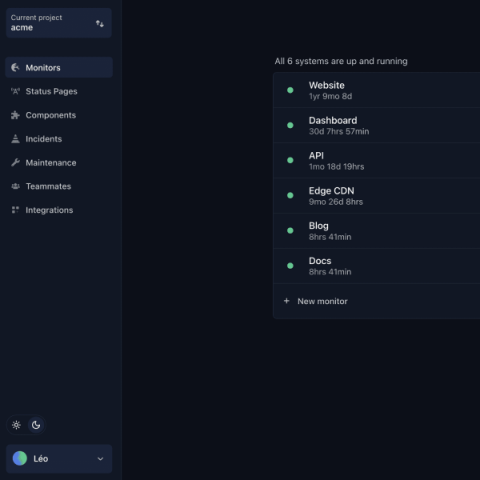
I'm excited to be launching onlineornot - OnlineOrNot's newly-built, open source (TypeScript) CLI for managing your uptime checks, all from the comfort of your terminal!


The latest News and Information on Monitoring for Websites, Applications, APIs, Infrastructure, and other technologies.
The online market gets more competitive by the day. You have an increasing number of online businesses competing for the same customers. Therefore, online business owners don't have the luxury of tolerating website issues like crashes. The more your website crashes, the more customers you lose. Even poor page load times increase bounce rates by up to 53%. Essentially, you have no option but to optimize your website and prevent crashes or resolve them as quickly as they happen.
Out of all the tools in your stack, your monitoring tool is probably not your favorite to work with. That's understandable—at best it works seamlessly in the background, at worst it's a source of constant headaches. But let's not underestimate the importance of monitoring tools. They are an essential part of any IT infrastructure, and finding the right one can be quite a challenge.
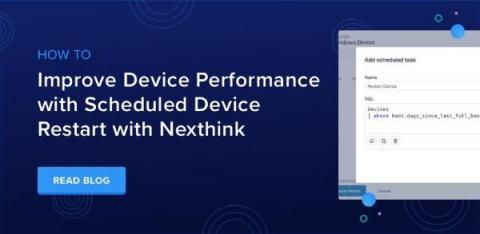
When devices are not rebooted frequently, it can adversely impact the Logon and Extended logon duration and affect device memory and device performance. This can lead to missing critical patches and Windows updates causing performance and security issues, Hence, scheduled restart of the device once in 7 days is a recommended best practice. Let us look at How to Improve Device Performance by doing a scheduled restart with Nexthink.
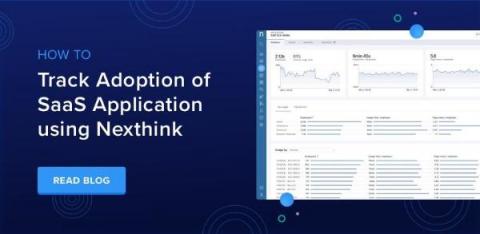
Digital transformation is complex, and software license costs can balloon your IT budget. Nexthink helps your team track adoption of SaaS applications, so you can make data-driven decisions to lower costs or speed digital transformation. In this blog, you’ll learn how Nexthink helps IT teams like yours evaluate application adoption and increase usage.
As businesses now rely on technology to carry out most, if not all their operations, the volume of IT issues that arise on a daily basis has grown significantly. From large corporations to small startups, operations are primarily run via a digital workplace that encompasses a huge variety of technology, such as Microsoft Office, Zoom, Google Meet, MS Teams, Salesforce, and many more.
Apache Kafka has come a long way since its initial development at LinkedIn in 2010 and its release as an open-source project the following year. Over the past decade, it has grown from a humble messaging bus used to power internal applications into the world's most popular streaming data platform. Its evolution is remarkable, and it has taken the industry by storm, quickly becoming a go-to solution for data streaming and processing.
Native app development is the creation of software programs that run on specific devices and platforms. You can build native apps for desktops, smart TVs, and so on - but since the most popular target devices are smartphones, native app development is frequently used to mean mobile app development. According to Statista's latest data, Google's Android and Apple's iOS operating systems have squeezed every other mobile OS out of the market over the years, and in the fourth quarter of 2022, they made up 99.4 percent of the total mobile market.
Here's a scenario. All your enterprise apps are running fine, as you expected. Maybe your team wasn't impacted by the Microsoft 365 outage a couple of weeks ago. Good for you! But don't let past application performance predict current performance. Instead, choose real-time monitoring to efficiently manage your network and proactively resolve app health issues at any time. That way, the IT operations (ITOps) team has visibility into your entire digital estate and pinpoint services unavailable to end-users.