AI looks great in a demo. The real test is production. In this week's Zero Ticket Minute, Ian explains why success isn't about what AI can do. It's about what it can reliably resolve.
This release roundup brings together Icinga Web SSO v1.0.0, Icinga Director v1.11.9, and Icinga vSphere Integration v1.8.4. It introduces OpenID Connect single sign-on for Icinga Web and includes compatibility updates for the upcoming Icinga PHP Library 1.0.0 release.
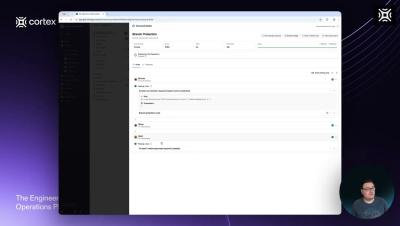
Stop guessing whether your repos meet your branch policies. Start knowing. In this Feature Friday, Senior Engineering Manager Gabriel walks through Cortex's new native support for GitHub branch rule sets and how to use them in scorecards to enforce consistent policies across all your repos. What you'll see: Questions? Reach out to your CSM or drop a comment below.
Customer lifetime value (CLV) is the total revenue a business expects from a single customer over the entire relationship, minus the costs of serving them. The standard SaaS CLV formula: Average Revenue Per Account x Gross Margin % / Monthly Churn Rate. For a $500/month customer with 75% gross margin and 5% churn: CLV = $7,500. That number can swing materially once AI spend per customer is built into gross margin, something many SaaS companies still don't do.
On June 18, OpenAI gave ChatGPT Enterprise admins new credit usage analytics and spend controls. It’s a single view of credit consumption broken down by user, product, and model, default workspace budgets, per-group limits, and a Cost API for pulling the data into their own systems. Two days earlier, Microsoft shipped Copilot Cowork with spending limits, budget allocation, usage alerts, and user-level caps. This is a step in the right direction.
Replace "AI shipped on hope" with an operating model that holds up once real users depend on it. AI quality is multi-dimensional, covering accuracy, tone, safety, and faithfulness to user data, and can't be debugged from outputs alone. Without visibility into what their AI actually did in production, teams miss regressions, reverse-engineer chains by hand, and watch a single bad answer erode trust built over hundreds of right ones.
Modernizing a legacy system serving 20 million devices without users noticing is like replacing a jet engine mid-flight. In this session, YoungJin Jung and Donggen Hong from LG U+ share their 18-month journey transforming a Telco-scale API Gateway from a rigid, proprietary solution into a high-performance, open-source architecture on AWS, and the operational challenges they solved along the way.
In this tutorial you'll learn how to use Uptrace and Grafana together. Uptrace exposes a Prometheus-compatible HTTP endpoint, so you can add it as a data source in Grafana and reuse your existing dashboards without changing metric names or rewriting queries.
In this video, learn what Root Cause Analysis (RCA) is and why it's essential for preventing recurring IT incidents instead of repeatedly fixing the same symptoms. Discover how effective RCA helps IT teams identify the real source of problems, reduce downtime, and improve operational resilience. In this video, you'll learn: Contact Us sales@motadata.com Resources Follow Us on Social Media.
Runtime PR review means validating a code change against live variable state, real execution paths, and downstream service behavior before the merge decision. Not after a checkout regression exposes what the diff missed. As AI coding agents ship PRs faster than any reviewer can mentally simulate execution, static analysis and CI leave a structural gap that only runtime evidence can close. This article explains what that gap looks like, why it recurs, and how to close it with runtime context code review.
Open source software (OSS) is a cornerstone of modern technology. According to the Linux Foundation, it powers up to 90% of software tools used today. Unlike proprietary software, OSS is developed collaboratively, meaning its code is available for anyone to use, change, and distribute. Because OSS projects have historically been driven by developers, they tend to be highly flexible and functional, but they can lack critical usability considerations.