Operations | Monitoring | ITSM | DevOps | Cloud

The latest News and Information on Cloud monitoring, security and related technologies.

Build Custom Field Templates for Application Assessments

Modernization assessments move faster when the structure is already in place. Instead of recreating custom fields, interview questions, and assessment workflows for every customer, you can use a custom field template to standardize how data is collected from the start. This guide shows you how to create a reusable Tidal Accelerator custom field template using Node.js and the Tidal API, so your assessments are easier to repeat, compare, and scale. So you’re starting a modernization practice.
From Prototype to Production With AWS AgentCore

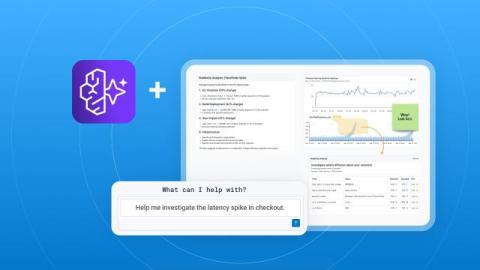
"Hello world, this is your agent speaking!" The agent loop! The LLM is calling tools, the answers are sensible, and the sky's the limit. Now, as you look forward to production, you look for a composable toolset, something that can grow with your use case and system needs. That's what we created with Honeycomb Canvas: a collaborative investigation space where AI agents help you understand, fix, and learn about your system.

GPT-4 API cost 2026: pricing breakdown and how to estimate it

GPT-4 API pricing spans $0.10 to $30.00 per million input tokens across the model family. GPT-4.1 is the current recommended production model at $2.00 input / $8.00 output per million tokens. Legacy GPT-4 still runs at $30.00/$60.00 per million tokens -- 15x more expensive for no meaningful quality gain. For finance and engineering leaders accountable for AI spend, choosing the right GPT-4 variant is the single biggest cost lever on your bill.

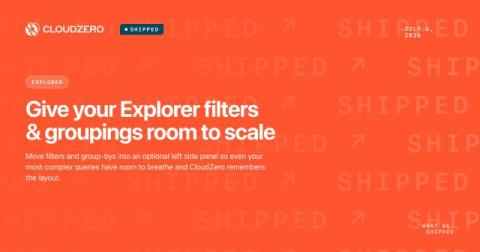
Shipped: Give your Explorer filters & groupings room to scale

The controls at the top of Explorer are great for a simple question. But as your query grows with more group-bys or a stack of filters, those controls start eating into the vertical space you actually want for your data. Now you have the option to move filters and groupings into a dedicated left side panel, so a complex query has room to scale cleanly. Set it once and CloudZero keeps it that way.

Modern IT Infrastructure for Business Continuity, Security and Operational Efficiency

Modern organizations rely on IT infrastructure for almost every part of daily operations. Communication, customer service, accounting, data storage, remote work, application hosting and internal collaboration all depend on stable digital systems. When infrastructure is reliable, employees can work efficiently and customers experience fewer disruptions. When it is outdated or poorly managed, even small technical issues can quickly affect the entire business.

How to Consolidate Your Azure & Multi-Cloud Monitoring and Avoid Tool Sprawl

This is the eighth blog in our Azure Monitoring series, where we look at a challenge many organizations face as Azure and multi-cloud environments expand: monitoring tool sprawl. What starts as a few monitoring solutions for different needs can turn into disconnected dashboards, duplicate alerts, and fragmented visibility.

The entire cloud stack is just pizza and we can't unsee it

The acronym soup is the universal IT rite of passage. So we explained the whole stack with the one thing everyone already understands: pizza. From making the dough yourself to just opening the box, there’s a version for every level of “how much do you actually want to manage.” Alexis can give the full breakdown in the time it takes to decide what you'll order.

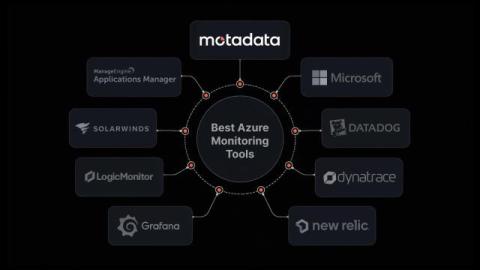
9 Best Azure Monitoring Tools Compared for 2026

When an Azure service slows down or stops responding, you often hear about it from a user before your monitoring says a word. It only gets harder as you scale: Azure now runs about a fifth of the world's cloud workloads (Statista, 2026), and every new service is one more place a failure can hide. By the end, you will have a shortlist for your stack. You will also know which tools to skip, without sitting through nine sales demos to find out.