Operations | Monitoring | ITSM | DevOps | Cloud

Extending Cloud ALM for ERP Operational Success

SAP customers are navigating a period of significant change. Of course, there’s the transition to Cloud ERP and the scheduled end of standard support options for ECC in 2027 – these are well known. Basis professionals will be familiar with changes in support for Solution Manager and its components including monitoring and change management. Landscape Management has been formally discontinued after 2027. The natural assumption is Cloud ALM fills the gap.

SigNoz Cloud Dashboard Schema Is Now Built for AI Agents

A quick walkthrough of SigNoz Cloud's new dashboard schema, redesigned to make dashboard operations by AI agents faster, more reliable, and lighter on tokens. AI agents are increasingly creating and editing observability dashboards. We redesigned the SigNoz Cloud dashboard data model with a structured, strictly validated schema so agents can work against defined fields and paths instead of inferring the dashboard structure.

We Redesigned the SigNoz Trace View for Million-Span Traces

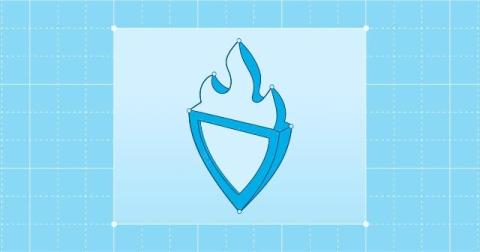
A quick walkthrough of SigNoz Cloud's new trace detail view, with a flame graph that renders 100,000 spans in a single load. AI and agent workloads are producing traces with much higher span counts. We rebuilt the trace detail view in SigNoz Cloud to make investigating large traces faster. Here's what's new.

How KPIs lose their meaning and what to do about it

Once you've published more than a handful of KPIs, you eventually need a way to summarize them. A total cost. An overall health status. An organization-wide SLA. Something that lets you answer the big questions without opening ten different dashboards. Summarizing those into a handful of KPIs usually feels straightforward. You add things together, average them, or collapse several statuses into one. The dashboard becomes easier to read, and nothing looks obviously wrong.

Kepler and Insights: Built From Opposite Directions

Most companies buy AI tools for developers and hope the impact shows up somewhere. A faster sprint. Fewer escaped bugs. Something. What they don’t have is a way to actually see it happening, which means adoption becomes a leap of faith instead of a measured bet. That’s the gap Kepler and GitKraken Insights close together, and it’s worth understanding as one story, not two separate product updates.

Why Your Internet Is Slow: Is It Your Network, ISP, or Your Machine?

Someone on your team says "the Internet is slow." Twenty minutes later, IT finds out the Internet was never the problem. Maybe it was a laptop with a full RAM disk. Maybe it was an ISP outage two towns over that had nothing to do with your office. Misdiagnosing slow Internet wastes time. It sends you down the wrong fix path, like rebooting a router when the real issue is sitting on someone's desktop.

Introducing the next generation of the BigPanda AI Incident Assistant

Effective incident response depends on having all of the context surrounding what’s happening. You have to understand your systems, services, architecture, and teams deeply enough to correctly interpret whatever alert just fired. Too often, that context doesn’t arrive packaged neatly in one place. Gathering and interpreting context correctly under time pressure is one of the most difficult parts of the job.

How I Support Humans in the AI Era

When our company pushed everyone to start using AI tools, I thought about what it would mean for my team. As a remote company, we are already challenged by the lack of organic human connection. Every connection is planned and takes effort, and now, AI adds another layer. People now spend part of their day collaborating with a tool rather than with a person, which can take away from the time we spend learning from each other.

Kubernetes AI SRE Agent Finds a Crash Loop Nobody Asked About: AURA

You ask for a routine health check and expect a clean baseline. What came back was a pod that had restarted 788 times, unrelated to the question. AURA is connected to a Kubernetes cluster and to Prometheus through read-only MCP servers, running as one coordinator with two specialized workers. The prompt is one sentence: check the health of the cluster, and confirm whether all the pods are running. What comes back is not a baseline. AURA names the state as CrashLoopBackOff and attaches the restart count to it.