Operations | Monitoring | ITSM | DevOps | Cloud

The latest News and Information on Cloud monitoring, security and related technologies.

Making Shared GPUs Even Safer with Kubex and HAMi-core

Table of Contents A few months ago, we introduced Kubex support for the KAI Scheduler to improve GPU sharing for production inference workloads. The basic model is simple: The KAI Scheduler handles placement and GPU sharing. Kubex continuously observes usage and adjusts those allocations as demand changes. KAI provides the scheduling foundation. It lets multiple workloads share a GPU while accounting for the amount of GPU each workload requests. Kubex then closes the loop.
Shipped: Self-serve your MCP server credentials

Enterprise agent platforms need a client ID and client secret in hand before they will connect to anything. An admin with the Modify MCP Settings permission can now issue that pair directly in Settings, connect the platform, and manage the credential lifecycle on whatever schedule your security policy requires. No support request, no wait.

The case for preview environments with production data

Before he joined Upsun, Andrew Kester spoiled the biggest sale of a client's year. He was one of two or three web developers at a creative agency that did branding, logos, print, and websites. A design boutique was about to run its annual trunk show, and the discounts and featured brands were meant to stay secret until the reveal on Tuesday at noon. The client asked for a preview. The preview reached production.

If We're Not Up, The Checkout Breaks

Kintsugi puts sales tax compliance on autopilot for 7,300 companies selling into 110 countries, and its tax engine sits inside other companies' checkouts. The answer has to arrive before the shopper finishes paying. "Typically, a customer's expectation is that we are returning the sales tax estimate on the invoice within 100 milliseconds." The cost of missing is not abstract: "For every minute that our sales tax API, if it ever goes down, our customers are not able to collect roughly $4 million in sales tax that they should be collecting.".

Cloud Cost Management for Observability: A Practical Guide

Observability spend is outgrowing infrastructure budgets. What drives the cost up, how pricing models work, and a practical framework to manage it. Sejal Pandey works on content and growth at Last9, writing about observability, reliability, and SRE practices.

Moving Beyond OOM Kills: Introducing Memory QoS in Kubernetes 1.37

Table of Contents For most of Kubernetes’ history, memory management has been a blunt instrument. Cross your limit, and the kernel kills your container. There has been no equivalent to CPU throttling, no graceful backpressure, just a hard stop. With Kubernetes 1.37, that changes: Memory QoS, built on cgroups v2, graduates to Beta and is enabled by default.

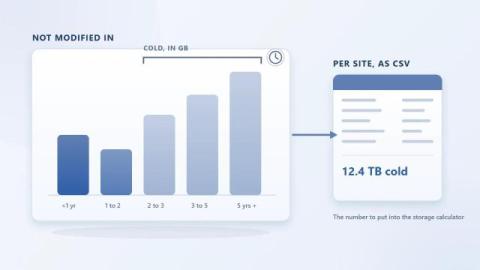
For whoever has to explain the cloud bill to finance every month.

As infrastructure gets more complex, with workloads spread across clouds, regions, and providers, every hop your data takes between them adds up. Where do these costs actually come from? Has your team ever traced a surprise bill back to data movement? With Megaport, cloud egress costs are minimized by routing data privately between providers, avoiding the higher transfer rates associated with public internet routing.

Our Customer Success AI bill tripled. Here's why we're spending more.

Pop quiz: If you spend $40,000 per month on Anthropic, and you’ve got two customers, what’s your cost per customer? If you bypassed the easy answer of $20,000 and said, “Scott, you old trickster, that’s not enough information to answer that question,” you’ve won today’s prize: a lesson in the perils of average costs. Let’s flesh out the situation: You put an AI feature in your product, a document assistant powered by Claude.