Operations | Monitoring | ITSM | DevOps | Cloud

The latest News and Information on Monitoring for Websites, Applications, APIs, Infrastructure, and other technologies.

How I Stream: Solving Tricky Security Challenges and Optimizing Splunk

Greetings Criblers! We’re introducing a new series by the Criblers, for the Criblers called How I Stream! Each month (maybe more frequently–you, too can be featured, share your insights here), we’ll share a quick profile from one of our community GOATS (Greatest of All Time Streamers) sharing use cases and lessons learned. Our first guest goes by Hobbit in the community.

Flowmon 12 - Workflows and UX Improvements

We released Flowmon 12 at the end of February. The new and updated functionality in the latest version has been well received by existing users, and has prompted many new organizations to consider the product. The headline changes in Flowmon 12 are in the blog post Progress Flowmon 12 – Ultimate Enabler of Your Multi-cloud Strategy.

Understanding Kubernetes pod pending problems

Kubernetes pod pending is ubiquitous in every cluster, even in different levels of maturity. If you ask any random DevOps engineer using Kubernetes to identify the most common error that torments their nightmares, a deployment with pending pods is near the top of their list (maybe only second to CrashLoopBackOff). Trying to push an update and seeing it stuck can make DevOps nervous.

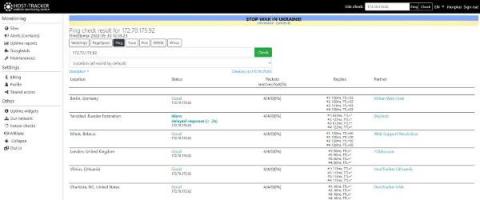
Why the Russia-Ukraine war means companies should monitor website changes closely

The Russian invasion of Ukraine has caused seismic ripples around the globe. Economically, businesses with investments and holdings in Russia have faced unprecedented public pressure to withdraw. Various industries have received supply chain impacts as economic sanctions continue to expand in the West.

Amazon AppStream 2.0 vs Amazon WorkSpaces

Amazon offers two different services, Amazon WorkSpaces and AppStream 2.0, that can be used to deliver apps remotely either streamed via a browser or within a virtual workspace (desktop). Once you understand the differences between the two services the choice is usually clear from the use case. It is in fact common for organizations to use a mixture of both.

Database monitoring - Do's and Don'ts

Enterprises evolve and transform into data-driven businesses, which take valuable insights from the data collected to grow and develop their business. This means that massive chunks of data are collected every second and companies search for ways to process it faster, secure and more accurately. The more data is processed, the smarter is the organisation and the greater potential for data-driven decisions is available.

Accelerate incident investigations with Log Anomaly Detection

Modern DevOps teams that run dynamic, ephemeral environments (e.g., serverless) often struggle to keep up with the ever-increasing volume of logs, making it even more difficult to ensure that engineers can effectively troubleshoot incidents. During an incident, the trial-and-error process of finding and confirming which logs are relevant to your investigation can be time consuming and laborious. This results in employee frustration, degraded performance for customers, and lost revenue.

NoSQL Database Monitoring with DX UIM

A NoSQL database provides a mechanism for data storage and retrieval, without using the tabular relations associated with relational databases. Originally referred to as "non-SQL" or "non-relational" databases, NoSQL databases are increasingly used in big data and real-time web application environments. NoSQL systems are also sometimes called “Not only SQL” to emphasize that they may support SQL-like query languages or sit alongside SQL databases in polyglot-persistent architectures.

Benefits of using an Application Performance Monitoring solution in Banks & How can banks optimize their performance using an APM tool?

Monitoring business-critical applications is just as vital as deploying them since their performance directly impacts your ability to meet business goals. When it comes to the banking industry, ensuring superior application performance of applications is crucial to enabling smooth banking operations. But it’s also complex since banks deploy interconnected applications across on-premise and cloud.

How to Surface Relevant Performance Data

Your applications most likely consist of multiple components. These components could be written in different languages, with each individually instrumented with Sentry’s SDK. The goal of our tracing solution is to make sure developers get a full picture of the data captured within their tech stack. Tracing allows you to follow a request from the frontend all the way to your backend application and back.