Operations | Monitoring | ITSM | DevOps | Cloud

Sponsored Post

From Silos to Collaboration: How to Democratize Data in Product Analytics

Companies who develop software products generate massive quantities of product performance and user engagement data that can be analyzed to support decision-making about everything from feature planning and UX design to sales, marketing, and customer support. Leveraging product data throughout the enterprise represents a significant opportunity to achieve a competitive advantage, but challenges like siloed data systems, poor data literacy, and the complexity of data analytics in the cloud can prevent organizations from making full use of their raw data.
Mastering the Trace Drilldown: How to Reduce MTTR with Coralogix

Stop the "Scavenger Hunt" during incidents. In this video, we walk through the new Coralogix Trace Drilldown, now GA for all customers. Learn how to move from high-level trace views to deep span insights in a single, unified workspace—without ever losing context. Whether you're investigating a latency spike or a failing microservice, the Trace Drilldown helps you answer "Where is the bottleneck?" from three different perspectives in one frame. What you’ll learn.

Ep 36: Do not resuscitate: Legacy tech in modern medicine

In this episode of Masters of Data, we dig into the cybersecurity nightmare that is modern healthcare IT, from ransomware attacks shutting down entire hospitals to IoT medical devices running software older than some of our passwords. We explore why healthcare organizations make such attractive targets for cybercriminals, and why the combination of life-or-death stakes, skeleton-crew security teams, and Windows-95-era equipment is a recipe for chaos.

Digital Trading: Why "Healthy Systems" Still Lose Trades

Digital trading firms operate in environments where milliseconds determine profit and loss. During volatile market conditions, platforms can appear fully operational while execution quality quietly degrades. When prices shift in so quickly, even a minor drift in your order-routing path means your competitors are exploiting the delta, while your platform appears perfectly green. For trading firms, observability is not just about uptime.

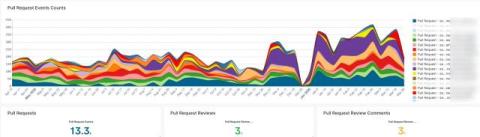
Pull Request Velocity as a Proxy for AI Usage for Software Development

While AI have usage has been growing steadily for the last several years, the LLM models noticeably improved around the end of 2025. Specifically, they become more viable for software development. We are seeing the results. The feature and product delivery has picked up. One way to visualize this is by looking at the number of pull requests for your organization / software development teams. This chart shows the number of Github pull requests created by a team. Can you spot when AI usage increased?

Logging in Next.js is hard (But it doesn't have to be)

A typical Next.js deployment can execute code in up to three different runtimes: Edge, Node.js, and the browser. You may already be capturing logs from server-side code, but if you are not capturing the full request from middleware through server rendering to the browser, you are missing a lot of debugging info when things go wrong. TL;DR: A typical Next.js deployment can run in up to three environments; Node, Edge, and the browser.

Beyond the Data Lake: Leading Cross-Domain Operational Intelligence

As we wrap up RSAC, one theme that repeatedly emerged in conversations with security leaders is that the modern enterprise has reached a critical inflection point where the velocity of machine-generated telemetry has outpaced the capacity of traditional architectures. This trend requires an approach that moves beyond the storage of information to the activation of it in ways that don’t simply exacerbate alert fatigue.

Cribl Search Demo: Security Investigation

In this demo, Nate Zemanek , Staff Solutions Engineer, shows how Cribl Search runs fast investigations. As an open data platform, Cribl Search lets you pull data from multiple sources and query everything from a single pane of glass. You’ll see how to run fast queries with the new lakehouse engine, search historical data with a federated approach, and bring everything together for full context. Then, use Notebooks to collaborate and share findings across teams to understand what happened—faster.

Coralogix Earns 196 Badges in G2 Spring 2026 Reports Across 15 Categories

We’re proud to announce that Coralogix has earned 196 badges across 15 categories in the G2 Spring 2026 Reports, our strongest G2 performance to date. Placing in 369 reports, this represents a significant leap from Spring 2025, when we placed in 318 reports and earned 141 badges. These results are a direct reflection of the trust our customers place in Coralogix and their willingness to share honest feedback on the world’s largest software review platform.

Bridging the gap between mobile experience and technical reality

For mobile-first organizations, the distance between a “slow app” and a “resolved ticket” is often filled with guesswork. Mobile performance is notoriously difficult to capture because it lives at the intersection of device hardware, network stability, and local code execution. Today, we are closing that gap with the launch of Coralogix Mobile Performance.

Benchmarking Kubernetes Log Collectors: vlagent, Vector, Fluent Bit, OpenTelemetry Collector, and more

At VictoriaMetrics, we built vlagent as a high-performance log collector for VictoriaLogs. To validate its performance and correctness under a real production-like load, we developed a benchmark suite and ran it against 8 popular log collectors. This post covers the methodology, throughput results, resource usage, and delivery correctness. Collectors under the test: We’ve made all benchmark configurations and source code public, so you can reproduce and verify the results independently.

Architecting Log Management for Privacy and Scale without the Headache

As companies grow, they inevitably hit a wall: observability data explodes while privacy requirements become stricter. For years, engineers have faced a painful tradeoff—either ship petabytes of sensitive data to a central cloud (incurring egress costs and compliance risks) or manage a complex self-hosted stack that is painful to scale.

Claude Code is running bash commands on your infrastructure. Here's how to watch it.

I’ve been staring at Claude Code telemetry for the past few weeks, and I keep noticing the same thing: most teams drop it into their environment, say “it’s amazing,” and have absolutely no idea what it’s actually doing at the system level. That’s fine for a personal dev tool. It’s not fine when you’ve rolled it out to 50 engineers.

Monitor schema health with engine.schema_fields: Structure, Drift, and Volatility

If you’ve worked with an observability pipeline, you’ve probably experienced schema problems: a field disappears, a type shifts from string to number, or a new label quietly appears. The causes are everywhere. Different teams adopt different naming conventions. A dependency upgrade changes the shape of a library’s log output. Over time, these small, reasonable decisions compound into schema sprawl: dashboards break, alerts misfire, and teams scramble to find out what happened.

From Data Chaos to Results: The New Data Strategy for the Agentic Era

The world is generating data at a pace that defies the human ability to draw insights and comprehend. By 2028, we’ll reach almost 400 zettabytes of global data—with over 55% of it coming from machines talking to machines. For enterprises, this isn’t just a storage problem; it’s an existential challenge.

Choosing a JavaScript logging library: The 2026 definitive guide

With AI writing more and more of our code, properly monitoring and debugging that code has become an increasingly critical part of the development workflow that can't be ignored. Luckily, we have more time than ever to implement the right tools to do so. Implementing a production-ready logging solution is easy to do, and provides you and your LLM Agents with a wealth of debugging information from your app, across users and environments.

OpAMP for OpenTelemetry: Managing Collector Fleets and Introducing the New OpAMP Gateway Extension

Today, Bindplane is launching the OpAMP Gateway Extension in alpha — a new component that extends OpAMP fleet management into network-segmented and firewalled environments where direct agent-to-server connectivity is not possible. It also addresses fleet scaling by fanning many agent connections into a small upstream pool, reducing connection load on the OpAMP server. We also hope to donate the OpAMP Gateway Extension upstream to the OpenTelemetry project and welcome community contributions.

Bindplane Community Call in March 2026

Tune in for the Bindplane Community Call in March to learn more about SSO going GA, a wave of new updates, connectors, sources, and destinations, including a VictoriaMetrics partner integration — and a preview of what we're building next. We'll also share details on meeting the Bindplane team at KubeCon + CloudNativeCon Europe in Amsterdam. As always, hands-on demos and a live Q&A at the end.

Mastering the Diagnostic pivot from Health Policy to Pod

In the world of modern microservices, scale is a necessary challenge. Enterprise service inventories start modestly with a handful of components, only to balloon to hundreds over time. Traditional monitoring approaches cannot support that weight. The more organizations build, the more work they create, often only to keep systems running.

Log Correlation for Security and Performance Monitoring

International travel comes with amazing sights, cultural experiences, and local delicacies. However, most travelers know that it comes with differing economies that impact a money’s value and various currencies. When people need cash, they have to translate the money in their wallets to the local currency, which means different coins and bills. Depending on the exchange rate, the currency’s value can change as the person moves from one country to another.

The future of Search is here: Faster, simpler, AI-driven

Do more with less. That’s the mandate we’re all hearing. AI has fundamentally changed how we work. Modern AI workloads generate 10-100x more queries than humans ever could, pushing legacy architectures past performance limits. And the audacity of it all? Legacy logging vendors continue to raise costs without delivering meaningful innovation. IT and security teams are still forced to choose between speed and retention. Investigations are still slow. Data onboarding is still painful.

Unleashing Resilience: Why the Agentic Era Demands a Unified Data Fabric

Imagine starting your day with a dozen disconnected apps where your calendar does not sync with your reminders, your maps do not know your appointments, and your contacts are not linked to your messages. You would constantly be scrambling, missing key details, and reacting late to what matters most. In our personal lives, we depend on tight integration to keep pace with the world. In business, the stakes are even higher.

The architecture advantage: Why the data layer decides the AI race

Dozens of startups are sprinting to build the next “agentic SIEM” that can autonomously detect, investigate, and respond to threats. They’re well-funded, well-marketed, but structurally hollow. Here’s what it usually looks like: an LLM layer on top of a thin orchestration engine on top of fragmented or customer-hosted data lakes. While it looks impressive in a demo, it quickly falls apart in production. Why? It’s not built on a strong foundation.

What's New at Cribl 4.17: On release days, we wear teal.

In this episode, Leon runs through all the updates in Cribl release 2603, which includes a massive update to Cribl Search, the ability to detect PII and secrets in the background as part of Cribl Guard, and two cool enhancements to Cribl Packs - monitoring and enhanced routing. Try Cribl Now! Sandboxes let you get hands-on experience with Cribl without the fuss or friction.

What is Cribl Guard background detection?

Security and compliance teams need to know exactly what sensitive data is flowing through their environments and where it’s going. ​​Because surprise PII is no one’s favorite kind of surprise. Meanwhile, upstream teams are shipping new apps, changing schemas, adding fields, and generally moving fast. However, you can only manage and protect the data you currently know of and expect. But sensitive data has a habit of showing up where no one expected it…

Meet the new Cribl Search: Faster investigations with AI

Get a quick look at the new Cribl Search experience—built to help teams investigate faster, onboard data easily, and get answers from their logs without complex query languages. In this quick overview, we show how Cribl Search helps you move from raw data to insights in minutes: The result? Faster investigations, simpler workflows, and powerful AI-assisted analysis across your telemetry. Learn how the new Cribl Search makes exploring and analyzing data easier for everyone—from experienced analysts to teams just getting started.

What is AI really going to bring to the table when it comes to migration?

Explore the real capabilities and limitations of AI in system and SIEM migrations. Learn where AI accelerates processes and where human review remains essential. Additional Resources: About Elastic Elastic, the Search AI Company, enables everyone to find the answers they need in real time, using all their data, at scale. Elastic’s solutions for search, observability, and security are built on the Elastic Search AI Platform — the development platform used by thousands of companies, including more than 50% of the Fortune 500.

Navigating Machine Data at Infinite Scale: Why the Modern Enterprise Demands a New Data Architecture

In the modern enterprise, data is no longer just a byproduct of business; it is the lifeblood. However, we have moved beyond the era of simple transactional data. We are now living in the age of machine data.
Olly for SREs: 3 ways I actually use it in production

There’s a moment after an alert where you’re not fixing anything yet. You’re trying to answer a much simpler question: Is it actually down? Sometimes it’s obvious. Sometimes it’s 20 alerts at once with no clear starting point. Sometimes it’s a small upstream degradation that might cascade. Sometimes it’s just a spike that resolves on its own. That first phase is orientation. Is the signal real or transient? Is it isolated or spreading? Root cause or symptom?

How AI lets you talk to your company's data and get answers instantly

In this conversation recorded at Elastic’s New York office, three product leaders discuss how AI agents are transforming enterprise software. The discussion features Steve Kearns (general manager, Search solutions at Elastic), Mike Nichols (general manager, Security solutions at Elastic), and Baha Azarmi (general manager, Observability at Elastic). They explain how Elastic Agent Builder allows teams to interact with their data using natural language instead of complex queries.

How LLMs can help boost productivity

Learn how large language models (LLMs) are transforming productivity in business, coding, research, and daily workflows. Discover practical ways to use AI tools to automate tasks and improve efficiency. Additional Resources: About Elastic Elastic, the Search AI Company, enables everyone to find the answers they need in real time, using all their data, at scale. Elastic’s solutions for search, observability, and security are built on the Elastic Search AI Platform — the development platform used by thousands of companies, including more than 50% of the Fortune 500.

Routing OpenTelemetry logs to Sentry using OTLP

If you've already instrumented your app with OpenTelemetry, you don't have to rip it out to use Sentry. Two environment variables and your logs start flowing into Sentry, no SDK changes, no re-instrumentation. Here's how to set it up in a sample app, and when the native Sentry SDK might be the better call.

Skills vs. MCP: You're probably reaching for the wrong one

Everyone is adding Model Context Protocol (MCP) servers to everything right now. And I get it. MCP is clean. It’s standardized. You write a server, expose some tools, and suddenly your LLM can query your log platform, pull a dashboard, and fire an alert. It feels like the right abstraction. But I’ve watched teams at serious companies burn weeks building MCP integrations for workflows that should have been skills, and build skills for things that genuinely needed MCP.

How does AI enhance search?

Explore how artificial intelligence enhances search engines through semantic understanding, vector embeddings, and contextual retrieval. Learn how AI-powered search delivers faster and more accurate results. Additional Resources: About Elastic Elastic, the Search AI Company, enables everyone to find the answers they need in real time, using all their data, at scale. Elastic’s solutions for search, observability, and security are built on the Elastic Search AI Platform — the development platform used by thousands of companies, including more than 50% of the Fortune 500.

Centralizing Docker Logs for Observability and Security

Most people can remember the old game of telephone, the stream of whispered sentences or phrases across a group of kids. At each transmission, a different piece of information gets lost or misheard, leaving the last person with an incomplete or incomprehensible statement. Managing Docker logs can feel the same way, especially when an error message is lost or an error message lacks context.

What You Need to Know About Choosing a Data Center Location for SolarWinds Papertrail

When signing up for SolarWinds Papertrail, you’ll see an option to choose where your data is stored. What does this mean? What should you consider when choosing a data center location? In this blog, we’ll explore how you can determine where to store your data. First off, the region you choose is the physical location where your data is stored. Once you select a region, you can’t migrate data from it, so it’s important to choose carefully.

Responsible transformation: Agentic AI for the public sector

The world is transforming, and artificial intelligence, especially agentic AI, is quickly becoming embedded across private and public sectors. For government agencies, law enforcement, and mission-critical organizations, embracing this new reality is uniquely challenging. On the one hand, agentic AI promises measurable improvements: modernized IT workflows, faster analysis, improved citizen services, and operational efficiency.

5 Essential Capabilities that Make Coralogix an Observability Powerhouse

Sometimes observability can feel like a second job. With many traditional tools, users must become experts in a proprietary language to ask a simple question. In these cases, developers or SRE’s can find themselves spending more time manually sifting through raw text, building complex data pipelines from scratch, and bouncing between fragmented dashboards than actually solving problems.

When was the term artificial intelligence coined?

Discover when the term artificial intelligence was first introduced and how it shaped the future of AI research and machine learning. This video breaks down the origin of AI and its historical significance in modern technology. About Elastic Elastic, the Search AI Company, enables everyone to find the answers they need in real time, using all their data, at scale. Elastic’s solutions for search, observability, and security are built on the Elastic Search AI Platform — the development platform used by thousands of companies, including more than 50% of the Fortune 500.

Protecting sensitive PII data with effective log management

Organizations rely heavily on logs or tracking changes, troubleshooting issues, and addressing authentication attempts. Although these logs are essential for ensuring a smooth onboarding experience, they often contain users' personally identifiable information (PII), including names, email addresses, phone numbers, and sometimes location or device details. The following sample log illustrates this scenario: 2025-11-01 09:12:33 ACCOUNT_CREATED - New user registered: Name: Michael Scott, Email.

Why we open-sourced AURA: Infrastructure for production AI

Over the last year, I’ve talked to dozens of SRE teams about AI. The excitement is real, but conversations hit a wall when we get to production reality. How does an agent manage complex context without losing the plot? How does it avoid hallucinating relationships between signals? Who owns the orchestration logic that ties it all together? We realized the bottleneck wasn’t model intelligence. It was the lack of a reliable logic layer between the data and the model.

System Datasets: From Alert Fatigue to Optimized Notifications

Alert fatigue rarely begins as a single mistake. It grows as systems scale, teams grow, and “just in case” monitoring becomes the default. A few extra alerts, another threshold, and soon the on-call channel becomes overwhelmed. Engineers get interrupted for noise or stop trusting pages; either way, real signals get missed. Reliability drops, and productivity quietly declines. Most teams respond tactically: tune thresholds, change notifications, suppress noise.

Tech Talk | Application management with Targeted Application Install for Victoria Experience

Apps create endless opportunities to leverage the strengths of the Splunk Cloud platform. Until now, you could only install Splunk apps across every search head on a Splunk Cloud Platform Victoria Experience deployment. With TAI you now have fine-grained control over which search head groups will run which apps.