Operations | Monitoring | ITSM | DevOps | Cloud

Why OpenSearch Serverless is a Game-Changer

AWS OpenSearch Service is a fully managed service supplied by Amazon Web Services (AWS) for deploying, managing, and scaling OpenSearch clusters in the cloud. OpenSearch Service was formerly known as Amazon Elasticsearch Service (Amazon ES) but was renamed in 2021 due to changes in the open-source project it is based on. In 2022, AWS OpenSearch Serverless was announced.

BindPlane Summer '24 Release

As the summer heats up, so does innovation at observIQ. We are thrilled to announce a number of exciting updates for BindPlane, the industry’s first OTel-native telemetry pipeline. Read on for a summary of what’s new in BindPlane, themed and tuned with the excitement and energy of NBA Jam’s legendary announcer, Tim Kritzow.

5 Ways to Slash Storage Costs

Managing and storing vast amounts of data is no small feat, and can be a real drain on resources. Organizations often need to retain data for extended periods — sometimes up to seven years — to comply with regulations. It’s a common dilemma: data volumes keep skyrocketing, but budgets don’t follow suit. IT and security teams face immense pressure to handle this data deluge while navigating procurement pitfalls.

Navigating the Data Current 2024: Exploring Cribl.Cloud Analytics and Customer Insights

IT and security teams dealt with massive changes a few short years ago. New deployment environments added to the monitoring toil, while architectural shifts complicated IT operations’ cost and performance effectiveness. On the security side, the protected perimeter expanded exponentially. These factors resulted in a huge increase in data volumes and complexity, leading teams to turn to tooling and platforms to cope with their data.

5 Ways Logz.io's Log Management UI Beats Kibana & OSD

At Logz.io, we’ve found that for most organizations observability challenges start with log management. Today more than ever, log management is a highly complex practice that involves mountains of ephemeral data, and the related obstacles are preventing people from achieving their observability goals, full stop. That’s why we designed our new log management UI to simplify the daily tasks of SREs and developers in managing logs and diving into data.
Sponsored Post

Improving Patch and Vulnerability Management with Proactive Security Analysis

Vulnerability management is the continuous process of identifying and addressing vulnerabilities in an organization's IT infrastructure, while patch management is the process of accessing, testing, and installing patches that fix bugs or address known security vulnerabilities in software applications. Vulnerability management and patch management are crucial SecOps processes that protect IT assets against cyber threats and prevent unauthorized access to secure systems.

Top Nagios Alternatives for Advanced Network Monitoring

Monitoring the health and performance of IT infrastructure is crucial for practically all organizations to ensure the reliability, availability, and efficiency of an organization's technology environment. By continuously tracking servers, network devices, applications, and services, organizations can promptly detect and address issues before they escalate into significant problems and impact customers.

This Month in Datadog: DASH 2024 recap, featuring LLM Observability, Log Workspaces, and more

Datadog is constantly elevating the approach to cloud monitoring and security. This Month in Datadog updates you on our newest product features, announcements, resources, and events. To learn more about Datadog and start a free 14-day trial, visit Cloud Monitoring as a Service | Datadog. This month, we’re recapping our flagship conference, DASH.

How to Ship AWS Cloudwatch Logs to Any Destination with OpenTelemetry

Observability and log management are needed for a strong IT strategy. Two essential tools for these purposes are AWS CloudWatch and OpenTelemetry. AWS Cloudwatch provides real-time data and insights into AWS-powered applications' health, performance, and efficiency. On the other hand, OpenTelemetry is an open-source observability framework that assists developers in creating, gathering, and exporting telemetry data (such as traces, metrics, and logs) for analysis.

See Your Structured Logs in the Explore Data tab

There's a new way to flip through your data in Honeycomb, released this week! It's super for looking at structured logs. It's called: Explore Data. Get directly at the logs, spans, events, or metrics that power the fast analysis you can do with Honeycomb. See all the fields, the whole variety of values — now ordered by timestamp, with pagination. Modify your query and graphs right from the data table. It's all connected!

Dynamic Application Security Testing at Cribl

Dynamic Application Security Testing (DAST) is a type of security testing that actively exercises and inspects a web application for security vulnerabilities. A DAST scanner sends an assortment of payloads to the target application, typically through HTTP requests for web applications, then analyzes the responses and behavior to detect vulnerabilities. DAST is language and framework agnostic, allowing for security scans against any web application with careful configuration.

Install The Splunk Distribution of OTel Collector in K8s with Helm

In this video, I’ll show you how to install the Splunk Distribution of the OTel Collector using a Helm Chart. We’ll walk through constructing the necessary Helm commands using the K8s Integration Wizard in Splunk Observability Cloud, and then deploy the collector to a cluster. We’ll then verify that the cluster and its services are being monitored in Observability Cloud’s Kubernetes Navigators, and then briefly walk through the values.yaml file of the Helm chart as well as the Otel Collector’s configuration.

Elastic vs Splunk [Detailed Comparison 2024]

Elasticsearch and Splunk are two leading solutions renowned for their capabilities in processing, analyzing, and visualizing large datasets in real-time. Both platforms have carved out significant roles in the fields of data analytics and log management, each offering unique features tailored to different needs. This article aims to provide a comprehensive comparison of Elasticsearch and Splunk, highlighting their strengths and weaknesses, and introducing Uptrace as a compelling alternative.

Why Your Telemetry(Observability) Pipelines Need to be Responsive

At Mezmo, we consider Understand, Optimize, and Respond, the three tenets that help control telemetry data and maximize the value derived from it. We have previously discussed data Understanding and Optimization in depth. This blog discusses the need for responsive pipelines and what it takes to design them.

Grafana Loki vs. ELK Stack for Logging: A Comprehensive Comparison

With the increasing complexity of modern applications, log management solutions have become synonymous with troubleshooting, monitoring, and ensuring application reliability. Moreover, choosing the right tools can significantly impact your application’s performance, efficiency, and overall operational costs. Two powerful tools that often come up in these discussions are Grafana Loki and the ELK Stack (consisting of Elasticsearch, Logstash, and Kibana).

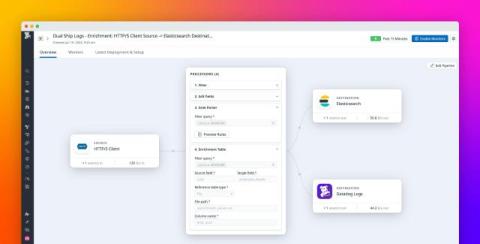
Transform and enrich your logs with Datadog Observability Pipelines

Today’s distributed IT infrastructure consists of many services, systems, and applications, each generating logs in different formats. These logs contain layers of important information used for data analytics, security monitoring, and application debugging. However, extracting valuable insights from raw logs is complex, requiring teams to first transform the logs into a well-known format for easier search and analysis.

WebAssembly: The Next Frontier in Cloud-Native Evolution

Kubernetes has just reached its 10th anniversary, signifying the maturity of the containers movement. Now it’s time to explore the next frontier in cloud-native evolution: WebAssembly, a.k.a. WASM or Wasm. Moving beyond containers and Kubernetes, WASM bears the promise to revolutionize the cloud landscape with unparalleled performance, portability, and security.

Introducing Mobile Real User Monitoring (RUM)

Human attention spans are seemingly shorter than ever, and your mobile application users are, unfortunately, no exception. Over 70% of users abandon an app if it’s taking too long, with half of these users waiting no more than three seconds. Even minor delays or errors can lead to significant user drop-off, negatively impacting your app’s success and user satisfaction.

From Necessity to Opportunity: The Customer Push for SIEM Options

The SIEM market attracts attention for a variety of reasons. First, it is dominated by a number of large players but there are a range of smaller companies vying for market share. It is also a market generally accessible to new entrants. There’s always a new company pitching a different spin on SIEM, whether it’s a new architectural model in the cloud, faster analytics from running on a third-party data warehouse, or leaning into new, undefined terms like a security data fabric.

How to Build a Custom OpenTelemetry Collector

Telemetry data collection and analysis are important for businesses. We're diving right in to explain the ins and outs of the OpenTelemetry Collector, including its core components, distribution selection, and customization tips for optimal data collection and integration. Whether you're new to OpenTelemetry or expanding your capabilities, this will help you effectively use the OpenTelemetry Collector in your observability strategy.

Securing the Foundation of Cribl Copilot

Integrations are the bread and butter of building vendor-agnostic software here at Cribl. The more connections we provide, the more choice and control customers have over their unique data strategy. Securing these integrations has challenges, but a new class of integrations is creating new challenges and testing existing playbooks: large language models. In this blog, we are going to explore why these integrations matter, investigate an example integration, and build a strategy to secure it.

How OTel Empowers You to Handle Unified Data

Discover the power of OpenTelemetry to consolidate your telemetry data. Our expert-led workshop demonstrates standardization techniques for metrics, logs, and traces. Delve into real-world applications, including capturing Prometheus metrics, managing logs with FluentD/Bit, and collecting traces with Jaeger.

Introduction to Ingesting Logs into Loki with Fluentd and Fluent Bit | Zero to Hero: Loki | Grafana

Have you just discovered Grafana Loki and plan to use FluentD or Fluent Bit as your telemetry collector? Or are you trying to decide which agent is right for you? In this "Zero to Hero" episode, we cover the basics of FluentD and Fluent Bit, highlighting their differences and helping you determine when to use one over the other. Additionally, we guide you through configuring both agents' Loki plugins to write logs directly into Loki.

Cribl's Blueprint for Secure Software Development.

What does it take to build software for the most security-demanding customers worldwide? At Cribl, building secure products is integral to our engineering identity. We have established a secure software development lifecycle that is both culturally and policy-driven, integrating product security tooling and processes into every architecture review, pull request, and release, whether major or minor.
Sponsored Post

CloudFabrix "Splunkify" for Cisco-Splunk

Splunk and CloudFabrix are both powerful tools in the realm of IT operations management, but they serve different primary functions, have different use cases and are complementary to each other. Splunk focuses on organizations requiring real-time visibility into IT operations with powerful search and analysis capabilities for large volumes of data, real-time monitoring and alerting for IT operations, log management, security incident response, Observability, and rich visualizations for AIOps.

How to Cut Through the Chaos of Custom App Log Management

In modern IT environments, logging has become an integral part of application development and operations. Logs, metrics, and traces allow organizations to alert on events, monitor performance, and troubleshoot issues effectively. However, as applications scale and generate an increasing volume of logs year over year, managing them efficiently becomes a daunting task for engineering teams and budget makers.

Logz.io Earns G2 Badges for Easiest to Use and Easiest Setup - AGAIN!

There’s no question that achieving end-to-end observability is among the most challenging tasks facing engineering and ops teams today. A quick look back at the 2024 Observability Pulse survey throws this conclusion into stark relief as: Logz.io is committed to making observability smarter, faster, and easier — from data ingestion, to troubleshooting, to managing costs.

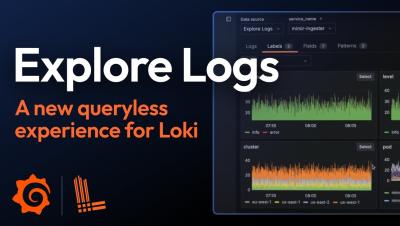
Get insights from logs without writing a query: Explore Logs is in Public Preview

Whether it’s 3 in the morning and you’re trying to resolve an outage, or you’re testing a new feature and you need to resolve a recurring issue so you can move on to your next task: time is of the essence. Wouldn’t it be great if your observability tooling could direct you to your “aha” moment, without you needing to fumble with writing a query?

How Data Profiling Can Reduce Burnout

One of the most common sentiments across the industry, let alone this world, is burnout. Burnout is prevalent, the World Health Organization (WHO) estimates it costs the global economy $1 trillion dollars a year. A Gallup poll equated that to $3,400 lost for every $10,000 of salary due to lack of productivity. This problem isn’t ending anytime soon either, with the global Cybersecurity industry alone having a talent shortage of 4 Million people.

Explore Logs - A new queryless experience for Loki | Grafana

Mat Ryer takes you through the new way to explore your logs using a queryless, click-based user experience for Grafana Loki. Grafana Cloud is the easiest way to get started with Grafana dashboards, metrics, logs, and traces. Our forever-free tier includes access to 10k metrics, 50GB logs, 50GB traces and more. We also have plans for every use case.

Cribl's Blueprint for Secure Software Development

Cribl is a customer first company. Building high value, secure-by-design software for security and IT teams has been by far the most gratifying experience of my professional career. As a security professional that deeply believes in Cribl’s product and mission, I share the excitement of changing forever how our customers operate and enabling them to protect their organizations; working at Cribl has been my greatest calling.

Mezmo Edge Explainer Video

Ensuring access to the right telemetry data - like logs, metrics, events, and traces from all applications and infrastructure are challenging in our distributed world. Teams struggle with various data management issues, such as security concerns, data egress costs, and compliance regulations to keep specific data within the enterprise. Mezmo Edge is a distributed telemetry pipeline that processes data securely in your environment based on your observability needs.

Why AI solutions aren't moving to market as quickly as imagined

With all the buzz around ChatGPT and the rapid mainstreaming of generative AI, 2024 was predicted to be the year of AI. While the market certainly talks a lot about AI this year, we’ve yet to see much of it in production environments. Events are a great chance for tech companies to showcase or announce new innovations to the market.

Calling All MSSP's and MDR's! Cribl.Cloud is Here for You!

Being a Managed Security Service Provider (MSSP) or delivering a Managed Detection and Response (MDR) service is hard. You’re doing the jobs that are so hard that large swaths of organizations turn to you to handle those complex jobs for them. MSSP/MDR tech stacks are dynamic and highly customized, allowing for competitive offerings at competitive prices.

How to Send Python Logs to Loggly

Logging in a Python application is straightforward. When you have good logs, you have better visibility into application health. You can monitor performance and track user activity. You’re better equipped to debug errors. Life is good. The challenges come when your application grows more complex. Perhaps your Python code is part of a broader application, or you have services distributed across multiple machines or clouds.

ROI for GenAI: Splunk to Sumo Logic Transformer

Tool consolidation outcomes have driven some customers to drop Splunk and consolidate their log analytics use cases on Sumo Logic. Long-term Splunk customers with many dashboards, saved searches and monitors understandably want to retain a consistent experience for end users. As a result, a replacement strategy requires migration.

Unleashing the Power of OpenSearch k-NN

K-NN (k-nearest neighbors) is a widely used machine learning (ML) recommendation algorithm, it is used to locate nearby documents based on vector dimensions. The algorithm can be and has been applied to numerous different use cases including image recognition, fraud detection, image recognition, and ‘other songs you might like’ feature in a music application. KNN uses proximity to provide classifications and predictions regarding the grouping of an individual data point.

How Logz.io Provides Trustworthy Observability through AI

The business of observability is all about data: what you’re observing in the data, how you’re visualizing it, what it indicates about the state of your environment, and how to address issues that may occur. Creating your own perspective for observability, and understanding what you’re seeing, can be difficult.

Optimizing Data Access: Best Practices for Partitioning in Cribl

The more customers I talk to, the more I see a trend toward wanting a low-cost vendor-agnostic data lake. Customers want the freedom to store their data long-term and typically look to object stores from AWS, Azure, and Google Cloud. To optimize for data access, users will partition their data into directories to optimize for use cases such as Cribl Replay and Cribl Search. Only relevant files will be accessed for rehydration or search by partitioning data.

Data Optimization Technique: Route Data to Specialized Processing Chains

In most situations, you will have several sources of telemetry data that you want to send to multiple destinations, such as storage locations and observability tools. In turn, the data that you are sending needs to be optimized for its specific destination. If your data contains Personally Identifying Information (PII) for example, this data will need to be redacted or encrypted before reaching its destination.

How to Monitor SNMP with OpenTelemetry

With observIQ’s contributions to OpenTelemetry, you can now use free, open-source tools to easily aggregate data across your entire infrastructure to any or multiple analysis tools. The easiest way to use the latest OpenTelemetry tools is with observIQ’s distribution of the OpenTelemetry collector. You can find it here. In this blog, we cover how to use OpenTelemetry to monitor SNMP.

Syslog: Even Better Best Practices

The Cribl Syslog source is our most commonly used input type. Cribl Stream can act as your edge and/or central syslog server, giving you more capability while easing management tasks. In this blog post we’ll go over a brief history of syslog. Then we’ll dive into best practices for standing up Cribl Stream as a syslog server, tuning the server, and other tips for running a high performance syslog platform.

Mastering Log Monitoring: Boost Your IT Operations

With the development and increased usage of cloud-native technologies, containers, and microservices-based architectures, log monitoring has become a fundamental component of effective management for organizations. Logs offer users insights into occurring issues and assist them in understanding how their software performs over time, where it excels, and where it fails.

Discover Financial Services cuts costs and accelerates data retrieval with Elastic Observability

Learn how Discover Financial Services helps its customers achieve a better financial future by partnering with Elastic. Discover utilizes Elastic Observability for its centralized logging platform. Users now have improved monitoring capabilities to help solve issues.

End-to-end SAP Observability with Elastic, Google Cloud, and Kyndryl: A deep dive

Tens of thousands of companies in the world, across almost all industries, from midsize to large enterprises, rely on robust, efficient complex SAP systems to power their core operations. From sales to finance, from warehouse management to production planning and execution, business’s continuity, revenue, and customer success highly depend on processes running on enterprise resource planning (ERP) architectures.

Building a Data Engine to Power the Future

In today’s digital era, data has become an integral part of every organization. The exponential growth of data continues to accelerate, with projections indicating a compound annual growth rate of 28% for data creation. While this surge in data presents vast opportunities, it also brings substantial challenges in terms of management and value extraction. This is where the concept of a data engine comes in. It serves as the core of your data infrastructure, functioning like a central nervous system.

How to customize your Loki deployment with Ansible

Michal Vaško is a DevOps engineer at cloudWerkstatt, with a passion for open source technology and a deep love for observability. While operations or platform teams have long relied on visibility into metrics to react swiftly, the idea of doing the same thing with logs was once just a dream. Thankfully, Grafana Loki has revolutionized the logging stack, giving you the same level of visibility with logs that you get with metrics.

The Top 8 Kafka Monitoring Tools

Apache Kafka has risen as a pivotal element in modern distributed systems, transforming data processing, storage, and distribution across diverse applications. Kafka, developed by Kafka, is an open-source distributed event streaming platform. It is designed to efficiently manage high volumes of real-time data, acting as a distributed messaging system.

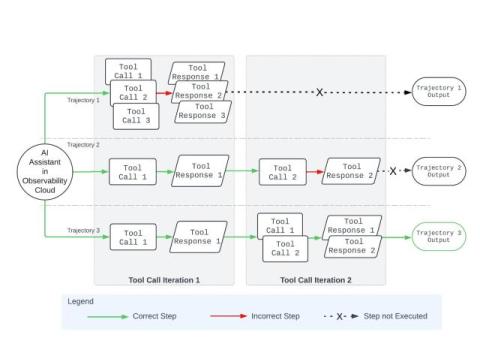
Building an AI Assistant in Splunk Observability Cloud

Splunk Observability Cloud is a full-stack observability solution, combining purpose-built systems for application, infrastructure and end-user monitoring, pulled together by a common data model, in a unified interface. This provides essential end-to-end visibility across complex tech stacks and various data types, such as metrics, events, logs, and traces (MELT), as well as end-user sessions, database queries, stack traces and more.


Uncomplicate SLOs to Deliver Digitally Resilient Systems and Better Customer Experiences

If your organization has an observability practice, it’s likely that the end goal was to increase system reliability and customer satisfaction. But balancing reliability needs with the need to innovate to meet ever-increasing customer expectations remains a challenge for most.

The Top IT Dashboard Examples

A vital aspect of working in IT is that you need to effectively monitor a broad range of KPIs and metrics to ensure the smooth operation of your IT infrastructure. IT dashboards streamline this process as they are specialized dashboards designed to offer insights and track key performance indicators (KPIs) related to numerous aspects of IT operations and infrastructure.

Optimizing observability costs with a DIY framework

Observability costs are exploding as businesses strive to deliver maximum customer satisfaction with high performance and 24/7 availability. Global annual spending on observability in 2024 is well over 2.4 billion USD and is expected to reach 4.1 billion USD by 2028. On an individual company basis, this is reflected by observability costs ranging from 10-30% of overall infrastructure spend. These costs will undoubtedly rise with digital environments expanding and becoming ever more complex.

Cloud Migration Challenges: Solutions for a Successful Move to the Cloud

Cloud migration has become a crucial strategy for businesses aiming to capitalize on scalability, flexibility, and cost-saving opportunities. As organizations transition from traditional data centers to cloud infrastructure, these companies can access advanced cloud services, enhance operational efficiency, and ensure seamless data and application management. However, cloud migration challenges can be difficult to solve.

Build Resilient Connections in Communications and Media with Splunk

In our super connected world, the Communications and Media industry has a lot on the line. Your networks help people stay in touch, get around-the-clock care, and protect their nest eggs. Expectations are incredibly high. And reliability is a must. At Splunk, we help Communications and Media organizations build resilient digital systems.

BindPlane Flight Plane June 2024

Learn how to make rollouts even better with Progressive rollouts in BindPlane. This video will show you how to create different stages for your agents and roll out configuration changes based on specific labels. About ObservIQ: observIQ brings clarity and control to our customer's existing observability chaos. How? Through an observability pipeline: a fast, powerful and intuitive orchestration engine built for the modern observability team. Our product is designed to help teams significantly reduce cost, simplify collection, and standardize their observability data.

Splunk Product Reviews & Ratings - Enterprise, Cloud & ES

Today, cybersecurity is a non-negotiable for business success. Original research from our annual State of Security confirms this is no easy task – which is why we are proud that the solutions we deliver help make organizations digitally resilient. Splunk Cloud Platform, Splunk Enterprise and Splunk Enterprise Security are our most well-known and popular solutions, which we’ll share more about below.