Thank you for your fantastic reviews of our mobile alerting app!
We would like to thank our loyal customers for the numerous reviews of SIGNL4! We are excited that you share your opinion on various rating platforms with other people and support us.
The latest News and Information on Incident Management, On-Call, Incident Response and related technologies.
We would like to thank our loyal customers for the numerous reviews of SIGNL4! We are excited that you share your opinion on various rating platforms with other people and support us.
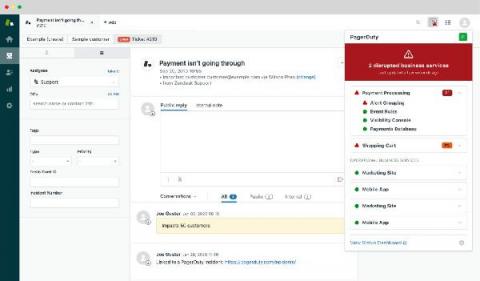
Managed service providers (MSPs) need an IT help desk to address and answer the technical questions of clients. In the modern MSP environment, the IT help desk is the primary source of contact between customers and knowledgeable, responsive support personnel. Successful help desks are customer oriented and encourage clients to report IT incidents when they occur.
With digital becoming the primary channel for work, education, shopping, and entertainment in the last 18 months, it’s no surprise that workloads for technical teams and on-call engineers have increased. Data from PagerDuty’s inaugural platform insights report, The State of Digital Operations, highlights this reality. As of July 2021, the average number of events managed daily by PagerDuty is 37 million, with 61,000 of those being critical incidents.
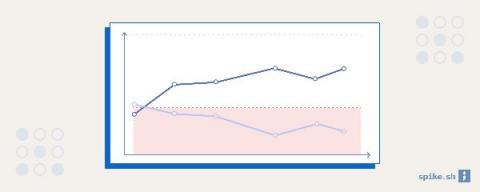
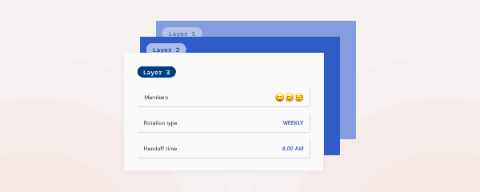
At Spike.sh , we are obsessed with making incident management more accessible to dev teams everywhere. With this goal in mind, we are always looking for ways to reduce the friction while setting up the Spike.sh platform. When we saw customers asking our advice for creating effective on-call schedules and escalations, we knew we had to do more than just good documentation - we needed a way to share best practices with our customers in the product itself.
Today I want to show you how to build a polymorphic select box in Ruby on Rails. Seems trivial, but it’s not. Let me show you the way and save you some time.
Even seemingly minor math bugs in software code can have outsize consequences.
In today’s fast-paced digital world, your customers expect your services to be available 24 hours a day, seven days a week. If your services are unreliable, these customers will likely take their business elsewhere — and spread the word. To retain their business, you must understand and optimize your service and system health to ensure your services are reliable. Gauging your service and system health requires much more than knowing whether they’re on or off.
As we near the end of the Summer season, we’re excited to announce a new set of updates and enhancements to the PagerDuty platform. These updates will help our users and customers: Make sure to view the latest PagerDuty Pulse or learn more from our community team and developer advocates who have launched new programs to help you learn more about our latest products and best practices.
These days, I keep encountering inquiries from various customers on the topic of call handling. Due to the current transformation, triggered by the increased use of home offices, it is becoming more and more important to make on-call staff more accessible. Often the already overloaded service desk is used for this purpose. Of course, this leads to a) a deterioration in the quality of the service desk and b) delays between the receipt of the problem and the start of problem resolution.
LogDNA integrates with your PagerDuty instance to help trigger incidents based on log data coming in from your ingestion sources. This allows your teams to quickly understand when there are issues with your application, and where in the logs you can investigate to understand root cause. To help further accelerate your team’s ability to understand the state of your applications, we are introducing the ability to automatically resolve those PagerDuty Incidents directly from LogDNA.