Operations | Monitoring | ITSM | DevOps | Cloud

Sponsored Post

DEX in IT Routine: How Digital Experience-Driven Decisions Elevate Operational Quality and Results

In a scenario where IT teams face growing pressure to deliver positive business outcomes, relying solely on technical metrics is no longer enough. During the webinar held on March 26, 2026, Leandro Silva and Bob Kruger spoke about how Digital Employee Experience (DEX) - a tangible discipline supported by specialized tools - transforms IT decision-making, resource prioritization, and strategic value delivery for organizations.
5 Things That Kill ITSM Migrations And How AI Fixes Them

The board approved the Agentforce roadmap. The CFO signed off on the consolidation business case. The Salesforce ITSM migration is the dependency that makes both commitments real, and it is green on the current status report. It is almost always green, right up until the quarter it isn't.

Patch Management vs Vulnerability Management: What are Key Differences?

What keeps systems secure in real IT environments, applying fixes quickly or knowing what needs attention first? Most IT teams do not struggle because they lack tools or processes. They struggle because two critical functions are often mixed together. Patch management and vulnerability management. This creates a gap between what is being fixed and what actually needs to be fixed. The challenge is that teams deal with constant alerts, regular updates, and growing security risks.

Never Miss a Device: Achieving Continuous Patch Compliance in an Era of Persistent Threats

Does your organization achieve 95% or greater patch deployment success, as demanded by SLAs and regulatory frameworks? Odds are you don't, as most organizations only hit the 90% mark due to common issue: Devices that miss scheduled maintenance windows leave IT teams like yours scrambling to manually, reactively close compliance gaps.

Top 9 Network Performance Metrics You Should Measure in 2026

How do you know if your network is actually healthy right now? For most IT teams, answering that question means jumping between multiple tools, dashboards, and alerts, only to end up with more uncertainty than clarity. The problem is not missing data. It is knowing which signals matter, what normal really looks like, and when performance issues start affecting users and business operations. Modern networks generate thousands of metrics every minute, but not every spike or alert deserves attention.

To Up-Level Your Security Maturity, Rethink Your Vulnerability Remediation Capabilities

Security teams are drowning in vulnerabilities. We’re talking tens of thousands of findings per quarter. Hundreds of thousands at larger organizations. Today's IT environments have no boundaries and span across every OS platform. Managing and securing that estate in a linear fashion is no longer viable, and neither is a vulnerability remediation process that treats every fix as a simple, low-impact task.

Episode 31: Who really governs artificial intelligence? ft. Luqman Kondeth

In Episode 31 of Server Room, we sit down with Luqman Kondeth, AI Governance & Cybersecurity Strategist and Director at NYU, for a conversation that goes far beyond technology. From personal growth and global experiences to AI governance, cybersecurity, and leadership, this episode explores how mindset shapes the way we build careers, communities, and the future of technology itself. In this episode, we discuss.

How BigPanda and ServiceNow are redefining agentic IT operations for enterprise IT

Enterprise ITOps leaders are realizing that legacy incident management processes are collapsing under the weight of today’s sprawling, hybrid-cloud enterprise environments. Monitoring and observability tools generate a relentless flood of alerts across cloud platforms, infrastructure, applications, and services. The signals are there, the volume of noise makes it harder than ever to identify what’s urgent.

The "Secret" Angle: The Automation Strategy Behind Morgan Sindall Group's IT Success

Morgan Sindall Group is a leading UK construction and regeneration group with a turnover of over £4.1 billion. The group operates through several specialized divisions: They have leveraged Ivanti's solutions—specifically Ivanti Neurons—to modernize their IT service management (ITSM) and asset management. By integrating these tools, they've been able to automate manual processes, improve visibility across their complex infrastructure, and enhance the digital employee experience for their diverse workforce.

What is AI-Powered Observability? A Complete Guide for IT Teams in 2026

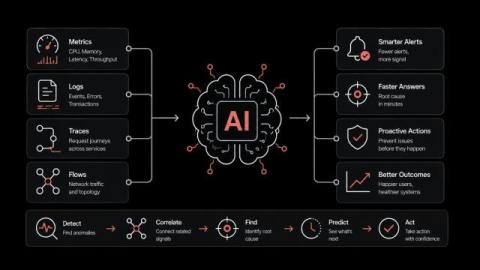
Is your monitoring stack really giving you clarity, or just more alerts? Your monitoring stack is probably working exactly as designed. That is the problem. As systems grow, most IT and platform teams start to see the same patterns: At this point, traditional monitoring starts to feel limited. This is where teams begin exploring AI in observability. In this guide, we will explain what AI-powered observability actually means, how it works, and when it is useful.

Digital Employee Experience (DEX): why isolated technical metrics are no longer enough

Digital transformation and remote work have made the user’s experience with IT a core operational requirement. Many organizations still measure IT success through traditional metrics such as response time, system availability, and the number of tickets resolved. These indicators, while useful, hide a more complex reality. A server can be 99,9% available and yet an employee may still lose 30 minutes per day due to a slow application or an unstable connection.

What Is Hybrid Cloud Monitoring (And How To Actually Do It Well)

Most IT teams running a real hybrid setup are not short on data. They are short on a place where the data agrees with itself. By the end, you will know what to ask a vendor for, where teams usually trip, and how to scope a proof of concept that does not burn a quarter. Hybrid cloud monitoring is the ongoing collection of telemetry across your on-prem kit and one or more public clouds, treated as one environment instead of two or three. The goal is not just visibility.

How to Reduce Help Desk Demand (Hint: It's Not a Help Desk Issue)

Most IT organizations are trying to reduce help desk demand the same way they have for years: by making the help desk itself more efficient. They improve routing, tighten SLAs, expand self-service, and add AI into the support flow. These changes can make the queue move faster, but they do not stop the work from arriving in the first place. The same problems keep finding their way back to IT. Employees lose time to slow devices, unreliable apps, failed updates, access issues, or confusion after a rollout.

Future Solving with Brian Evergreen (Or: How to Escape those AI Career Jitters)

Brian Evergreen joins the show to challenge the fear-driven narrative around AI and work. Rather than treating the future as something coming for us, Brian argues that leaders and individuals should decide what future they want to create, then work backwards. He explores why “start with the problem” thinking limits AI strategy, how visible strategy and relational leadership can unlock better transformation, and why human connection may become more valuable—not less—in an AI-enabled world. A thoughtful conversation on escaping AI career anxiety, building resilient networks, and creating value beyond efficiency.

10 ITIL Change Management Best Practices for 2026

Most IT teams do not struggle with change management itself. The problem is how it is run in practice. In many organizations, CABs meet regularly, approvals are recorded, and workflows already exist. Even with this in place, production incidents still come from changes that were not properly checked or assessed. The issue is not the process. It is execution. Many teams rely too much on approvals, do not assess risk in a consistent way, and slow down delivery with heavy governance.

What is a Change Agent? Roles, Types, and Why They Matter

Why do so many IT change initiatives fail even after the rollout is complete? A new ticketing system goes live on a Monday. Training is finished, documentation is shared, and the process looks ready on paper. Yet by Wednesday, teams are still sending requests through old email chains and avoiding the new workflow. The issue is rarely the technology itself.

The New Agentic AI Job Roles IT Leaders Need

CIOs are under pressure from every direction. Budgets remain tight, geopolitical uncertainty is forcing organizations to rethink resilience, and workforce expectations continue to evolve. At the same time, AI is accelerating a broader shift across enterprise IT – changing not only how organizations operate, but also the skills and roles they will increasingly depend on. The question is not whether AI will reshape IT teams, but how quickly organizations can adapt to these new ways of working.

Faster Workflows, Better Knowledge, Smarter Assets | InvGate Updates

New updates are now available across InvGate Service Management and InvGate Asset Management. Watch the video for a quick look at some of our latest additions, including Knowledge Discovery, intelligent CMDB suggestions, and more. We’re also introducing the new AI adoption lifecycle whitepaper and quiz.

More Results, Less Busywork: The AI Agent that Works for All

Raise the bar for how your IT team operates by going beyond the AI basics. Ivanti’s agentic AI delivers autonomous, goal-oriented support with multi-agent collaboration. Think fewer menial tasks for IT, more opportunities for faster resolutions and elevated employee experience. Discover how Ivanti Neurons AI Self-Service Agent benefits everyone: IT teams: Reduce repetitive work, get AI-powered guidance and spend more time on meaningful projects that power innovation and business outcomes.

What is Service Request Management? A Complete Guide

If you run a service desk, you’ve likely seen this pattern: Service requests, incidents, and change requests often end up in the same queue under the same SLA, even though they require different handling. Many requests that could be resolved through self-service still go through manual intervention, while misclassification adds further delays and confusion. Service request management brings structure to this by defining how requests are handled end to end.

Vendor Management: How to Centralize Vendor Data With InvGate Asset Management

--- Still managing vendors through spreadsheets and disconnected supplier fields? In this video, Matt Beran shows how Vendor Management works inside InvGate Asset Management and how IT teams can centralize vendor data, contracts, assets, and procurement visibility in one place. Instead of scattered supplier records across contracts, asset inventories, and finance spreadsheets, InvGate Asset Management turns vendors into first-class records connected directly to your IT operations.

What is Patch Management and Why is It Important? A Complete Guide

Patch management is one of the cheapest security steps you can take, and one of the most often ignored. Most IT teams know they are behind on patching. They just disagree on how far behind they actually are. Here is the simple truth: That waiting period is the problem patch management exists to solve. This guide covers what patch management actually is, how the full process runs from start to finish, where most teams quietly fall behind, and what to look for in a tool that holds up today.

What is a Self-Service Portal? A Complete Guide for 2026

Salesforce's research found that 61% of customers would rather solve simple issues on their own than wait for a support agent. The same pattern shows up inside companies, where most IT teams report that password resets, software requests, and ticket status checks make up the bulk of their daily work. So, the demand is clear. The use cases are obvious. Yet most self-service portals quietly stop being used by month six. This guide walks through what's going wrong, and what works.

The Productivity Tax of Repeat IT Failures in Technology Companies

Technology companies are being pushed to deliver faster outcomes while justifying growing investment in AI, SaaS, and digital infrastructure. But productivity does not improve just because new tools are deployed. It improves when employees can use those tools without the constant drag of slow devices, unstable applications, and fixes that do not fully solve the problem. That is the productivity tax of digital friction.

How to Build a Maintenance Ticketing System That Actually Works

Building a Maintenance ticketing system is a strategic move for any company looking to streamline its Facility Management operations. It helps manage the influx of maintenance requests through tickets and streamlines the entire process from reporting to resolution. If optimizing maintenance operations is your priority, the best step you can take is to use a help desk as a maintenance ticketing tool.

Significant CMDB enhancements: Baselines, Data Policies, Integration Mapping, and more!

������ ���������� ������������ ���� ��������! In the latest episode of ServiceDesk Plus Premiere, we are happy to announce that the CMDB enhancements we teased last month are now generally available—from baseline configurations and data quality policies to the all-new CMDB dashboard. The CMDB story does not stop there! We have also added powerful new capabilities like Integration Mapping, which lets you filter and work with CIs based on the specific integration they came from, whether that is ManageEngine OpManager, Applications Manager, or Site24x7, so tune in to see what else is new.

Upcoming CMDB enhancements and a quick roundup on everything you can unlock with Zia

������ ���������������� ������������ ���� ��������! In the latest episode of ServiceDesk Plus Premiere, we’ll uncover some interesting enhancements coming soon to the cloud version. We will be focusing on what can easily be considered the single source of truth for your IT estate: The CMDB. From setting baseline configurations to track and measure the evolution of your CIs to gaining a bird’s-eye view with the all-new CMDB dashboard, there’s a lot in store.

Enhanced Predictive AI suite, Google AI Studio integration, and more!

������ �������������� ������������ ���� ��������! We're a month into the year, and it’s already been an exciting start for ServiceDesk Plus. From expanding our AI provider integrations—which now include Google AI Studio alongside OpenAI, Azure OpenAI, and our own hosted LLM—to enhancing our Predictive AI suite, we’re excited to share some exciting updates to the cloud version of ServiceDesk Plus.

Transform IT with Agentic AI: the Dawn of Accelerated, Autonomous Service

The IT service management (ITSM) industry stands at a real inflection point. For decades, service desks have operated on a fundamentally reactive model — employees face problems, submit tickets and wait for human analysts to diagnose, triage and resolve their issues. Automation improved throughput within that model, but it never challenged the model itself.

12 IT Infrastructure Best Practices Every IT Leader Should Follow

Why do IT infrastructure issues continue to slow down teams even when tools keep improving? In most IT environments, the challenge is not a single failure. It is a set of ongoing operational gaps that are easy to overlook but difficult to control over time. A few of the common challenges include: In 2026, IT environments are more distributed and fast-changing than before. Hybrid infrastructure, cloud adoption, and strict compliance requirements make consistency harder to maintain.

Reality Byes The Birth of Mobile DEX (Opening the Black Box)

On this edition of Reality Bytes, Dina and Tom welcome Rose Cicala, Director of Product Marketing, and Mile Djokic, Senior Product Manager, to discuss the launch of Mobile Experience — and what it means for the future of Digital Employee Experience. Together, they explore why mobile devices have become mission-critical for frontline and hybrid workforces, why mobile visibility has remained a major blind spot for IT, and how Mobile DEX changes that. The conversation covers healthcare, retail and manufacturing use cases, AI compliance, application insights, VDI convergence, and the growing shift toward mobile-first work strategies.

Server Monitoring: The Complete Guide to Metrics, Tools, and Best Practices

If you run IT operations, you already know servers carry most of what your business depends on: When a server slows down or goes offline, the impact spreads fast, and the team feels it before the dashboard does. That's the core problem server monitoring is built to solve. It watches the health and performance of your servers continuously, so issues get caught early instead of becoming outages. The cost of getting these wrong keeps climbing.

Alloy Navigator 2026 Spring Release: Highlights

See the highlights of the latest Alloy Navigator release, the all-in-one ITSM and ITAM solution for modern IT teams. Built-in dashboard analytics, enhanced reporting, a smarter AI Assistant, and Outlook integration help you work faster, collaborate better, and make data-driven decisions with ease.

Proactive vs Reactive Monitoring: What are the Differences?

A single hour of unplanned downtime can cost a mid-sized enterprise more than $300,000, according to ITIC report. Most of that cost comes from one place: teams find out about the problem after users do. That is the core limitation of reactive monitoring. It tells you something has failed, but doesn't tell you something is about to fail. This guide is for IT operations leads, platform and SRE engineers, and IT directors deciding how to evolve their monitoring practice.

ITSM Maturity Playbook Live, Episode 1: Incident Management Masterclass

Join this 5-part series designed to help IT teams move from reactive, fragmented processes to a more structured, connected way of working. Each session focuses on a core area, from incident resolution and CMDB visibility to employee experience, service catalog design, and change governance, giving you practical frameworks you can apply right away. You’ll walk away with: Faster, more consistent incident resolution.

Collective IQ: DEX Made Simple, Fast, Without Dedicated Specialists

There is plenty of talk about the value of Digital Employee Experience (DEX). But how can you use it a typical day? Do organizations need a DEX specialist? And what about AI — must you master the art of prompting? During a casual conversation on the road to HDI Support World in Las Vegas, Dave Wagner (Almaden executive) and Bob Kruger (Chief Product Officer) answered these questions directly. Below are their key insights, preserved exactly as they shared them.

Why Siloed Monitoring Increases Your MTTR and How to Resolve It

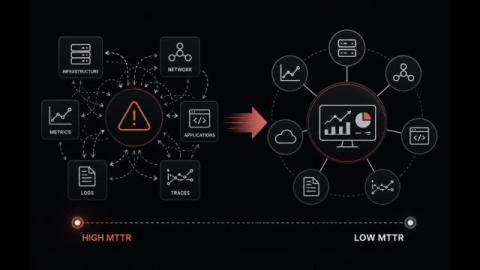
Are you spending more time figuring out whose problem it is than actually fixing it? If that feels familiar, you are not alone. Many IT teams start their day with multiple dashboards and tools, yet still struggle to understand what is wrong when something breaks. Everything may look fine in one view, and fine in another, but the customer impact tells a different story. Incidents end up taking longer to resolve than they should. This is not about effort or capability.

What is the Mean Time to Resolution (MTTR)? Why It Matters and How to Resolve

How quickly can you restore service when an incident hits your system? Most IT teams are not slowed down by detecting incidents. The challenge starts after something breaks, when the goal is to bring services back online as quickly as possible. Modern systems are highly distributed. Alerts arrive from multiple tools, dependencies are complex, and it is often difficult to immediately understand what actually failed.

The Messy Truth About AI Data Management (And What to Do About It)

Data will always be unclean. It's just a matter of degree. I internalized that on day one of my master's program in data science, when a professor warned us that roughly 80% of our time would go to preprocessing and cleaning, not building models. Years later, as Principal Product Manager for AI, ML and Analytics at Ivanti, I've found the guidance holds up remarkably well in practice.

Almaden Brings Proactive Digital Intelligence to HDI Service & Support World 2026

Las Vegas, May 2026 — Almaden took part in the 2026 edition of HDI Service & Support World, held May 3–7 at Caesars Palace in Las Vegas. From Booth 109, the company had a clear mission: to show how Collective IQ, its Digital Employee Experience (DEX) platform, amplifies the value of IT service management without added complexity, disruption, or wasted time. Visitors to the booth had the opportunity to speak directly with experts, Dave Wagner and Bob Kruger (Chief Product Officer).

What is AI Agent Orchestration? Concept + How It Works

Have you tried using AI at work and felt it works well for small tasks, but not beyond that? It can handle simple things like creating a summary, writing a draft, or answering a question. This works because the task is clear. But most tasks are not that simple. They involve multiple steps. One step depends on another. Data comes from different systems, and some decisions need checks before moving ahead. This is where a single AI system starts to struggle.

What is an Enterprise Knowledge Graph? Definition, Benefits, and Use Cases

Are your AI systems giving answers your teams cannot trust? Most enterprises deploy LLMs expecting reliable outputs, but the results often feel inconsistent or incomplete. The problem is the missing structure behind it. Enterprise data is usually fragmented across multiple systems, teams, and tools. Your AI does not understand how customers, products, policies, and operations connect. Without that context, it fills gaps with assumptions, which leads to unreliable results.

Collective IQ Business: meet the artificial intelligence that transforms IT management

The employee digital experience (DEX) is no longer just a concept; it has become a concrete discipline supported by specialized tools. At the center of this transformation is Collective IQ, Almaden’s DEX solution, available in the Essential and Business editions. The Business edition includes AlmaAI a family of generative AI capabilities that take IT management to a new level.

Atlas: AI-Driven Asset Enrichment For Proactive ITAM

Over the years, InvGate Asset Management has helped organizations build structured, reliable IT inventories, creating the visibility and control required for effective IT Asset Management. That maturity is critical, but visibility alone does not eliminate one of the biggest operational burdens IT teams still face: constant manual work. Atlas was designed to address this gap.

CMDB Auto-Mapping: A Smarter, Faster, More Reliable CMDB

InvGate Asset Management has launched CMDB Auto-Mapping, a new feature that modernizes the way teams create and maintain a Configuration Management Database (CMDB). This capability detects the most critical asset relationships and recommends connections that users can quickly accept or reject. The result is less manual work, stronger governance, and a step closer to a true System of Intelligence, where visibility naturally leads to better decisions, faster assessments, and more reliable operations.

Faster incident investigation with BigPanda and ServiceNow Now Assist

When an incident occurs, an L2/3 engineer or SRE can spend 20–30 minutes investigating across alert consoles, combing through change records, and pinging teams on Slack or Microsoft Teams. When you multiply that time spent across thousands of incidents per year by the cost of an IT outage at $14,056 per minute, the cost is staggering. Enterprises can’t afford to waste time searching across disparate tools.

What is Cloud Threat Detection? An Ultimate Guide for 2026

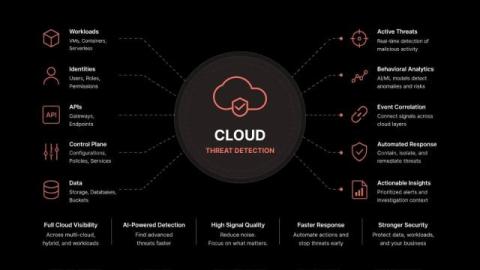
What if the next breach in your cloud is already in motion, and your team has no idea how to see it? Cloud workloads are growing fast. APIs, identities, and data are spread across AWS, Azure, GCP, and on-prem systems all at once. Every layer creates its own logs, its own alerts, and its own blind spots. Most security teams are short on visibility, context, and time. That is the gap cloud threat detection is built to close.