Operations | Monitoring | ITSM | DevOps | Cloud

Detailed Guide Security Incident Response Workflow

Security incident response is all about how organizations handle and mitigate the effects of a security breach. It's a structured process that helps identify, contain, and recover from incidents, ensuring minimal damage and business continuity. This process involves several stages: preparation, detection, containment, eradication, recovery, and post-incident analysis. Each stage is crucial for tackling security threats and boosting an organization’s resilience against future incidents.

What is Runbook Automation and Best Practices for Streamlined Incident Resolution

As organizations scale, managing IT systems and resolving incidents efficiently becomes increasingly complex. Manual processes, while functional in smaller setups, often fall short in speed, accuracy, and scalability. Enter Runbook Automation (RBA)—a transformative approach to streamline and standardize incident resolution. This blog explores what Runbook Automation is, its significance in modern IT operations, and best practices to implement it effectively.

Essential Guide to Building an Effective AIOps Strategy

We often hear about the many benefits AIOps (Artificial Intelligence for IT Operations) brings to businesses. But how can you develop an effective AIOps strategy? Where do you even start? What are the best practices or implementation challenges? These and many more questions must be answered before beginning your AIOps journey. In this guide, we will explore the steps for creating an effective AIOps strategy and discuss crucial components, obstacles, and best practices for successful implementation.

Navigating high-traffic events with proactive incident management

In this episode of "Founder & Friends," Raygun co-founder & CEO JD Trask sits down with Birol Yildiz, co-founder & CEO of ilert, the incident management platform. We're excited to sit down with Birol and hear about his experience in the tech industry, including how ilert came to life with their mission to support teams during high-stakes moments.

The Shift Left Movement In DevOps: Empowering Developers and Responders to Secure Code Early

The demand for faster, secure software delivery has given rise to a critical transformation in the software development lifecycle (SDLC): the Shift Left in DevOps. This approach, which integrates security and testing early in the development process, is becoming essential for organizations striving to stay competitive.
Sponsored Post

The Perfect Guide to IT Alerting Tools: Ensuring Proactive Monitoring and Swift Incident Response

Every second counts when it comes to managing IT infrastructure and handling incidents. The stakes are high, and organizations require tools that ensure no issue goes unnoticed. This comprehensive guide to IT alerting dives into everything you need to know to maintain proactive monitoring and swift incident response. We'll discuss the best practices, core features, and review the Top 10 IT alerting tools and IT alerting software that can drive performance and resilience.

How we page ourselves if incident.io goes down

Picture this: your alerting system needs to tell you it's broken. Sounds like a paradox, right? Yet that’s exactly the situation we face as an incident management company. We believe strongly in using our own products - after all, if we don’t trust ourselves to be there when it matters most, why should the thousands of engineers who rely on us every day? However, this poses an obvious challenge.

The Rise of ServiceOps: Unifying IT Service Delivery

With the complex and steadfast growth of IT service delivery processes, organizations and their internal teams have come to rely on several tools in their toolbox to deliver best-in-class products and services. The use of AIOps, AI/ML, and overall automation has shaped modern delivery methods, but what we call this process, and how we grow to advance it, has yet to find a definition that’s universally recognized.

Lessons from Microsoft's office 365 Outage: The Importance of third-party monitoring

When your software powers productivity for millions of users, trust becomes your ultimate currency. Trust is earned through transparency, clear communication, and unwavering reliability—especially when disruptions occur. Microsoft learned this lesson recently during a significant outage that took down two of its flagship services: Outlook and Teams.

Looking for an incident management tool?

These days, IT infrastructures are so complex, and cyber threats are so advanced, that it's not a question of if an incident will happen but when. To effectively respond to these challenges, a reliable incident management tool is an absolute necessity. The right tool can significantly reduce the impact of incidents, minimize downtime, keep your data safe, and protect your business.

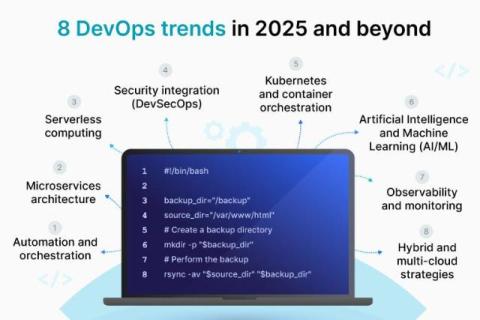
8 Future DevOps Trends In 2025 - Learn How To Stay Competitive

What is the future of software development and deployment? DevOps processes have helped take developers and operations folks out of their silos and share responsibilities. But is it enough to succeed long term? Many companies have yet to embrace DevOps completely across their teams. Clearly, the culture of sharing tools, a key aspect of DevOps, is not enough.

Building Interactive Dashboards: Why React-Grid-Layout Was Our Best Choice

After releasing our first version of the ilert dashboard as a static layout, we knew we wanted to take it further by allowing users to customize and arrange widgets freely. We aimed to provide a truly interactive experience, which led us to search for a library that could handle drag-and-drop and resizing functionalities while integrating well with our existing tech stack.

From iOS to Web Apps: Comparing Setup and Development

I joined ilert as a student front-end software developer. Before, I was mainly writing iOS apps. Even though I already had some experience with web technologies, diving deep into front-end development was a huge step. Both developing iOS apps and web apps share the same kinds of tasks, such as developing the user interface (UI) and writing app logic. However, the actual development environments are completely different.

Understanding Service Reliability: How Squadcast Empowers Your Business With It

In today’s fast-paced digital landscape, service reliability is not just a technical challenge—it’s a critical business need. Downtime can cost organizations millions, and customer trust is easily lost but difficult to regain. Service Reliability Management (SRM) emerges as the cornerstone of delivering consistent and dependable services that meet both customer expectations and business goals.

What are the benefits of generative AI for IT?

Can generative AI help improve IT efficiency? Imagine you’re part of an IT team constantly juggling a growing number of support tickets, system issues, and daily maintenance tasks. It can feel like you’re always playing catch-up. It’s a common challenge: Repetitive tasks and troubleshooting waste valuable time, leaving little room for innovation or strategic improvements. Generative AI (GenAI) for IT provides a solution.
Are you ready for the next outage? How a to prepare for any crisis

We live in an “always on” world, so unplanned outages are more than just inconvenient. They can result in lost revenue, damaged reputations, and, more importantly, frustrated customers. While preventing outages is impossible, the most resilient teams must be prepared with a solid plan, a “technical go bag,” so to speak: a collection of tools, plans, and resources ready to activate at the first sign of trouble.

From DevOps to GenOps: The Future of Cloud-Native and Hybrid IT Operations

Over the past decade, DevOps has transformed IT operations by fostering collaboration between developers and operations teams. It brought agility, automation, and efficiency to software development and deployment. But as IT environments evolve, especially with the rise of cloud-native and hybrid infrastructures, a new paradigm is emerging: GenOps (short for Generative Operations).

How data integration improves incident management

During critical incidents, teams often scramble to pull data from multiple sources, wasting precious time and delaying issue resolution. Manual processes hamper response and create blind spots that can lead to costly oversights. Data integration addresses this head-on. Data integration collects incident management information from various sources, such as monitoring tools, logs, and user reports, into a unified system.

Deploying Prometheus With Docker

There are different ways you can use to deploy the Prometheus monitoring tool in your environment. One of the fastest ways to get started is to deploy it as a Docker container. This guide shows you how to quickly set up a minimal Prometheus on your laptop. You can then extend that setup to add a monitoring dashboard, alerting, and authentication.

From Runbook to Service Orchestration & Automation: The Next Level of Operational Efficiency

Given the sophisticated nature of modern IT, today’s operations teams require more than simple step-by-step instructions—they need intelligent automation that boosts efficiency, accuracy, and accessibility throughout the organization. Runbook automation transforms traditional, manual processes into automated workflows, empowering operators to execute complex, multi-step tasks quickly and reliably.

How AIOps improves response times in the NOC

The sheer volume of data and the need for fast, accurate troubleshooting can overwhelm even the most experienced network operations center (NOC) teams. Stress levels increase when response times lag — as do costs, customer frustration, and risks to revenue. AIOps can help. Deploy AIOps to automate data analysis and correlate alerts in real time, filter alerts to reduce noise, and pinpoint incident root cause faster than traditional methods.

Organizing ownership: How we assign errors in our monolith

At incident.io, we run on a monolith. This brings a whole load of benefits that we don’t want to give up any time soon. We don’t have to worry about the speed of internal network requests, complex deployments, or optimizing work that touches multiple services. This blog post isn’t about the relative benefits of monoliths though (but we’ve written more about that here if you are interested)! Ownership in monoliths is tricky.

Salesforce Outage Disrupts Services Globally: Updates and Timeline

Today, November 15, 2024, Salesforce customers worldwide faced significant disruptions due to a service outage that began early in the morning (UTC). The outage affected multiple Salesforce instances and a range of other production and sandbox environments. This incident has left many businesses unable to access critical services, causing widespread frustration and operational delays. Here’s a detailed breakdown of the situation, what’s being done, and where you can find the latest updates.
Enhance observability with AI-powered IT operations

Your organization probably relies on a collection of observability tools to track specific elements of its IT stack. You’re not alone; a recent survey from Enterprise Strategy Group showed that most organizations have six or more observability solutions. Our research found that the average BigPanda customer uses 20 observability and monitoring data sources!

Ask the Expert: Insights from Paula Thrasher, Senior Director of Infrastructure and Platform, PagerDuty

In this blog post, Paul Thrasher, Senior Director of Infrastructure and Platform at PagerDuty, provides her takes on the challenges and opportunities facing tech leaders today. From managing complexity to driving operational resilience, Thrasher shares expert insights on how executives can get ahead of disruptions.

The Ultimate Guide for Enterprise DevOps

Speed and reliability in incident management have always been the formula for many businesses’ success. But what happens when this already demanding workflow needs to be done at scale? The answer is adopting enterprise DevOps methodologies to scale operations efficiently. DevOps benefits are magnified when they are correctly scaled across an entire enterprise. In this comprehensive guide, we’ll explore enterprise DevOps’s fundamental principles, challenges, and components.

How we handle sensitive data in BigQuery

As a provider of incident management software, we at incident.io manage sensitive data regarding our customers. This includes Personally Identifiable Information (PII) about their employees, such as emails, first names, and last names, as well as confidential details regarding customer incidents, such as names and summaries. Consequently, we approach the management of this data with a great deal of care.

New BigPanda features accelerate IT incident response

ITOps teams are inundated with a significant volume of alerts each day. Sifting through these alerts to discern which ones are harmless and which could lead to major incidents is a time-consuming and tedious task. This process often involves hunting for information across disparate data sources, tools, and workflows. As a result, the investigation can slow down incident response times, negatively affecting service reliability and customer satisfaction.

3 Ways to Streamline Kubernetes Operations with PagerDuty Automation

Kubernetes popularity continues to grow, with over 60% of organizations maintaining multiple Kubernetes across diverse environments and teams in some capacity. However, as clusters multiply, so do operational challenges: from monitoring hundreds of microservices to responding to and escalating incidents across distributed systems.

Building an AI Chatbot Playground with React and Vite

Read how we set up an experimental chatbot environment that allows us to switch LLMs dynamically and enhances the predictability of AI-assisted features' behavior within the ilert platform. The article includes a guide on how you can build something similar if you plan to add AI features with a chatbot interface to your product.

A Beginner's Guide To Service Discovery in Prometheus

Service discovery (SD) is a mechanism by which the Prometheus monitoring tool can discover monitorable targets automatically. Instead of listing down each and every target to be scraped in the Prometheus configuration, service discovery acts as a source of targets that Prometheus can query at runtime. Service discovery becomes crucial when there are dynamically changing hosts, especially in microservices architectures and environments like Kubernetes.

Top 5 outages detected by StatusGator in October 2024

StatusGator’s Early Warning Signals alerted customers to several notable service outages in October 2024. With advanced warning, our users could take proactive measures, minimizing the impact of downtime on their businesses. Here’s a summary of how our detection gave customers an edge over service disruptions, often notifying hours or minutes before the provider even acknowledged the issue.

Incident Response Automation: How It Works & Why It Speeds Up Resolutions

The speed at which you respond to incidents can make or break user satisfaction, team morale, and business continuity. Whether it’s a server crash, a security breach, or a software bug affecting users, rapid and efficient incident management is key to maintaining a strong reputation and minimizing operational downtime. And while traditional manual responses have worked in the past, automated incident response is now paving the way for faster, smarter, and more efficient handling of these issues.

Demo Roundups! Automation Standardization (Workflows)

Join PagerDuty’s Solutions Consultants Bobby Zimmerman and Justyn Roberts to discover how combining technical automation with human-driven processes can reduce manual interventions, streamline repetitive tasks, and increase operational efficiency. Level up your digital operations expertise with PagerDuty Demo Roundups — a series of live, interactive webinars where you can deepen your knowledge in the Operations Cloud and see how PagerDuty can work for you. Each 1-hour session presents a hands-on demo that showcases PagerDuty’s capabilities in real-time followed by Q&A.

Site Reliability Engineer's Guide to Black Friday

It’s gotten to the point where Black Friday reliability prep has to start on…well Black Friday. This year, 32% of consumers in the US claimed that they were going to start their holiday shopping in July-October. Plus, Black Friday isn’t the only day eCommerce businesses have to worry about, now we have Cyber Monday, Travel Tuesday, and the thousands of Prime Days from Amazon.

Lessons from 4 years of weekly changelogs

Writing a meaningful update for customers every week has been held sacred at incident.io since we started the company. We've written over 200 of them in the past 4 years, and we recently celebrated going 2 years straight without missing a single a single week The numbers themselves are not the goal, but the consistency of this habit and what it represents for our customers and our team is very real, and special to me.

Operationalizing AI for IT operations

Advances in artificial intelligence are rapidly transforming the IT operations landscape. According to Enterprise Strategy Group, 85% of organizations use or plan to deploy AI across many functional areas, including IT operations. Among its many benefits, AI can help ITOps teams: AI has immense potential to transform how IT operations, service management, and infrastructure teams function. Adoption is the first step toward creating organizational change.

Did Delta's slow web performance signal trouble before CrowdStrike?

The CrowdStrike outage was a reminder of how quickly the dominoes can fall—especially when the foundation is shaky. Delta Airlines was hit harder than its competitors. While United and American Airlines were able to recover within days, Delta faced ongoing struggles, leading to the cancellation of 7,000 flights over five days.

Against Incident Severities and in Favor of Incident Types

About a year ago, Honeycomb kicked off an internal experiment to structure how we do incident response. We looked at the usual severity-based approach (usually using a SEV scale), but decided to adopt an approach based on types, aiming to better play the role of quick definitions for multiple departments put together. This post is a short report on our experience doing it.

Observability as a superpower

With every job I have, I come across a new observability tool that I can’t live without. It’s also something that’s a superpower for us at incident.io: we often detect bugs faster than our customers can report them to us. A couple of jobs ago, that was Prometheus. In my previous job, it was the fact that we retained all of our logs for 30 days, and had them available to search using the Elastic stack (back then, the ELK stack: Elasticsearch, Logstash, and Kibana).

Building Operational Resiliency in Higher Education with AIOps

The higher education industry is experiencing significant transformation. Colleges and universities have embedded digital tools across their academic environments to provide exceptional experiences for students, faculty, and staff. As technology becomes more integral to education, maintaining efficient, secure IT operations while ensuring 24/7 availability presents new challenges for institutions to manage.