
Best ISO 27001 Software in 2026: Compared

Image Source: depositphotos.com
Getting ISO 27001 certified used to feel like crossing a finish line. Now it feels more like mile one of a marathon nobody warned you about.
I keep having the same conversation with the founders. They celebrate the certification, frame the certificate, and update the website. Three months later, they're drowning in evidence requests, chasing down access reviews, and realizing their compliance platform isn't actually built for the ongoing work. The certification was the easy part.
Here's what I've learned after watching dozens of teams navigate this: your software choice matters way more than the sales demos suggest. A platform that looks impressive in a 30-minute walkthrough can quietly create hours of manual work every week. The wrong tool doesn't just waste time; it multiplies the effort your team needs to stay compliant. And by the time you realize it, you're already locked in.
What ISO 27001 Software Actually Helps With
Before we get into specific platforms, it helps to understand what these tools are actually designed to solve. ISO 27001 software isn't just a checklist tracker. It's meant to manage the full lifecycle of your Information Security Management System (ISMS).
Risk Assessments and Control Ownership: You need a clear system for mapping risks to treatments and assigning accountability across your organization.
Evidence Collection and Control Tracking: This means pulling logs, screenshots, and documentation continuously instead of scrambling before an ISO 27001 audit.
Policy Management: Creating, versioning, and reviewing security policies in a way that auditors can follow.
Internal Audit Preparation: The best tools help you run readiness checks and spot gaps before the official audit begins.
Continuous Compliance vs Point-in-Time Audits: Some platforms are built to get you certified once. Others are designed to keep you compliant every single day after that.
No two platforms feel the same in practice. They all claim to automate evidence collection, but how they handle edge cases, integrations, and control mapping varies dramatically.
The Best ISO 27001 Software Platforms in 2026
1. Scytale (Best overall ISO 27001 software)
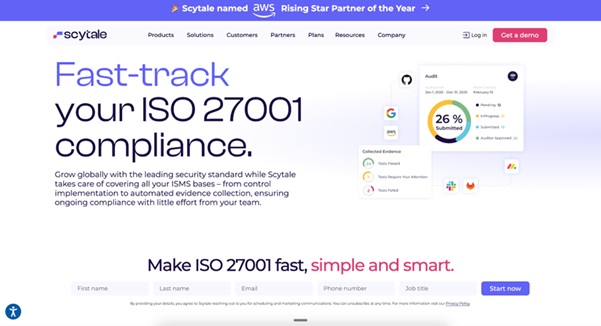
Scytale stands out because it was built by auditors, not just engineers trying to automate compliance from the outside. That difference shows up in how the AI-powered compliance automation platform is structured. Instead of throwing features at you and expecting you to figure out the workflow, Scytale organizes everything into a guided process that mirrors how audits actually happen.
What I appreciate most is the hands-on expert support. Every plan includes a dedicated GRC expert who manages timelines and requirements, chases evidence, and keeps your audit on track. Most platforms leave you to figure things out on your own. Scytale embeds a former auditor directly into your workflow, which means fewer mistakes and less internal effort.
What I like about Scytale
- Automated evidence collection pulls data from your tech stack continuously, so you're not scrambling to gather screenshots and logs at the last minute
- Continuous control monitoring flags misconfigurations in real time, which helps you catch issues before they become compliance gaps
- Key features like automated user access reviews and vendor risk management are built in
- Multi-framework cross-mapping lets you manage critical security and privacy frameworks like SOC 2 or HIPAA alongside ISO 27001 without duplicating work
- AI GRC agent (Scy) provides real-time guidance and remediation suggestions directly within the platform
- Transparent, flexible pricing means no surprise add-ons Dedicated GRC experts manage ISO 27001 requirements and timelines, and provide proactive guidance throughout the entire process
Best for
SaaS companies that want an end-to-end compliance partner instead of another DIY tool. Scytale works for fast-growing startups and established enterprises alike because the AI-driven platform scales with your business, enabling you to manage your GRC program more efficiently as your business expands. .
Final take
Scytale removes the guesswork. If your team lacks deep compliance expertise in-house, this is the platform that will guide you from readiness to certification without the stress most teams experience. The combination of AI-powered automation, hands-on advisory, and proactive support makes it the most complete ISO 27001 solution available in 2026.
2. Scrut Automation
Scrut focuses on compliance automation with an emphasis on reducing manual work. The platform supports multiple frameworks and offers a range of integrations. I find that Scrut appeals to teams looking for straightforward automation without unnecessary complexity.
What I notice is that Scrut covers the fundamentals competently. The evidence collection works for common tools, and the risk management module provides structure for tracking security risks. The platform doesn't stand out with unique features, but it handles the core compliance tasks reliably.
What I like about Scrut Automation
- Evidence collection is automated for common tools and platforms
- Risk management module helps you track and mitigate security risks in a structured way
- Policy management and control mapping cover the basics
- Supports ISO 27001 alongside other frameworks
Best for
Small to mid-size companies looking for basic compliance automation without a lot of complexity.
Final take
Scrut delivers straightforward automation, but it doesn't stand out in any particular area. The platform works, but it feels more like a feature set than a complete solution.
3. Delve (Known for customization)
Delve takes a different approach by focusing on risk management and compliance operations. The platform is designed for teams that want deep control over their compliance workflows. I've seen organizations with mature compliance programs gravitate toward Delve for its customization capabilities.
What stands out to me is the depth of the risk management features. Delve allows you to build custom frameworks and tailor workflows to specific needs, which appeals to teams with unique compliance requirements. However, this flexibility comes with more setup and configuration compared to platforms that prioritize simplicity.
What I like about Delve
- Robust risk management features that are more detailed than most competitors
- Ability to build custom frameworks and tailor the platform to specific compliance needs
- Evidence collection and policy management are included
- Powerful for organizations with specific customization requirements
Best for
Organizations with mature compliance programs that need customization and detailed risk management capabilities.
Final take
Delve is powerful, but it requires more hands-on configuration. If you have compliance expertise in-house and need flexibility, it's worth considering. For teams looking for guided support, it may feel too open-ended.
4. Vanta
Vanta markets itself heavily around automation and integration depth. The platform connects to hundreds of tools and claims to automate a large percentage of evidence collection. For teams with straightforward tech stacks, this can work well.
What I notice about Vanta is the emphasis on brand recognition and polish. The interface is clean and the onboarding experience is smooth. If your team values a recognizable name in the compliance space, Vanta delivers on that front. However, I find the advisory support model less proactive than what I've seen with other platforms.
What I like about Vanta
- Extensive integration library with native connectors for most mainstream tools
- Clean and user-friendly interface that makes onboarding faster for teams without compliance backgrounds
- Multi-framework support available, though additional frameworks come as paid add-ons
- Automated evidence collection for standard use cases
- Strong brand recognition makes it easier to explain to stakeholders and customers
Best for
Mid-market companies with standard tech stacks that want a recognizable brand and straightforward automation.
Final take
Vanta delivers solid automation, but the advisory support is more reactive than proactive. If you need guidance throughout the process, you might find yourself wanting more hands-on help than the platform provides by default.
5. Secureframe
Secureframe positions itself as a compliance platform for startups and scaling companies. The interface is intuitive and the onboarding process is designed to be quick. I've noticed that teams appreciate how fast they can get started with Secureframe.
What I find interesting is the focus on speed and simplicity. You can connect integrations and start collecting evidence within a few hours, which appeals to teams that want immediate momentum. The platform provides templates and guides, but the support model relies more on self-service than hands-on guidance.
What I like about Secureframe
- Fast setup where you can connect integrations and start collecting evidence within a few hours
- Policy templates and guides to help you get started
- Clean and approachable user experience for non-technical teams
- Multi-framework support exists, though advanced features require plan upgrades
- Security questionnaire automation speeds up vendor and customer responses
Best for
Startups looking for a quick way to get ISO 27001 certified without a steep learning curve.
Final take
Secureframe is approachable and easy to use, but you may find the support model less hands-on than you need. The platform works best when you have some compliance knowledge already.
6. Drata
Drata focuses on continuous monitoring and compliance automation. The platform is designed to keep you audit-ready year-round, not just during certification cycles. I've seen teams choose Drata specifically because they want real-time visibility into their compliance posture.
What stands out to me is the monitoring infrastructure. Drata checks your controls continuously and sends alerts when configurations drift. This approach works well if your team wants to avoid last-minute surprises before audits. The platform leans heavily on automation, which can reduce manual work for teams with mature tech stacks.
What I like about Drata
- Real-time monitoring checks your controls continuously and alerts you when something drifts out of compliance
- Evidence collection is automated for most common integrations
- Multiple framework support, though additional standards typically cost extra
- Reduces the scramble before audits with ongoing compliance tracking
- Audit readiness reports help you spot gaps before the official assessment
Best for
Teams that prioritize ongoing compliance monitoring and want a tool that keeps them audit-ready between certification cycles.
Final take
Drata handles continuous monitoring well, but the pricing structure can add up quickly if you need multiple frameworks or advanced features. The platform feels more software-focused than service-focused.
7. Sprinto
Sprinto offers automation and a growing list of integrations. The platform is designed for teams that want to manage compliance across multiple frameworks from a single dashboard. I've seen companies choose Sprinto when they're planning to pursue several certifications at once.
What I observe with Sprinto is a solid integration ecosystem. The platform connects to over 200 tools, which covers most common tech stacks. The evidence automation handles standard cases well, but I notice the advisory component feels lighter compared to platforms that include dedicated compliance experts.
What I like about Sprinto
- Integration library includes over 200 native connectors covering most common tools
- Evidence automation works well for standard use cases
- Policy templates and risk assessment tools are included
- Straightforward and functional interface
- Task management and compliance calendar keep teams aligned on deadlines
Best for
Teams managing multiple compliance frameworks who want a centralized platform with strong integration support.
Final take
Sprinto handles the basics well, but the advisory component feels lighter than platforms like Scytale. You'll get the software, but you may need to bring your own compliance expertise.
Understanding the Real Differences Between ISO 27001 Platforms
Not all compliance platforms solve the same problems. Understanding these differences helps you evaluate tools more effectively.
ISMS management vs evidence automation
Some platforms focus heavily on automating evidence collection. They connect to your tools, pull logs and screenshots, and organize everything for audits. Other platforms emphasize ISMS management, helping you structure policies, assign control ownership, and manage risk assessments.
The best platforms do both, but many tools lean heavily in one direction. If you need strong evidence automation, make sure the platform actually automates the evidence types your auditor requires. If you need ISMS guidance, look for structured workflows and advisory support.
Software-only tools vs auditor-supported platforms
Most ISO 27001 platforms give you software and leave you to figure out how to use it. A smaller group of platforms includes advisory support from compliance professionals who guide you through the process.
The software-only approach works if you already have compliance expertise. The auditor-supported model works better if your team is learning as you go. Top platforms like Scytale fall into the second category, where dedicated GRC experts streamline the compliance process by providing proactive guidance every step of the way.
One-time certification focus vs continuous compliance focus
Some platforms are optimized to get you certified once. They help you prepare for the audit, gather evidence, and achieve ISO 27001 certification. After that, maintaining compliance becomes a manual effort all over again.
Other platforms are designed for continuous ISO 27001 compliance. They monitor controls in real time, alert you to drift, and keep you audit-ready year-round. This distinction matters a lot in 2026, where customers and key stakeholders expect ongoing proof of compliance, not just a certificate on the wall.
Final Thoughts on Choosing ISO 27001 Software
ISO 27001 in 2026 isn't just about getting a certificate. It's about building a compliance system that scales with your business without consuming more resources every quarter.
I've seen teams struggle because they picked GRC tools that looked good on paper but didn't account for the ongoing workload. Early decisions compound over time, so start with a platform that keeps you audit-ready continuously and provides expert support when you need it.
FAQs about ISO 27001 Software
Do you need ISO 27001 software to get certified in 2026?
Technically, no. You can manage ISO 27001 compliance manually with spreadsheets and documents. But in practice, almost every company uses ISO 27001 software because the ongoing workload is too high and resource-intensive otherwise. AI-powered platforms like Scytale reduce manual effort, keep evidence organized, and help you stay audit-ready continuously.
How is Scytale different from other ISO 27001 platforms?
Scytale was built by auditors, not just engineers. That means the platform mirrors how audits actually work instead of forcing you to adapt your process to the software. Every plan includes a dedicated GRC expert who manages timelines, chases evidence, and provides proactive guidance. Most platforms give you software and leave you to figure it out. Scytale embeds compliance expertise directly into your workflow.
Can ISO 27001 software support multiple frameworks at once?
Yes, most platforms support multi-framework compliance. The difference is in how they handle it. Some platforms like Scytale, include multi-framework cross-mapping from day one, so you can manage ISO 27001, SOC 2, HIPAA, and GDPR without duplicating work..
What should teams prioritize when choosing ISO 27001 software?
Focus on three things. First, does the platform provide ongoing support and guidance, or just automation software? Second, does it support continuous compliance, or just one-time certification? Third, is the pricing transparent and flexible, or will you face surprise add-ons as you scale? Teams that prioritize these questions early avoid the most common frustrations later.