Operations | Monitoring | ITSM | DevOps | Cloud

Building vs. Buying your platform: The honest framework nobody discusses

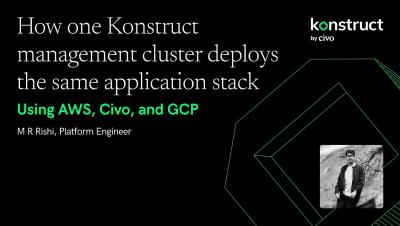
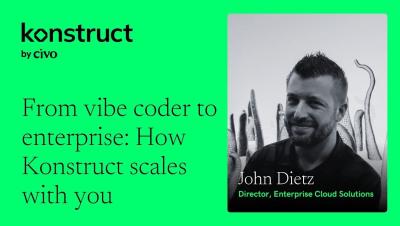
Most organizations get the build versus buy decision wrong in the same way. They underestimate the cost of building while overestimating the cost of buying. In the recent Konstruct monthly webinar with M R Rishi (Platform Engineer at Civo), we explored the discussion surrounding whether you should build or buy your platform. If you want to watch the full discussion, watch the recording here.

How AI is changing platform engineering

AI is changing software development fast. But what does that actually mean for platform engineering teams? In this conversation, Civo's John Dietz and M R Rishi dig into what they're seeing on the ground, the 10x effect of AI on app count, what it means for platform team workloads, the debugging skills that are quietly being lost, and whether Kubernetes itself might eventually become just another abstraction.

The debugging crisis nobody's talking about: AI, abstraction, and the skills gap

Here's a scenario that's playing out in engineering teams across the industry right now. A developer uses AI to rapidly prototype a microservice. The code works. They deploy it to production. Six months later, something breaks. The system is under load, a database connection pools, and the service starts failing in subtle ways. The engineer pulls up the code, but here's the problem, they didn't write it. An AI assistant did. They don't understand the flow deeply. They don't know where to look first.

Why we built relaxAI, and where your AI data actually goes

Sandboxing your AI agent is only half the story. The other half is where your data goes when it hits your LLM provider's API. In this clip from our secure execution agents webinar, Ben Norris, founding engineer at relaxAI, explains why the sovereignty of your AI provider matters just as much as the security of your agent's environment and why relaxAI was built on a sovereignty-first principle, with inference running exclusively in the UK and no foreign data transfer.

What nobody tells you about platform engineering at scale

Platform engineering has become one of the most discussed topics in cloud native infrastructure. Yet despite the rising focus, most conversations around platform engineering skip over the uncomfortable truths. What actually works at scale? When should you build versus buy? And how do you avoid the traps that trip up even experienced teams?

How to build a hybrid private cloud strategy that scales with your business

Most hybrid cloud strategies fail not at launch but at scale. The architecture works fine for the first year. The team's workloads are modest, the integration points are limited, and the operational overhead is manageable. Then the business grows. Workloads multiply, data volumes climb, the team expands, and the seams between public cloud and private infrastructure start showing.

How to build sustainable AI infrastructure on GPU cloud

AI's environmental cost is real, and it's growing. Training a large language model can consume the electricity of hundreds of households for weeks. Inference at production scale runs continuously, with GPU clusters drawing power around the clock. The data centers that house all of this are some of the most concentrated energy consumers in the modern technology stack.

Platform engineering unplugged: What nobody tells you about platform engineering at scale

Most platform engineering stories are told in hindsight, with the rough edges smoothed out. On June 17th, we are doing it differently. Join us for Platform Engineering Unplugged, a frank conversation with a practitioner who has navigated the real challenges of building and scaling platform engineering. What worked, what didn't, and what they would do differently. If you lead engineering teams and are thinking seriously about platform engineering, this is the session for you.

How to build a secure AI agent sandbox with relaxAI and Claude Code

AI agents are powerful. They're also unpredictable, non-deterministic, and capable of doing things you didn't ask them to do, as the Rome Alibaba and Claude Mythos case studies make very clear. The answer isn't to avoid agentic AI. It's to run it properly. In this demo, Ben Norris, founding engineer at relaxAI, shows how to build a fully sandboxed AI agent environment from scratch, an ephemeral Civo VM provisioned via Terraform and GitHub Actions, locked down with egress policies, an unprivileged Linux user, and hard resource caps, running a Claude Code session pointed at the relaxAI API.

Lock-in is not theoretical: What UK organizations told us about cloud exit barriers

For years, vendor lock-in has been discussed as a theoretical risk. A concern to acknowledge in architecture reviews. A box to tick in compliance frameworks. A future problem that might need addressing. Our latest research reveals something more urgent. For UK organizations, lock-in isn't theoretical anymore. It's structural. It's measurable. And it's preventing organizations from acting on their own strategic priorities.