IoT is slowly, quietly taking over the world. A few years ago, self-ordering fridges, driverless cars, and fully automated homes seemed like the stuff of dreams. And while the technology exists, rollout and adoption is slower than anticipated, amidst security and privacy concerns. That said, IoT is the future, and growth is steady, as the challenges of building and maintaining hundreds of thousands of devices per vendor are getting solved.
With the economies of many countries heading towards recession, increasing regulations, growing security threats and increasing costs, financial services firms need practical solutions, now more than ever. Many of the financial technology firms (‘fintechs’) and mobile app-based challenger banks have taken advantage of modern application architectures and DevOps practices that are associated with cloud native technologies.
Today, social media uses a wide range of different social networking platforms to help its users with the creation and sharing of ideas, information, personal interests and hobbies by establishing virtual networks. Affiliates can benefit from these groups that use web-based applications to communicate, interact and connect. Affiliates participate by generating content, for example with comments, articles, photos, videos.
Web designers are putting their time, effort, and creativity into creating a site that appeals to users, and engages, and holds their attention. According to one episode of the Project Management Podcast, it’ll be easier for designers to turn those ideas and concepts into a tangible web design using the right tools. But with so many tools out there in the market, picking the right one can be difficult. So, what will a designer do?
Whether it be on the administrative side of the house or in a production environment, the digital world is not slowing down. In fact, it is increasing by the second. Data is collected from a thousand different sources and often stored in the same number of places. Automating the collection, analyzing and augmentation of this data can be quite a cumbersome task and very time-consuming. Not to mention the loss in revenue when this is not done.
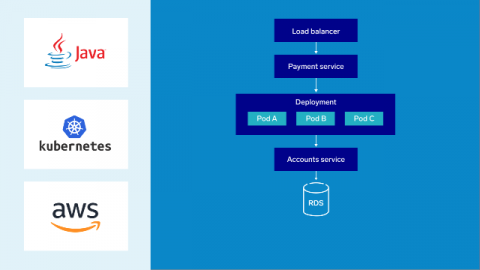
Amazon EKS is the most popular managed Kubernetes solution. DevOps teams can quickly spin up clusters in the cloud and get started with Kubernetes in a few clicks. As organizations embrace Kubernetes in the cloud, the challenge becomes managing clusters across multiple regions or accounts. At that point, organizations struggle to visualize all of their clusters.
The ability of Kubernetes to easily deploy and manage containerized software has given organizations tremendous capabilities in their cloud services, with clusters multiplying into the hundreds or thousands and extending out to the edge for any number of purposes. But its growing popularity has also led to challenges in managing complexity in an environment that is conducive to cluster sprawl.
I’ve built web applications for 15 years. Some have succeeded and flourished, others have crashed and burned. But I’ve learned some hard-won lessons along the way: techniques that correlate with maintainable code and long-term success. Maybe they can help you.