Operations | Monitoring | ITSM | DevOps | Cloud

Stop Token Maxing The Future of Al Budget Management

The era of token maxing is over. When Claude Fable 5 launched last week at $10/$50 per million tokens - double the price of Opus 4.8 - it was a clear reminder that the most powerful model isn't always the right model. Not every task needs the Ferrari. The fastest way to burn your Al budget is sending every request to the most expensive model by default. The real question for the next phase of Al cost management isn't "can this model do the job?" — it's "is it the right model for the job?".

Ship From Where You Build: Harness Delivery Intelligence, Now Inside Antigravity | Harness Blog

The Harness MCP Server now connects directly inside Google Antigravity. Developers can link Harness in under two minutes and give the agent structured, real-time access to their pipelines, execution history, services, environments, and policies, without leaving the editor. What makes it reliable isn't the connection itself. It's the Harness Software Delivery Knowledge Graph underneath, which gives the agent the context to act accurately, fast, and within your guardrails. ‍

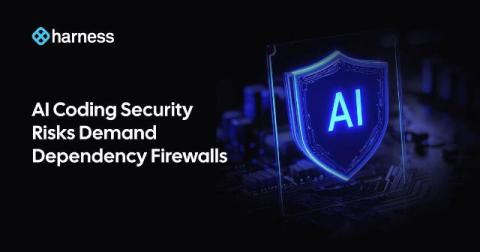
AI Coding Security Risks Demand Dependency Firewalls | Harness Blog

AI coding assistants accelerate development but can rapidly introduce vulnerable, malicious, or non-compliant open-source dependencies into your codebase. Harness Artifact Registry's Dependency Firewall acts as a registry-level control point, evaluating and blocking risky external packages before they enter your CI/CD pipeline—essential protection against modern npm-style supply chain attacks.

Only ONE company has all of DevSecOps - and it's not who you think

Harness has been named a Leader in the 2026 Gartner Magic Quadrant for DevSecOps Platforms — for the third year in a row. Here's what stands out: almost every company in the Leaders quadrant is missing a piece. Some have Dev, some have Ops, but not the security. Harness is the one platform that brings Dev, Sec, AND Ops together — with AI built in. AI is changing how software gets built: more code, more automation, more agents — but also more complexity. Teams need delivery, security, testing, reliability, and cost in one place. That's what we're building every day.

Real-Time CPU and Memory Insights for Harness CI Cloud Builds | Harness Blog

When a CI pipeline runs on cloud infrastructure, the build machine is ephemeral. It spins up, executes your build, and disappears. During that window, you have zero visibility into how much CPU and memory your pipeline actually consumes. This blind spot creates real problems. Teams over-provision VMs "just in case," wasting compute spend. Others under-provision and deal with silent OOM-kills or CPU throttling — the only clue being a cryptic exit code 137.

Harness Named a Leader in the 2026 Gartner Magic Quadrant for DevSecOps Platforms for the Third Consecutive Year | Harness Blog

Harness has been recognized as a Leader in the 2026 Gartner Magic Quadrant for DevSecOps Platforms for the third consecutive year. Harness was also positioned furthest on the Completeness of Vision axis in the report. Harness has been recognized as a Leader in the 2026 Gartner Magic Quadrant for DevSecOps Platforms for the third consecutive year. Harness was also positioned furthest on the Completeness of Vision axis in the report.

Anthropic Fable 5 & Mythos 5 Suspended AI Risk Revealed!

Your entire AI stack ran on a model that disappeared in three days. The US government issued a directive suspending all access — a few hours' notice, no deprecation window, no roadmap. Launched Tuesday. Gone by Friday. And every enterprise that had built workflows on top of it just found out what the real risk was: not the model itself, but the absence of a governance layer underneath it.

Tokenmaxxing: The AI Productivity Lie

Your best engineer spent 500,000 tokens last week. Nothing shipped. There's a name for it now: tokenmaxxing. Failed prompts, dead PRs, code that never reaches production — it looks like productivity, but it isn't. Most engineering leaders can't tell you what percentage of AI-generated code actually ships, or where the budget went. You should be able to say "that bug cost me $2,700 in tokens to fix.".

Mainframe DevOps: Modern CI/CD for Big Iron | Harness Blog

For Platform Engineering teams, the goal has always been clear: build a secure, scalable internal developer platform that reduces cognitive load and accelerates time-to-market. Yet, a massive obstacle often remains hidden in plain sight: the mainframe. While your distributed teams are shipping cloud-native microservices multiple times a day, your core backend mainframe applications frequently remain locked in an isolated silo, lagging behind on slow monthly or quarterly cadences.

From Commit to Approval, Without Leaving VS Code | Harness Blog

The Harness VS Code Extension is now on the Marketplace. Monitor pipelines, debug logs, approve deployments, and query failures with Claude Code, Copilot, or Cursor, without leaving VS Code. Your Harness pipelines, logs, and deployment approvals are now a sidebar panel away inside VS Code. The Harness VS Code Extension is live on the VS Code Marketplace today, no.vsix download, no manual install.

Azure Deployment Strategies & CI/CD Best Practices | Harness Blog

‍ Learn how to master Azure deployment with CI/CD pipelines, progressive delivery, and feature flags. See how Harness helps engineering teams ship faster and safer on Azure. Azure deployment sounds straightforward. Push code, it runs in the cloud. But if you've managed a 2 a.m. production incident because a deployment went sideways on AKS, you know the gap between "it deploys" and "it deploys safely at scale" is significant.

AI Cost Savings Unlocking Hidden Engineering Value

Bain says AI cost savings aren't arriving. But the value isn't missing, it's invisible. Most engineering teams can see token spend. They can see AI usage. What they can't see is whether any of it shipped, and whether it moved the needle on delivery. That's the measurement gap. And until it closes, AI ROI will keep looking worse than it should.

Enforce Artifact Governance with OPA Policy-as-Code | Harness Artifact Registry

Artifact governance should not depend on manual checks. But for many teams, container images, software packages, and open-source dependencies are imported into registries from multiple internal and external sources. Without automated guardrails, vulnerable images, untrusted packages, end-of-life dependencies, or non-compliant artifacts can reach developers and delivery pipelines.

MongoDB Changelog Automation Explained: How Harness Database DevOps Works

Managing MongoDB database changes shouldn't require manually creating and maintaining changelogs. In this video, you'll learn how Harness Database DevOps automatically generates MongoDB changelogs, helping teams capture existing database changes and bring them into version control for reliable CI/CD workflows. As a modern **database schema migration tool**, Harness Database DevOps helps teams automate database change management across relational and NoSQL databases, reducing manual effort and deployment risk.

Shai-Hulud Miasma: Inside the Compromise of Red Hat's Packages | Harness Blog

The Shai-Hulud lineage has a new face. On June 1, 2026, security teams independently flagged a fresh supply chain compromise inside the @redhat-cloud-services npm namespace. 32 packages and 96 versions were all republished with a credential-stealing worm. These aren't typosquats. They are the official packages in a trusted scope, pulling somewhere 80,000-117,000 average weekly downloads.

GitHub Copilot Price Hike Developers Outraged! V2

What used to be $50 a month is now $3,000 — overnight. Microsoft just moved GitHub Copilot to token-based billing, and devs are split between calling it a "rug pull" and admitting someone always had to pay the bill. Here's the part that should worry every engineering leader: most can't tell you what percentage of their AI-generated code actually ships, or where the tokens went. When the meter is running on every prompt, "it feels productive" isn't good enough — you need to know that bug cost you $2,700 in tokens to fix.

Get Ship Done: Everything We Shipped in May 2026 | Harness Blog

AI coding tools promise faster development. What they don't show you is the queue forming at the pipeline, the security scanner you bypassed to stay fast, or the cost dashboard with a line now labeled "unknown" that is steadily growing. In May, we shipped 60+ features in 31 days across the entire delivery system: not just the editor, but everything downstream of it.

AI Spend Hit $297B. Nobody Knows Where It Goes.

AI spend doubled to $297B in two years — and most companies can't tell you what any of it shipped. Token spend is disconnected from outcomes on the dev side. Agents in production? The invoice is the only signal. Harness Cloud & AI Cost Management (CACM) gives teams unit economics at the inference level, cross-provider visibility across OpenAI, Anthropic, Bedrock, and Vertex AI, and request-level attribution to the agent, session, or workflow that triggered the spend.

Software Delivery Context, Now Inside Claude | Harness Blog

Key Takeaway: The Harness MCP Server is now in the official Claude Connectors Directory. Developers using Claude can now discover and connect to Harness, gaining structured, real-time access to their pipelines, deployments, approvals, and delivery workflows. What makes this different from a typical API integration is what's underneath: the Harness Software Delivery Knowledge Graph, which gives Claude the context it needs to make decisions that are accurate, fast, and safe. ‍