Operations | Monitoring | ITSM | DevOps | Cloud

The latest News and Information on Containers, Kubernetes, Docker and related technologies.

Key metrics for monitoring Cilium

Cilium is a Container Network Interface (CNI) for securing and load-balancing network traffic in your Kubernetes environment. As a CNI provider, Cilium extends the orchestrator’s existing network capabilities by giving teams more control over how they build their applications and monitor traffic. For example, vanilla Kubernetes installations typically rely on traditional firewalls and Linux-based network utilities like iptables to filter pod-to-pod traffic by an IP address or port.

Monitor Cilium and Kubernetes performance with Hubble

In Part 1, we looked at some key metrics for monitoring the health and performance of your Cilium-managed Kubernetes clusters and network. In this post, we’ll look at how Hubble enables you to visualize network traffic via a CLI and user interface. But first, we’ll briefly look at Hubble’s underlying infrastructure and how it provides visibility into your environment.

Four Ways to Run Containers on AWS

AWS provides multiple ways to deploy containerized applications. From small, ready-made WordPress instances on Lightsail, to managed Kubernetes clusters running hundreds of instances across multiple availability zones. When deciding on the architecture of your application, you should consider building it serverless. Being free from (virtual) server management enables you to focus more on your unique business logic while reducing your operational costs and increasing your speed to market.

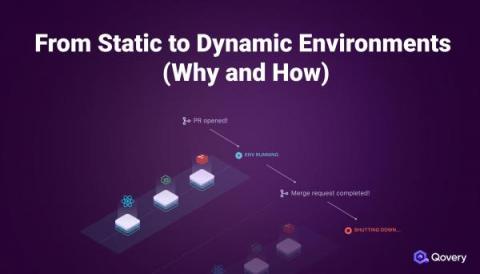
Everything You Need to Know About Deployment Environments

It's common practice that development environments for the same product are kept the same (or at least compatible) for smooth software development life cycle (SDLC) workflow. That brings the question, why do we need more than one environment for the same product. In today’s modern software development, it is crucial for product development teams to maintain an effective and rapid workflow if they want to gain a competitive edge in the product market.

Managing Your Hyperconverged Network with Harvester

Hyperconverged infrastructure (HCI) is a data center architecture that uses software to provide a scalable, efficient, cost-effective way to deploy and manage resources. HCI virtualizes and combines storage, computing, and networking into a single system that can be easily scaled up or down as required.

How to Monitor Docker Metrics | Container Performance Monitoring Explained - Sematext

Find out which are the key Docker metrics you should be monitoring when deploying your containers to ensure the health and performance of your system. Monitoring Docker containers is an essential step in development but is not always an easy thing to do. Even though Docker helped overcome some of the challenges of migrating from a monolithic architecture to a distributed system, it does come with a potential downside when it comes to monitoring. Having multiple containers across a wide variety of hosts that change their scale in milliseconds makes traditional monitoring tools totally obsolete.

How to gain Kubernetes visibility in a few clicks

Enterprises are increasingly adopting Kubernetes for the value that it brings to their organizations, from IT cost savings to improved time to market for application development. See how Sumo Logic can help you realize the value of Kubernetes faster with a guided onboarding setup that only requires a few clicks to go from zero to visibility.