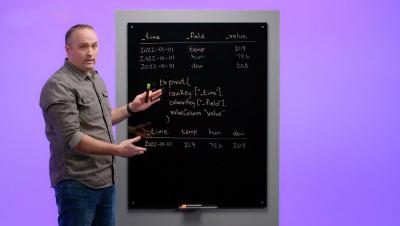
Most developers are more familiar with the shape of relational data than the shape of time series data. InfluxDB stores time series data in such a way to maximize its effectiveness. As developers get more familiar with time series data, it may be helpful to view time series data in a relational layout. Fortunately, Flux language makes it easy to present your time series data the way that's useful for you.
Runaway cardinality can be a problem when working with time series data. This video explains what cardinality is, why runaway cardinality is an issue, and how to begin addressing runaway cardinality if you experience it.
Time series data isn't like other types of data. Instead of constantly updating a record with new info, it is typical to purge highly granular data that is no longer useful. With InfluxDB, you can automate this process using retention policies.
In this demo, Samantha Wang shows how incredibly easy it is to integrate The Things Stack with InfluxDB Cloud, the managed time series platform. All you have to do is use the Things Network InfluxDB Template to ingest your Things data and view monitoring dashboards. From there you’ll be able to perform analytics and set up alerts & notifications. Watch to see how you can do it all in minutes.
InfluxDB 2.x handles InfluxQL differently than InfluxDB 1.x. Here, Scott Anderson walks you through those changes and provides some tips for InfluxQL users.
Telegraf plugins use TOML for configuration. Here, developer Mya Longmire explains how Telegraf reads TOML for plugins and provides some tips to help you get up and running quickly with Telegraf.
Telegraf has hundreds of plugins. Here, developer Mya Longmire explains how to configure Telegraf plugins for data ingest using three of the most popular plugins: SNMP, MQTT, and PostgreSQL. Use these configuration concepts to set up your Telegraf agent.
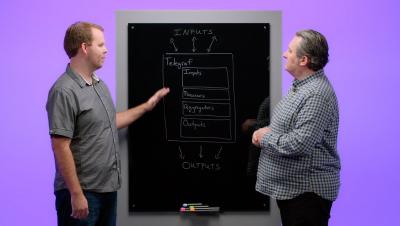
Telegraf offers users hundreds of plugins to choose from. Here, developer Josh Powers talks about the plugin ecosystem, the different types of plugins available, and walks through an example to explain how a plugin works.