Operations | Monitoring | ITSM | DevOps | Cloud

Serverless Monitoring Made Simple: Challenges and Solutions with Atatus

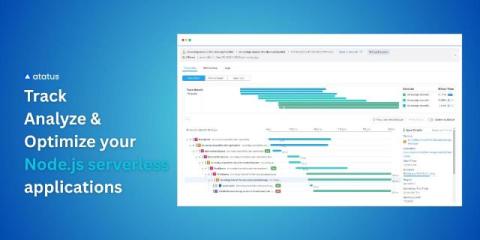
Serverless computing has revolutionized the way applications are built and deployed by eliminating infrastructure management and enabling automatic scaling. However, the dynamic and distributed nature of serverless architectures presents unique monitoring challenges that can impact application performance and user experience.

The Role of Service Maps in Optimizing PHP Application Performance

Modern PHP applications rarely exist in isolation. They run across distributed environments, connect to MySQL or PostgreSQL databases, interact with Redis or Memcached, rely on APIs, and communicate with microservices. This interconnected web brings power but also enormous complexity. When performance issues arise, finding the root cause can feel like searching for a needle in a haystack. Is it the database? A caching layer? A failing third-party API?

How to Reduce Serverless Costs with Smart Monitoring

Serverless architecture has changed how applications are built and run. It removes the need to manage servers, letting developers focus on writing code while automatically scaling with demand. But even with its pay-as-you-go model, serverless apps can get expensive if not monitored and optimized. In this blog, lets see how smart serverless monitoring helps developers and DevOps engineers lower serverless costs, boost performance, and keep operations running smoothly.

Serverless Monitoring: Essential Metrics Every Developer Should Track

Serverless applications have become one of the most efficient ways to build and deploy software. With platforms like AWS Lambda, Azure Functions, and Google Cloud Functions, teams can focus on writing code while the provider handles infrastructure, scaling, and availability. But going serverless doesn’t mean monitoring stops being important. In fact, monitoring becomes even more critical because you don’t have direct control over the servers, containers, or VMs.

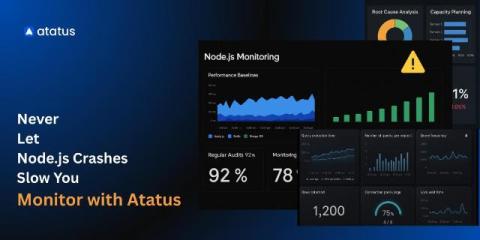
How to Reduce Errors and Improve Reliability in High-Traffic Node.js Applications with APM?

Node.js has become the go-to runtime for building modern, high-performance applications. Its event-driven, non-blocking I/O model makes it particularly well-suited for apps that demand speed and scalability, such as real-time chats, gaming backends, streaming platforms, fintech dashboards, and e-commerce systems. It’s no surprise that some of the world’s largest companies like Netflix, PayPal, LinkedIn, Walmart rely on Node.js to deliver services at scale.

Top 10 Serverless Monitoring Tools in 2025

Monitoring serverless applications is critical to ensure optimal performance, reduce errors, and maintain end-to-end observability. Choosing the right serverless monitoring tools can help track serverless performance metrics, cold starts, and distributed traces across cloud functions. Below, we explore the top 10 cloud-native and third-party serverless monitoring solutions, highlighting their features, pros, cons, and best use cases.

Serverless Applications: Why Monitoring is Essential for Speed and Reliability

Serverless applications are becoming the go-to architecture for modern developers. Startups and enterprises are building serverless applications because they offer scalability, cost-efficiency, and flexibility. However, these advantages come with unique challenges, especially when it comes to monitoring serverless applications. Traditional server monitoring tools fail to capture short-lived functions, making serverless application monitoring essential for maintaining performance and reliability.

Debugging Slow PHP Applications with APM Tools

A slow PHP application in production is not just a performance issue, it poses a significant risk to business operations and user satisfaction. Slow page loads frustrate users, increase bounce rates, and directly impact revenue. For developers, the bigger challenge is that these slowdowns often hide deep in the code, database queries, or external dependencies, making them hard to find.

Common Issues in PHP Applications and How Monitoring Tools Help

PHP has been powering the web for over two decades and continues to be a dominant server-side scripting language. From small business websites to massive enterprise applications, PHP sits at the heart of many critical digital experiences. "But with great popularity comes great responsibility and challenges" Performance bottlenecks, security vulnerabilities, and inefficient coding practices can cripple applications, frustrate end-users, and burn out engineering teams.

Why SaaS Startups Need PHP Application Monitoring for Scalability

For SaaS startups, speed and reliability are everything. A few seconds of downtime or slow performance can turn away users, impact sign-ups, and directly affect revenue. Unlike traditional apps, SaaS platforms operate on an always-on model, which means performance and scalability must be built in from day one. PHP remains one of the most popular choices for startups due to its flexibility, cost-effectiveness, and fast development cycle.