In my prior blog, Continuous Test Data Management for Microservices, Part 1, we offered an introduction to the key approaches for applying continuous test data management (TDM) to microservices. The continuous TDM process for microservices applications is similar to that for general continuous TDM (see figure below), but tailored to the nuances of the architecture. In this post, I’ll outline the key steps for applying TDM across the lifecycle.
Microservice is now the architecture of choice for many developers when crafting cloud-native applications. A microservices application is a collection of loosely coupled services that communicate with each other, enhancing collaboration, maintainability, scalability, and deployment. There are several options for enabling this communication between microservices. REST is the most popular among developers, sometimes used synonymously with APIs. However, gRPC can be a better alternative to REST.
With dozens of microservices running on multiple production regions, getting to a point where any error log can be immediately identified and resolved feels like a distant dream. As an observability company, we at Coralogix are pedantic when it comes to any issue in one of our environments. That’s why we are using an internal Coralogix account to monitor our development and production environments.
Many organizations are experiencing the need to modernize their IT systems to keep pace in an increasingly digital world. Adopting DevOps helps companies implement and initialize the modernization processes. At xMatters, our path to IT modernization has included implementing DevOps, but we have done it a little differently to ensure we are using agile processes.
According to a 2020 CNCF survey, the use of containers in production has been rapidly increasing for the past several years. Nutanix, a global leader in cloud software and a pioneer in hyperconverged infrastructure solutions, is part of that trend.
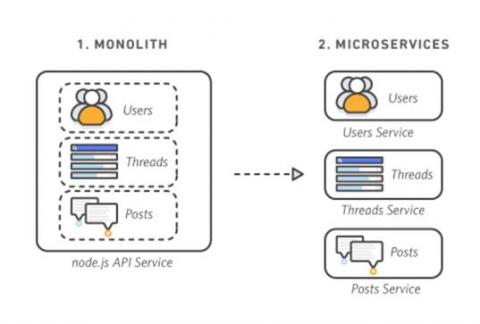
How do you perform AWS Fargate monitoring? Today, we’ll discuss the background of AWS Fargate and using Retrace to monitor your code. As companies evolve from a monolithic architecture to microservice architectures, some common challenges often surface that companies must address during the journey. In this post, we’ll discuss one of these challenges: observability and how to do it in AWS Fargate.