April Customer Newsletter
Welcome to the April 2020 edition of the Tigera Calicommunication newsletter! In the March edition, we discussed context-aware flow logs. This edition covers the next component of logging, the audit logs.


Welcome to the April 2020 edition of the Tigera Calicommunication newsletter! In the March edition, we discussed context-aware flow logs. This edition covers the next component of logging, the audit logs.
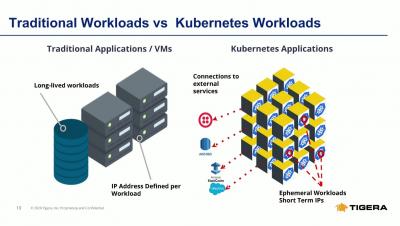
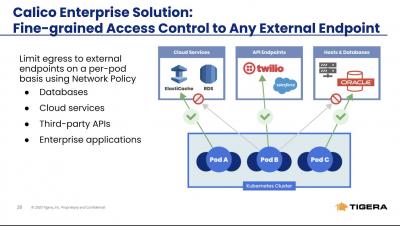
Container use continues to grow, and Kubernetes is the most widely adopted container orchestration system, managing nearly half of all container deployments.1 Successful integration of container services within the enterprise depends heavily on access to external resources such as databases, cloud services, third-party application programming interfaces (APIs), and other applications. All this egress activity must be controlled for security and compliance reasons.
2020 is predicted to be an exciting year with more organizations adopting Kubernetes than ever before. As critical workloads with sensitive data migrate to the cloud, we can expect to encounter various Advanced Persistent Threats (APT) targeting that environment.
Approximately one year ago, Kubernetes 1.14 made support of Windows containers running on Microsoft Windows Server nodes generally available. This was a declaration that Windows node support was stable, well-tested, and ready for adoption, meaning the vast ecosystem of Windows-based applications could be deployed on the platform.
We are excited to announce the general availability of Calico Enterprise 2.7. With this release, Fortinet’s 400,000 customers can use FortiGate to enforce network security policies into and out of the Kubernetes cluster as well as traffic between pods within the cluster.
2019 was a big year for Kubernetes adoption, and 2020 is sure to exceed that pace. Already, we have seen a large number of organizations migrating their workloads to Kubernetes (k8s) both in public and private clouds as they embrace a hybrid cloud strategy. With so much at stake, what are you currently using for network security inside your k8s cluster?
In part 1 of the GitOps blog series, we discussed the value of using GitOps for Calico policies, and how to roll out such a framework. In this second part of the series, we will expand the scope to include decentralized deployment and GitOps.