Operations | Monitoring | ITSM | DevOps | Cloud

Searching Sentry Logs with Regex

We use Sentry's new Regex search for Logs to hunt for non-obvious bugs in our app. What do you do when traces show that Postgres jobs are backing up? Logs are trace-connected, so by looking at one of the affected traces, we can see all of the logs on that trace. In there, we can see Postgres has logged that it acquired a lock only after a long wait. Using regex, we can find all of these logs that describe acquiring a lock after a 10-second-plus wait. That narrows our search from thousands or hundreds of logs down to about a dozen.
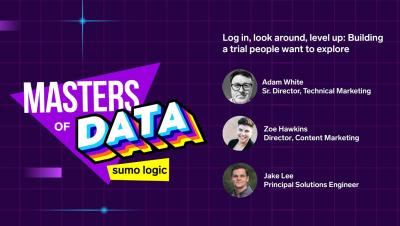
Log in, look around, level up: Building a trial people want to explore

We turned the mic around for this episode, with Zoe Hawkins interviewing Adam White and Jake Lee about Sumo Logic’s redesigned free trial. The new 14-day sandbox comes preloaded with realistic data feeds, Cloud SIEM, and our AI agents, so no one has to build collectors or open tickets before finding out whether the platform fits. Adam and Jake walk through the guided “choose your own adventure” paths, the broad, open-ended questions that bring out the best in Mobot, and how the trial will keep pace with new releases.

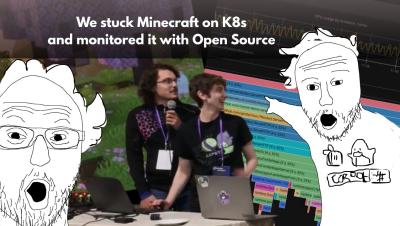
We Stuck Minecraft on a Kubernetes Cluster and Observed it with Open Source

Why did we do this? Not important: jump to 1:31 to see the Pis. TL;DR: We stuck Minecraft on kubernetes running on 4 Raspberry Pis in a 3D-Printed case, and monitored it with open source observability. Huge thanks to Percona DBA Ivan Zaitsev for putting the demo together for Percona University, Montevideo. Coroot automatically collects and visualizes all your telemetry data: logs, metrics, traces, profiles, and a complete map of your services. With the complete context of eBPF, it can diagnose the exact cause of an incident in seconds, and show you the exact commands to fix it.

Claude Opus pricing in 2026: every model, every rate, and whether it's worth it

Claude Opus pricing is $4 per million input tokens and $20 per million output tokens on Claude Opus 5.5, the current model, with cache reads at $0.20 and batch jobs at $2/$10. Opus 5 and the legacy 4-series bill at $5/$25. The 1M context window carries no surcharge. Every Opus model Anthropic shipped in 2026 held the same line: $5 in, $25 out, per million tokens. Opus 4.6 in February, 4.7 in April, 4.8 in May, Opus 5 in July. Four releases, one price. On September 22, 2026, the line broke.

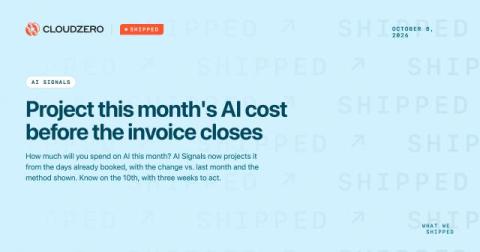
Shipped: Project this month's AI cost before the invoice closes

The question comes up on the 10th, the 15th, and again on the 25th. Where is AI spend going to end up this month? The invoice won’t tell you until it’s closes, and by then there’s nothing left to forecast. “If I’m looking at this on the 15th, I want to know where we’re going to land.” That’s how a finance lead put it during a persona session in September, and it’sthe whole job. You have half a month of real usage behind you.

Reducing Android scope-sync overhead in Sentry Flutter

Our SDK adds work to the app that installs it. It records recent app activity as breadcrumbs and keeps user information and other diagnostic data up to date. Changes to that information are called scope updates. On Android, we send those updates to a worker isolate, which passes them to the Sentry Android SDK. We found that the calling isolate and the worker both normalized the same data. The encoding step also created a JSON string and an extra byte buffer that we could avoid.

AI is making software delivery less stable. DORA's Nathen Harvey on the fix | EVOLVE 2026

DORA's data shows that as AI adoption goes up, individual effectiveness rises, and so does software delivery instability: more rollbacks and more unplanned rework. Nathen Harvey of Google's DORA team explains why AI acts as an amplifier of whatever system you already have. He walks through the seven capabilities that separate teams getting real gains from teams drowning in downstream chaos. He also argues that the risks stopping you from shipping AI-built work should become your platform roadmap.

When AI agents ignore the code freeze: governance that holds | EVOLVE 2026

AI can write 1,100 lines of code for a loading spinner in five minutes. Your change board still meets once a week. Karthik Jayaraman, VP of Information Technology at Fiserv, explains what happens when code generation speeds up and everything downstream stays the same. He covers why "human in the loop" doesn't scale, why handing all review to AI backfires, and why an agent told not to touch production needs a boundary it can't cross, not just an instruction.