Operations | Monitoring | ITSM | DevOps | Cloud

Simplify Feature Flag Management with Harness FME and OpenFeature

Harness FME continues its investment in OpenFeature, building on our early support and adoption of the CNCF standard since 2022. Evaluate flags consistently across languages and environments, and integrate them seamlessly into your applications without modifying your code. Feature flags are table stakes for modern software development. They allow teams to ship features safely, test new functionality, and iterate quickly, all without re-deploying their applications.

Harness Dynamic Pipelines: Complete Adaptability, Rock Solid Governance

Harness Dynamic Pipelines offers an option to create pipelines, or pipeline stages, at runtime For a long time, CI/CD has been “configuration as code.” You define a pipeline, commit the YAML, sync it to your CI/CD platform, and run it. That pattern works really well for workflows that are mostly stable. But what happens when the workflow can’t be stable? In all of those cases, forcing teams to pre-save a pipeline definition, either in the UI or in a repo, turns into a bottleneck.

Building the Next Phase of Harness's AI Engineering Organization in India

Over the past year, Harness’s India organization has entered a new phase of growth – one defined not just by scale, but by increasing technical depth and impact. What began as steady expansion has turned into real momentum across engineering, product, and operations. Today, 480 people work in India, contributing across every major product area. In 2025 alone, the team in India grew by more than 75%, and now each core Harness product offering has a strong engineering presence in the region.

Harness AI For Everything After Coding

AI didn’t just change how we write code. It changed everything that comes after. Application teams are shipping more code than ever with AI — but 70% of the work still happens after coding: testing, security, deployment, optimization, and keeping everything moving. As coding gets faster, delivery becomes the bottleneck. That’s where Harness comes in.

CTO Predictions for 2026: How AI Will Change Software Development | ShipTalk S4E7 Special Episode

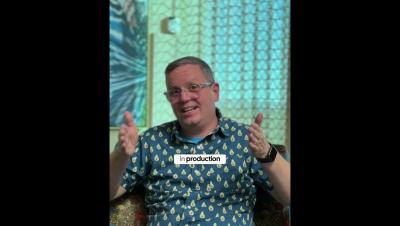
In this special ShipTalk episode, host Dewan Ahmed (Principal Developer Advocate, Harness) sits down with @Harnessio Field CTO Nick Durkin for spicy—but practical—2026 predictions across AI, software delivery, DevSecOps, MLOps, and developer experience. Will we see the first “AI-caused meltdown”? Are AI “confidence scores” even trustworthy? Is 2026 the year of AI cleanup crews and recovery engineering? Nick’s take: the answer isn’t more gates—it’s guardrails, policy in the pipeline, and teams operating with the same “rulebook.”

CTO Predictions for 2026: Special ShipTalk Episode with Nick Durkin

AI will not fix broken software delivery. It will expose it. By 2026, teams that win will use specialist AI agents, guardrails over gates, and security built directly into the pipeline. As we look toward 2026, it is becoming clear that AI is not just changing how code is written. It is changing how software delivery itself works. The real shift is happening at the intersection of AI, security, and developer experience, where speed, risk, and responsibility now collide.

Theory to Turbulence: Building a Developer-Friendly E2E Testing Framework for Chaos Platform

Chaos fault validation must be safe, predictable, and measurable. High setup friction blocks adoption and slows feedback loops. API-driven execution beats manual YAML workflows. Real-time logs and smart target discovery speed debugging. Dual-phase validation ensures impact and recovery. Strong DX enables faster, scalable chaos testing. As an enterprise chaos engineering platform vendor, validating chaos faults is not optional — it’s foundational.

ShipTalk S4E6 | Beyond the Magic Box: Solving AI Hallucinations with Precision RAG

In this episode of the ShipTalk Podcast, host Dewan Ahmed (Principal Developer Advocate at Harness) sits down with Evgeny Ilinykh (Founder of GuidedMind.ai and former Tesla Engineering Manager) to move past the AI hype and get into the engineering reality of Retrieval-Augmented Generation (RAG). If your AI agents are hallucinating, the problem probably isn't your model—it’s your retrieval layer. Evgeny breaks down how to turn the "black box" of LLMs into a transparent, production-ready system that developers can actually trust.

Knowledge Graph + RAG: A Unified Approach to DevOps Intelligence

Knowledge graphs and RAG (Retrieval-Augmented Generation) are complementary techniques for enhancing large language models with external knowledge, and each brings unique strengths for DevOps use cases. While they are often mentioned together, they are fundamentally different systems, and combining them delivers far better outcomes than relying on either approach alone.

How Enterprises Modernize and Migrate to the Cloud Safely with Harness Automation

Cloud migration is a multi-layer transformation involving infrastructure, CI/CD, governance, security, and cost management—not just application movement. Enterprises face unique migration challenges due to complex systems, parallel cloud operations, compliance requirements, and tool sprawl. Automation and standardization are critical to reducing risk, manual effort, and operational inconsistency during cloud-to-cloud migrations.