Operations | Monitoring | ITSM | DevOps | Cloud



New Relic vs. Sentry vs. Scout
In the digital economy, software applications have become a primary product for a large number of companies. On top of that, customers expect a flawless user experience from the applications as it evolves. To provide such a great experience, companies need to have powerful performance monitoring across their applications. We will discuss APM tools that are popular in the market right now and compare them in different aspects. Feel free to use these links to navigate the guide.
Limit Coralogix usage per account using Azure Functions
At Payoneer, we use Coralogix to collect logs from all our environments from QA to PROD. Each environment has its own account in Coralogix and thus its own limit. Coralogix price modules are calculated per account. We as a company have our budget per account and we know how much we pay per each one. In case you exceed the number of logs assigned per account you will pay for the “extra” logs. You can see the exact calculation in this link.
Ketch Now in the Civo Cloud Marketplace - Getting Started

Infrastructure as Code, part 2: build Docker images and deploy to Kubernetes with Terraform
This series shows you how to get started with infrastructure as code (IaC). The goal is to help developers build a strong understanding of IaC through tutorials and code examples. In this post, I will demonstrate how to how to create a Docker image for an application, then push that image to Docker Hub. I will also discuss how to create and deploy the Docker image to a Google Kubernetes Engine (GKE) cluster using HashiCorp’s Terraform.
What's Wrong With Observability Pricing?
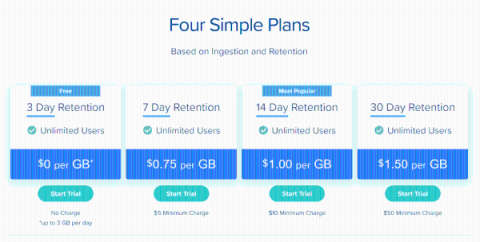
There’s something wrong with the pricing of observability services. Not just because it costs a lot – it certainly does – but also because it’s almost impossible to discern, in many cases, exactly how the costs are calculated. The service itself, the number of users, the number of sources, the analytics, the retention period, and extended data retention, and the engineers on staff who maintain the whole system are all relevant factors that feed into the final expense.
How to Become An Agent of Change in Your Organization
To change or not to change? It is a question that every IT leader faces in the wake of lagging technology growth. While IT leaders aren’t blind to the problem, change remains elusive. Instead of risking stability and performance by switching to an unknown alternative, many leaders stick with their known incumbent. But that’s not the case anymore. We see a new generation of IT leaders challenging the status quo and transforming the technology behind world-leading companies.
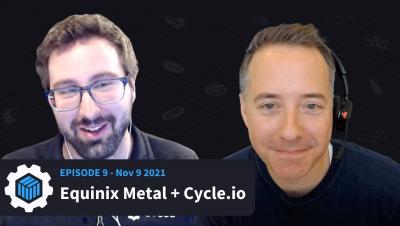
Cycle Podcast | Episode 9 "Equinix Metal + Cycle.io" Featuring Zachary Smith, Managing Director
Now you see me, now you don't: feature-flagging with LaunchDarkly at incident.io
At incident.io, we ship fast. We're talking multiple times a day, every day (yes, including Fridays). Once I merge a pull request (PR), my changes rocket their way into production without me lifting a finger. 💅 It's when we tackle larger projects that this becomes a bit more complicated. We recently launched Announcement Rules, which let you configure which channels incident announcements are posted in depending on criteria you define.
Pepperdata Lets AWS Auto Scaling Execute More Big Data Workloads
Here at Pepperdata, we continuously work to improve our products and better serve our customers. Whether it’s executing more big data workloads or ensuring their resource consumption remains optimal, we want our customers to get the best value and tangible benefits from our products while not overshooting their big data cloud budgets. Today, we’re bringing you the data to back up our claims that all of this is possible.