Demo of setting up observability of event and metrics for a python flask web app with real time visulization. Data is stored and queried from InfluxDB 3 Core (alpha) database.
When Netflix buffers or AWS goes down, teams spring into action. But how do they identify and fix issues so quickly? The secret lies in intelligent DevOps monitoring, a system that not only watches but understands your infrastructure’s behavior. In this hands-on guide, we’ll build a modern monitoring pipeline that helps you catch and resolve issues before your users notice them. We have prepared a sample Python application that we encourage you to play with to understand the system in action.
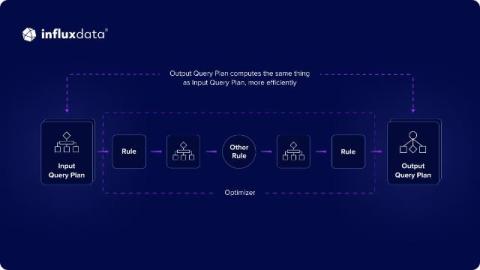
Apache DataFusion has reached an inflection point. It has matured beyond early adopters and is now a viable choice for anyone building highly performant analytic systems. I predict 2025 will bring a significant acceleration in the number of systems built on DataFusion, and my focus this year is to help drive that growth.
InfluxDB is a purpose-built time series database designed to handle high-write throughput and large volumes of time-stamped data. From monitoring system metrics to tracking IoT device readings and analyzing financial trends, it excels in scenarios where time is a fundamental factor. With the release of InfluxDB v3, users now benefit from dual query language support: SQL and InfluxQL.
This tech paper was created by IIoT World and InfluxDB. This post was originally published on IIoT World. The Industrial Internet of Things (IIoT) is revolutionizing industries like manufacturing, energy, and logistics by creating more intelligent, interconnected systems that elevate productivity and efficiency. With IIoT, machines, systems, and sensors are linked in real-time, streamlining industrial automation and making predictive maintenance a reality—all while reducing downtime and costs.
The stakes are high in Aerospace manufacturing and operations. Aerospace systems are highly complex and require extremely precise engineering—every part of an aircraft or spacecraft must work together flawlessly, and error tolerance is minuscule. Ensuring that all components work perfectly under various conditions (pressure, temperature, vibration) is vital. The cost of building and operating aerospace systems is enormous.
In a world driven by data, efficient time series data management is a growing concern. APIs play a significant role in automating tasks, especially in cloud-based environments. Go, with its high performance and concurrency, is quickly becoming one of the standard languages for writing cloud infrastructure and utilities for managing streams of data.
This blog was originally published on Apache DataFusion Project News & Blog I am extremely excited to announce that Apache DataFusion 43.0.0 is the fastest engine for querying Apache Parquet files in ClickBench. It is faster than both DuckDB and chDB/Clickhouse using the same hardware. It also marks the first time a Rust based engine holds the top spot, which has previously been held by traditional C/C++ based engines.
In this blog post, we’ll explore how to build a data pipeline using Kafka, Faust, and InfluxDB to effectively ingest, transform, and store data. We’ll start with an overview of Kafka, a high-performance messaging platform, and Faust, a Python library designed for stream processing, now maintained by the community as Faust-streaming.
If you’re looking to dive into the world of IoT data collection, you’ve probably come across MQTT—a lightweight messaging protocol designed for efficiently transmitting data between devices.