Operations | Monitoring | ITSM | DevOps | Cloud

Zoom into Kinsing

The Kinsing attack has recently been reported by security researchers, and it is well known for targeting misconfigured cloud native environments. It is also known for its comprehensive attack patterns, as well as defense evasion schemes. A misconfigured host or cluster could be exploited to run any container desired by the attacker. That would cause outages on your service or be used to perform lateral movement to other services, compromising your data.
Securing Kubernetes clusters with Sysdig and Red Hat Advanced Cluster Management

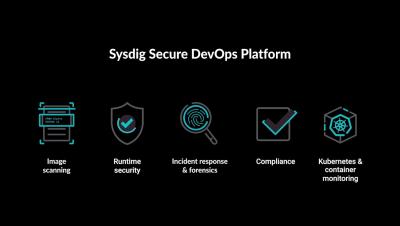
In this blog, we introduce the new integration between Sysdig Secure and Red Hat® Advanced Cluster Management for Kubernetes that protects containers, Kubernetes, and cloud infrastructure with out-of-the-box policies based on the Falco open-source runtime security project. Organizations are quickly growing their Kubernetes footprint and need ways to achieve consistent management and security across clusters.

Container security on IBM Cloud

If you’re running containers and Kubernetes on IBM Cloud, you can now enable the key security workflows of Sysdig Secure as a service within your IBM Cloud deployments. This makes it easier for you to implement security tools and policies to ensure your containers and your Kubernetes environment are protected and running as intended. The new container and Kubernetes security features are integrated into IBM Cloud Monitoring with Sysdig and offered as an additional service plan.

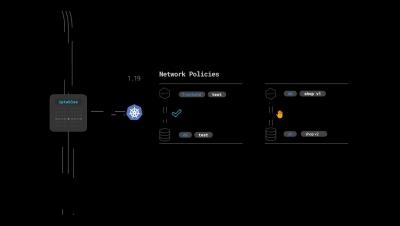
Kubernetes network policies with Sysdig

Microservices and Kubernetes have completely changed the way we reason about network security. Luckily, Kubernetes network security policies (KNP) are a native mechanism to address this issue at the correct level of abstraction. Implementing a network policy is challenging, as developers and ops need to work together to define proper rules. However, the best approach is to adopt a zero trust framework for network security using Kubernetes native controls.

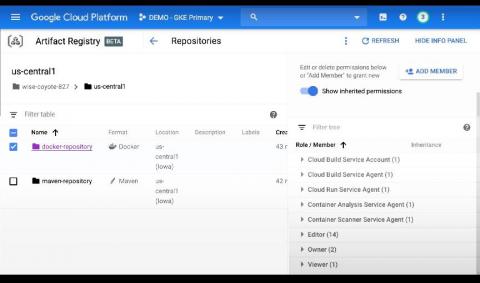
Sysdig extends image scanning to Google Cloud's Artifact Registry

In support of modern application development built on CI/CD, containers and open source, Google Cloud launched Artifact Registry (now generally available), a new artifact management solution. Sysdig helps DevOps teams using Artifact Registry confidently secure the build pipeline with comprehensive image scanning that identifies container vulnerabilities and misconfigurations to reduce risk.

How to monitor Kubernetes control plane

The control plane is the brain and heart of Kubernetes. All of its components are key to the proper working and efficiency of the cluster. Monitor Kubernetes control plane is just as important as monitoring the status of the nodes or the applications running inside. It may be even more important, because an issue with the control plane will affect all of the applications and cause potential outages.