Operations | Monitoring | ITSM | DevOps | Cloud

The latest News and Information on Containers, Kubernetes, Docker and related technologies.

How to configure HTTPS for an Nginx Docker Container

There are a few ways to effectively configure HTTPs for an Nginx Docker Container. In this guide, we will quickly cover configuration through the use of free certificate authority Let’s Encrypt. For plenty of people, using Let’s Encrypt to configure HTTPS for an Nginx docker container is a good option. A paid version like Comodo’s SSL certificates may make more sense if you want to increase the security of your site and server.

We raised $1M pre-seed round to simplify application deployment in the Cloud

I am thrilled to announce that we have raised a $1M pre-seed round with top notch investors. Among them are top entrepreneurs and Cloud experts like Alexis Lê-Quôc, co-founder and CTO at Datadog, and Sebastien Pahl, Co-founder of Docker. Qovery will use the funds to strengthen its research and development team and extend their offer to technology companies in Europe and in the US.

Network Policy with GKE

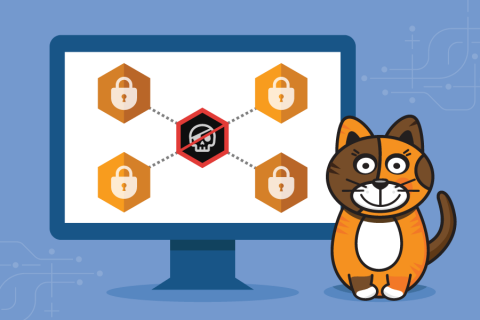
By default, pods are non-isolated; they accept traffic from any source. The Google GKE solution to this security concern is Network Security Policy that lets developers control network access to their services. Google GKE comes configured with Network Security Policy using Project Calico which can be used to secure your clusters. This class will describe a few use cases for network security policy and a live demo implementing each use case.

What's new in Sysdig - September 2020

Welcome to our monthly update on what’s new from Sysdig! This month is a little eclipsed by last month’s big launch of Essentials and our new SaaS regions, KubeCon EU, and many of us finishing off the summer holidays and getting the kids packed off back to school. Our teams are busy working on some big feature releases which we don’t want to reveal just yet, but I think you’re all going to really love them in the coming months!

2 ways to set up static IP addresses for ALB

One highly requested feature of AWS’s Application Load Balancer is the ability to assign static IP addresses. Unfortunately, ALBs do not support this feature and it is unlikely they will in the near future. Today, the only way to achieve static IP addresses for your application behind an ALB is to add another layer in between the client and your ALB which does have a static IP address, and then forward requests to your ALB.

Manage AppArmor profiles in Kubernetes with kube-apparmor-manager

Discover how Kube-apparmor-manager can help you manage AppArmor profiles on Kubernetes to reduce the attack surface of your cluster. AppArmor is a Linux kernel security module that supplements the standard Linux user and group-based permissions to confine programs to a limited set of resources. AppArmor can be configured for any application to reduce its potential attack surface and provide greater in-depth defense.

How to Secure Mixed Linux/Windows Clusters with Calico Policy

Calico is the only cross-platform CNI and Network Policy engine available today and is currently powers more than 150,000 known clusters across millions of nodes worldwide. Many organizations have .NET and windows workloads that they are or will eventually modernize and deploy to Kubernetes. We have been collaborating with Microsoft and joint customers over the past few years to bring Calico to the Windows platform.

Secure and monitor AWS Outposts and hybrid clouds

Today we announced that Sysdig has demonstrated successful integration of our monitoring and security software with AWS Outposts and achieved the AWS Outposts Ready designation. AWS Outposts provides a fully managed service that extends AWS infrastructure, services, APIs, and tools to your datacenter, co-location space or “edge” location to support on-prem and hybrid cloud use cases. AWS Outposts provides a hardware and software stack built on Amazon’s EC2 public cloud expertise.