Operations | Monitoring | ITSM | DevOps | Cloud

The latest News and Information on Containers, Kubernetes, Docker and related technologies.

Getting up and running with Calico on your Rancher Kubernetes Cluster

Rancher is a great way to deploy and manage Kubernetes clusters across a broad range of environments, abstracting away many of the differences between the environments, and using Canal for run-anywhere networking. But what if you want to up your networking game to squeeze the most out of your clusters? In this training session you’ll learn about the various networking options available to you in Rancher, and considerations to take into account in order to select the best option for your environment.

Best Practices and Considerations for Multi-Tenant SaaS Application Using AWS EKS

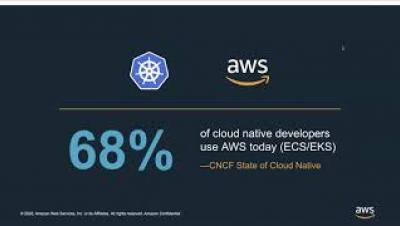
Today, most organizations, large or small, are hosting their SaaS application on the cloud using multi-tenant architecture. There are multiple reasons for this, but the most simple and straightforward reasons are cost and scalability. In a multi-tenant architecture, one instance of a software application is shared by multiple tenants (clients).

Keep Watch on Docker Hub Pulls with JFrog Log Analytics

Have you heard? Docker Hub now limits usage by free anonymous and credentialed accounts. After the number of pulls from an IP address exceeds a fixed threshold within a six hour period (100 for anonymous, 200 for credentialed), Docker Hub throttles bandwidth. You’ll still get your Docker images, but at a much slower speed. You can read our earlier blog post to learn more about the Docker Hub policy changes.

Docker: Secure, but comfortable images.

While developing Docker images for Icinga 2, Icinga Web 2 and Icinga DB we stumbled over OpenShift which doesn’t allow images to run as root by default. One has to enable that explicitly. Also admins of K8s environments being more permissive by default may decide not to allow running as the superuser. So we’ve added a USER directive to our Dockerfiles to make our customers‘ compliance departments happy.

How to monitor coreDNS

The most common problems and outages in a Kubernetes cluster come from coreDNS, so learning how to monitor coreDNS is crucial. Imagine that your frontend application suddenly goes down. After some time investigating, you discover it’s not resolving the backend endpoint because the DNS keeps returning 500 error codes. The sooner you can get to this conclusion, the faster you can recover your application.

KMC - Observing and Optimizing Your Rancher Env (with Datadog)

Kubernetes has exploded in popularity due to its versatility, ease of use, and powerful autoscaling abilities. With Rancher, teams can seamlessly manage their Kubernetes and cloud-native workloads. Getting observability into such a dynamic technology, however, remains challenging.

Are Developers Not That Keen On Kubernetes?

Should application developers learn Kubernetes? Let’s ask an even deeper question; should application developers even be aware of Kubernetes in their infrastructure? I frequently hear this question being asked by DevOps, Platform Engineering, and Development teams. Of course, this is a discussion that brings very different views from different people and can result in a very long debate.

Deploying Applications on Kubernetes

In a previous article, we discussed why we frequently hear that developers are not that keen on Kubernetes. You can read it here. In summary, while developers certainly see the value of Kubernetes, they want to continue focusing on their application code and updates and not be impacted by the company’s Kubernetes initiative, which is quite fair.

How Kubernetes is transforming the industrial edge

According to leading independent researchers teknowlogy | PAC, open source platforms – and Kubernetes in particular – are central to the future of digital factories. The PAC RADAR report offers a detailed market analysis of industrial digitalisation trends, and it predicts that Kubernetes-based platforms that bring together edge and cloud technologies will soon dominate the digital factory landscape.