The latest News and Information on Containers, Kubernetes, Docker and related technologies.
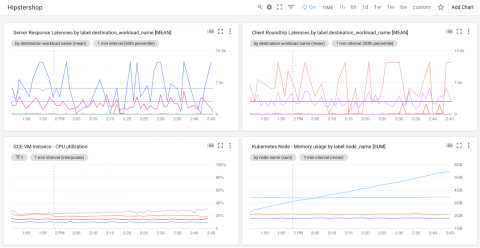
The Kubernetes ecosystem contains a number of logging and monitoring solutions. These tools address monitoring and logging at different layers in the Kubernetes Engine stack. This document describes some of these tools, what layer of the stack they address, as well as best practices for implementation including an example from the field, a quick start, and a demo project.
In the words of the UFC's icon Bruce Buffer, with a 180 degree spinning announcement - "we...are...live..." and finally after a long beta period, we're ready to launch to the public as a whole. The beta period has been an excellent experience for us, and of course, a great learning curve.
Docker 18.09 offers the possibility for a Docker client to communicate with a remote daemon via ssh. Here’s how.
We released version 2.2.0 of Rancher today, and we’re beyond excited. The latest release is the culmination of almost a year’s work and brings new features to the product that will make your Kubernetes installations more stable and easier to manage.
An important element of operating Kubernetes is monitoring. Hosted Kubernetes services simplify the deployment and management of clusters, but the task of setting up logging and monitoring is mostly up to us. Yes, Kubernetes offer built-in monitoring plumbing, making it easier to ship logs to either Stackdriver or the ELK Stack, but these two endpoints, as well as the data pipeline itself, still need to be set up and configured.
The StatsD stack is one of the most popular monitoring solutions to instrument your code using custom metrics. In this post we will describe the StatsD metrics architecture, metrics types and formats, proving code examples for the Golang, NodeJS/Javascript and Python programming languages.
Six months in the making, Write-Ahead Logging (WAL) for the remote_write API was one of the enhancements we included in the Prometheus 2.8 release on March 12. It’s a change intended to safeguard client metrics in the face of any network issues.
As it is already a tradition, here we are with What’s new for Kubernetes 1.14. Here at Sysdig we follow the Kubernetes development cycle closely in order to bring you a sneak peak of the enhancements and new features that Kubernetes 1.14 will contain when released on March 25, 2019.