Operations | Monitoring | ITSM | DevOps | Cloud

In-House vs. Outsourced: Why Enterprises Rely on Professional Data Analysis Services

Why do enterprise technology directors choose external software engineering vendors over building internal analytics units when modernizing legacy data infrastructure? The strategic choice comes down to technical velocity, economic optimization, and access to domain-specific analytical frameworks. Building an internal data science team from scratch requires significant capital expenditure, multi-month talent recruitment, and continuous software platform license overhead.

Inside LeoLabs: How Radar Engineers Track Over 27,000 Objects in Orbit with InfluxDB

Summary InfluxDB plays a critical role in LeoLabs’ infrastructure, enabling a lean team to operate with confidence that potential issues will be detected and surfaced in real-time. By offloading the complexity of managing time series data at scale, engineers are free to focus on higher-impact work (such as optimizing their radar network) rather than maintaining and troubleshooting database systems.

AI's Role in Enhancing Digital Commerce Operations

Artificial intelligence is quickly becoming a must-have for digital businesses, not just a nice-to-have. For companies looking to sharpen their operations, AI offers powerful ways to predict what's next, smooth out customer interactions, and keep transactions safe. It's not about replacing people, but giving them better tools. This lets teams focus on big-picture strategy while AI crunches data and automates tasks. This shift is changing what's possible in terms of how efficient a business can be, how happy its customers are, and how much it can grow.

How AI Can Help Identify Business Investment Opportunities

Artificial intelligence is quickly moving from a futuristic concept to a practical tool for modern business. For entrepreneurs and investors, AI offers a powerful way to cut through the noise and identify genuine investment opportunities. Instead of relying solely on intuition and manual research, you can now use AI to analyze complex data sets, predict market shifts, and pinpoint ventures with the highest potential for success.

Discover How Home Services Marketing Agencies Redefine Local Success

Local home service businesses operate in a highly competitive environment where visibility, trust, and relationships with clients define success. In most cases, conventional marketing strategies may not be able to match the dynamics in which people conduct their searches in the digital age. Local home services marketing firms assist businesses in redefining themselves by integrating technology and creativity using six strong strategies.

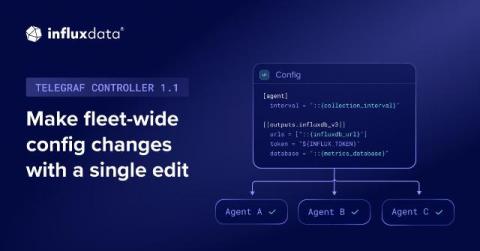
Getting Started with Telegraf Controller

Telegraf Controller is a centralized application designed for managing Telegraf deployments at scale by defining configurations in one location and consistently applying them across a fleet of agents. In this video, Product Manager Scott Anderson walks you through the steps of setting up and managing agents using the controller, covering.

How Analytics Engineering Coaching Closes the DataOps Skills Gap

Enterprise data teams are under pressure from two directions at once. Business stakeholders expect faster, more reliable data products, from clean dashboards to trustworthy metrics feeding into AI systems, while the talent market for people who can build and maintain that infrastructure remains tight. Hiring has not solved this on its own, since experienced analytics engineers are expensive, hard to find, and often just as hard to retain once they are trained up on a specific stack.

From BigQuery to ClickHouse: How we made our analytics 5× faster

‍For years, ilert has given our customers extensive analytics across their alerts, notifications, and on-call activity, a comprehensive overview of how their teams and services respond to incidents. These capabilities were backed by a separate analytical database running on Google BigQuery. It held the numbers behind every reporting dashboard in ilert, and for a long stretch it was perfectly fine. Then three problems grew too big to ignore.

OpenSearch 3.6: Agentic Applications Meet Long-Term Support

TL;DR OpenSearch 3.6 makes agentic search production-ready, with the AI-powered Launchpad provisioning full search apps in minutes and faster default vector search, and it's the first LTS release, bringing 18+ months of guaranteed support, SBOMs, and an upstream-first commitment (every fix goes back to the main project) so teams get fast-moving open source and a stable, supported platform at once.

What I got wrong about ClickHouse as a Kafka Person

Kafka is brilliant at moving events around, but sooner or later someone wants to actually query those events, perhaps aggregations, dashboards, or ad-hoc analytics over billions of rows. That is where ClickHouse comes in. It's the option for when stream processing is more than you need, but warehouse query latency is more than you'll tolerate.