Operations | Monitoring | ITSM | DevOps | Cloud

Any Apple update can break our app. Here's how we find out first.

This is a guest post by Dan Mindru, a Frontend Developer and Designer who is also the co-host of the Morning Maker Show. Dan is currently developing a number of applications including PageUI, Clobbr, and CronTool. It feels like with every release, we are walking a tightrope. We need to keep our app lightweight, stable, and performant, all the while depending on APIs that can shift at any moment (without warning, too!).

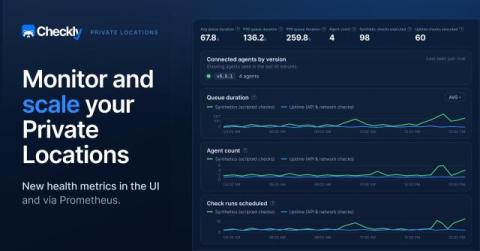
Autoscaling Checkly Private Location Agents in Kubernetes with KEDA

Monitoring load is not always steady. A team might add a new batch of checks or run several ad hoc tests during a rollout. When that happens, your Private Location agents need to pick up more work at once. If there aren’t enough agents available during a burst, checks start piling up in the queue, which can delay or disrupt check execution. But solving this by running a high number of agents around the clock has the opposite problem: most of that capacity sits idle until the next busy period.

ACP vs MCP: What's the difference for agentic coding?

An AI coding agent holds many conversations at once. Not only is the user prompting it, the agent also talks to the IDE, showing diffs and asking before it touches a file. At the same time it talks to tools, pulling a failing build or querying a database. Two open protocols standardize those conversations. This guide compares ACP vs MCP in practical terms: what each protocol does and when each applies. ACP (Agent Client Protocol) connects a code editor to an AI coding agent.

What Are Network Performance Metrics? How to Track and Fix Issues (2026)

Network performance metrics are real-time measurements of how data moves across your network, from speed and capacity to delay, loss, and reliability. Network performance metrics are the diagnostic layer between your infrastructure and your users. They explain why things are slow, dropped, or unreachable by capturing everything from how fast packets travel and how much bandwidth is in use to how often data gets dropped or delayed.

From Alert Noise to Automated Action: The Case for Workflow-Driven Monitoring

TL;DR: Modern monitoring platforms face a “workflow problem”: engineers are drowning in telemetry but lack tools that connect detection to resolution, often leading to fragmented, manual incident investigations. Most organizations have mastered data collection but fail at incident response. Engineers waste precious time manually stitching together logs, metrics, and traces across siloed tools. The Solution: Workflow-driven monitoring acts as a guide, not just a dashboard.

5 Top Rated LEI Registration Services That Will Save You Money in 2026

Securing a Legal Entity Identifier is pretty much a non-negotiable step to prepare your business for growth if you plan on trading globally. But let's be honest, regulatory compliance isn't exactly anyone's favorite budget line item. The good news is that keeping things legal in 2026 doesn't mean you have to overpay. Finding the right registration partner can actually save you a ton of cash on annual upkeep.

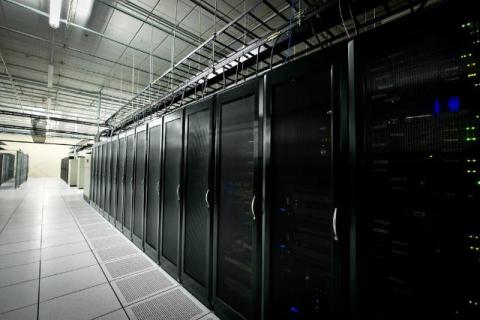
Why Modern Data Centers Require Better Insulation Strategies for Continuous Uptime

From streaming platforms to banking networks, today's digital demands rest on advanced facilities that operate without pause. With companies relying heavily on constant connectivity, stability within these environments matters more than ever before. A short disruption might result not only in monetary setbacks but also slower workflows and weakened confidence among users. Although computing hardware, climate controls, and emergency energy sources typically dominate discussions, protective layering quietly contributes just as much to seamless performance.

Why Most AI Pilots Never Reach Production

Most AI initiatives never make it out of the pilot stage. Gartner has forecast that 30% of generative AI projects will be abandoned after proof of concept by the end of 2025, undone by poor data quality, weak controls, unclear business value, and escalating cost. The problem predates the current wave of generative tools. RAND's study of experienced practitioners found that more than 80% of AI projects fail, roughly twice the rate of IT projects that carry no AI component.