Operations | Monitoring | ITSM | DevOps | Cloud

Deep Learning Toolkit 3.6 - Automated Machine Learning, Random Cut Forests, Time Series Decomposition, and Sentiment Analysis

We’re excited to share that the Deep Learning Toolkit App for Splunk (DLTK) is now available in version 3.6 for Splunk Enterprise and Splunk Cloud. The latest release includes: Let’s get started with the new operational overview dashboard which was built using Splunk’s brand new dashboard studio functionality which I highly recommend checking out. You can learn more about it in this recent tech talk which you can watch on demand.
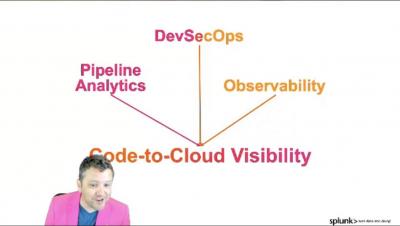

Dissecting DevOps - Code-to-Cloud Visibility: The Framework for DevOps Success

Recording from the DevOps.com webinar Code-To-Cloud Visibility where Splunker Chris Riley covers the key concepts to maintain visibility from the point a feature is defined to the point that feature runs in production. Learn about the practices of DevSecOps, Pipeline Analytics, and Observability. And why a Code-To-Cloud strategy is necessary to support and accelerate Cloud and DevOps transformation.

How to Instrument a Java App Running in Amazon EKS

As we start to see big moves from monolith deployments to microservices, the adoption of Kubernetes has become top of mind for many SREs. Organizations can leverage the open-source system to automate deployments, scale, and manage containers, making Kubernetes one of the primary solutions for delivering workloads. However, maintaining the system can be difficult and, in some cases, overwhelming.

Dissecting DevOps - Measuring quality in a SaaS world: SLA, SLI, SLO

Now that software is delivered over the web and not in a box, how developers guarantee quality to their users has radically changed. Users do not care about version numbers or floppy disks. They just want access to a service that just works. In the microservices world, the quality of your service both to your internal users and external is measured by SLAs, SLIs, and SLOs. And how you decide what those metrics are is a key strategy.

Taking Inventory of Your Google Cloud

Splunk Cloud Architect Paul Davies recently authored and released the GCP Application Template, a blueprint of visualizations, reports, and searches focused on Google Cloud use cases. Many of the reports included in his application require Google Cloud asset inventory data to be periodically generated and sent into Splunk. But HOW exactly do you craft that inventory generation pipeline so you can "light-up" Paul's application dashboards and reports?

Introducing Splunk Federated Search

Rapid digital transformation partnered with increased cloud adoption have resulted in organizations generating unprecedentedly large volumes of data. This data is stored in disparate data repositories due to organizational boundaries, data protection, and privacy laws (e.g. GDPR). Additionally, it is stored across environment types with some kept in the cloud and often historical data and other sensitive data types are kept in on-premise environments contributing to more data silos.

API 2.0: TruSTAR Operationalizes Data Orchestration and Normalization for a New Era in Intelligence Management

Today we released API 2.0, the latest version of TruSTAR’s API-First Intelligence Management Platform. This new version continues our commitment to simplify and streamline intelligence for automation in enterprise security intelligence management, and breaks through long-standing industry limitations around operationalizing data orchestration and normalization.

Managing Updates to the Splunk Cloud Vetting Process

Before apps can be installed in a customer’s Splunk Cloud deployments, these apps have to go through Splunk’s cloud vetting process. Cloud vetting helps ensure that apps are safe and performant for our mutual customers to use in Splunk Cloud. It’s important for us to make regular updates to our cloud vetting requirements in order to ensure apps running on Splunk Cloud are “up to snuff”.