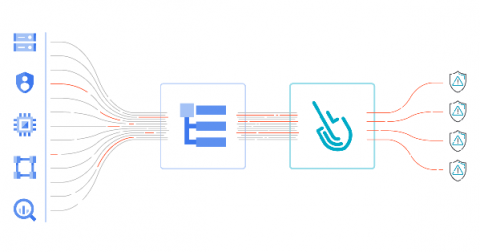
GCP audit logs are a powerful tool that track everything happening in your cloud infrastructure. By analyzing them, you can detect and react to threats. Modern cloud applications are not just virtual machines, containers, binaries, and data. When you migrated to the cloud, you accelerated the development of your apps and increased operational efficiency. But you also started using new assets in the cloud that need securing.
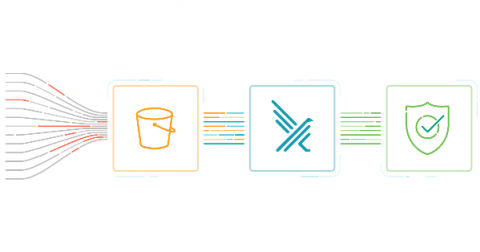
One of the major concerns when moving to the cloud is how to approach AWS S3 security. Companies may have moved their workflows to Amazon, but are still cautious about moving their data warehouse. And that is totally understandable. We have all heard about data breaches in companies like Facebook, GoDaddy, and Pocket. It’s important that access to information is done properly, in a limited and controlled fashion, to avoid such breaches.
Welcome to another monthly update on what’s new from Sysdig. Our team continues to work hard to bring great new features to all of our customers, automatically and for free! This month was mostly about compliance and a PromQL Query Explorer! Have a look below for the details. We have added a number of new compliance standards to our compliance dashboards page, making it even easier for our customers to quickly (and continuously!) check how well they’d do from an audit.
AWS Fargate is a technology that you can use with Amazon ECS to run containers without having to manage servers or clusters of Amazon EC2 instances. With AWS Fargate, you no longer have to provision, configure, or scale clusters of virtual machines to run containers. This removes the need to choose server types, decide when to scale your clusters, or optimize cluster packing. In short, users offload the virtual machines management to AWS while focusing on task management.
Today, AWS announced the general availability of Amazon ECS Exec, a powerful feature to allow developers to run commands inside their ECS containers. Amazon Elastic Container Service (ECS) is a fully managed container orchestration service by Amazon Web Services. ECS allows you to organize and operate container resources on the AWS cloud, and allows you to mix Amazon EC2 and AWS Fargate workloads for high scalability.
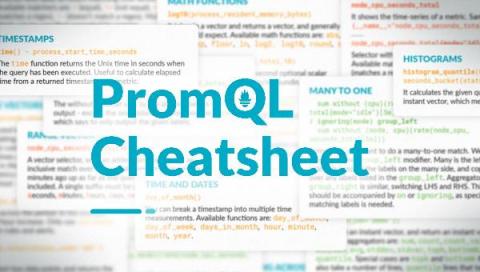
Getting started with PromQL can be challenging when you first arrive in the fascinating world of Prometheus. Since Prometheus stores data in a time-series data model, queries in a Prometheus server are radically different from good old SQL. Understanding how data is managed in Prometheus is key to learning how to write good, performant PromQL queries. This article will introduce you to the PromQL basics and provide a cheat sheet you can download to dig deeper into Prometheus and PromQL.
CVE-2020-13942 is a critical vulnerability that affects the Apache open source application Unomi, and allows a remote attacker to execute arbitrary code. In the versions prior to 1.5.1, Apache Unomi allowed remote attackers to send malicious requests with MVEL and OGNL expressions that could contain arbitrary code, resulting in Remote Code Execution (RCE) with the privileges of the Unomi application.
Learn how to prevent security issues and optimize containerized applications by applying a quick set of Dockerfile best practices in your image builds. If you are familiar with containerized applications and microservices, you might have realized that your services might be micro; but detecting vulnerabilities, investigating security issues, and reporting and fixing them after the deployment is making your management overhead macro.
We are announcing the new PromQL Explorer for Sysdig Monitor that will help you easily understand your monitor data. The new PromQL Explorer allows you to write PromQL queries faster by automatically identifying the common labels among different metrics. It also allows you to interactively modify the PromQL results by using the visual label filtering