Operations | Monitoring | ITSM | DevOps | Cloud

Sponsored Post

How Log Analytics Powers Four Essential CloudOps Use Cases

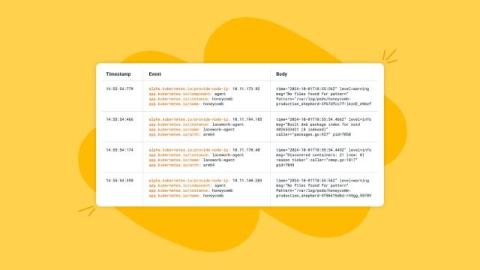
Cloud computing shapes the ability of enterprises to transform themselves and effectively compete. By renting elastic cloud resources, enterprises can support new customer platforms, distributed workforces, and back-office operations. The cross-functional discipline of CloudOps helps enterprises manage cloud resources by optimizing applications and infrastructure. But, none of this can be done without the right strategies and techniques to analyze your application telemetry data - primarily logs and events.


23 Lambda Metrics You Should Know

Developing an application is like composing a song. You know your intended outcome, and the creation is what gives you the jolt of adrenaline to keep going. However, your job isn’t over once you push the application live. You need to monitor and maintain it to ensure performance and cost optimization. AWS Lambda forwards metrics to CloudWatch once the function completes processing an event. Through the CloudWatch console, you can set alarms and build visualizations with these metrics.

The Log Monitoring Guide for Sweet Insights

Logs are more than just records. With proper log monitoring, they become the honey that sweetens observability. Observability is your ability to understand and optimize your system’s behavior. Turning raw logs into actionable insights requires the right tools, practices, and insights. This blog post is a guide on log monitoring key concepts and best practices for sweetening your observability.

The Ultimate Guide to Heroku Logs Monitoring

Effective application monitoring is essential for developers, and Heroku, a popular Platform-as-a-Service (PaaS), provides a solid platform for deploying apps. However, monitoring logs is often an overlooked aspect of maintaining applications on Heroku. Heroku logs provide valuable information to help find bottlenecks, fix issues, and improve application performance.

Top 5 Things to Consider When Selecting a Log Analysis Platform

Here in this blog, we will discuss in detail how log analysis techniques are vital for the operation and protection of today’s complex IT networks. Understanding the functioning of the systems from where the log data is collected and analyzing user behavior is very much possible from log data originating from an organization’s software applications, networks, and security tools. They can also identify some situations that could be implying security issues.

Leverage log analytics dashboards for better monitoring

Visuals often communicate better than words, and this is also true for monitoring systems. Dashboards are an essential feature in log monitoring systems, providing great value to those who need to analyze and monitor logs. They help centralize log data in a simple, easy-to-read format, avoid clutter, and allow the team to focus on critical metrics.

Splunk AppDynamics 24.10 Accelerates Deployment And MTTR

Splunk AppDynamics, now part of the Splunk Observability portfolio, provides critical observability for traditional 3-tier/n-tier applications and helps IT Operations teams quickly discover root causes of issues before end-users even notice. AppDynamics complements Splunk Observability Cloud, which is optimized for observing cloud-native applications by DevOps and engineering teams.

AWS re:Invent '24: Generative AI Observability, Platform Engineering, and 99.9995% Availability

I attended Amazon Web Services re:Invent conference. This is AWS's annual user conference, which takes over most of Las Vegas for a week. There’s a lot to do and take in—customer stories galore, new tech, learning different use cases, and all the walking. But you’re here to hear what I learned, so I’ve broken it down into sections. Enjoy!

Critical Context: Adding Trace Quickview to Logz.io's Explore

Complexity rules the day within the world of data systems and pipelines. A goal for any observability practice is to help reduce complexity and give users and administrators a clear view of what’s happening in any system. This is the path to unified observability, a mature system where monitoring and troubleshooting are streamlined. This has been difficult to achieve for many organizations.

The evolving role of SREs: Balancing reliability, cost, and innovation

A look at the expanding roles of SREs and the new skills needed: cost management and AI Imagine the CTO walks into your team meeting and drops a bombshell: "We need to cut our cloud costs by 30% this quarter." As the lead SRE, this might cause a strong reaction — isn’t your job about ensuring reliability? When did you become responsible for the company's cloud bill? If you've had a similar experience, you're not alone. The role of site reliability engineers (SREs) is evolving fast.

Diving into .NET 9.0, Blazor, and Observability with Coralogix

So, there I was, a newbie to.NET 9.0, Blazor, and Coralogix, standing on the precipice of observability in a world of production bugs and development mysteries. As an Agile enthusiast, I’m well versed in all things “observability” and how it’s a game-changer for root cause analysis, especially in today’s rapid, iterative development cycles. Observability is like getting X-ray vision into your application to understand what’s truly happening based on system outputs.

Complete Python Logging Guide: Best Practices & Implementation

Python's logging system provides powerful tools for application monitoring, debugging, and maintenance. This comprehensive guide covers everything from basic setup to advanced implementation strategies, helping you build robust logging solutions for your Python applications.

Cribl Stream: Up To 47x More Efficient vs OpenTelemetry Collector

Let me set the record straight before anyone accuses me of bias or not being an OpenTelemetry supporter. Cribl loves OpenTelemetry! We’ve written lots of blogs about It; we have vendor-specific OpenTelemetry Destinations (with more to come!), and we support automatic batch parsing for easier data manipulation and re-batching for network transport efficiency of logs, metrics, and traces.

What Are SLMs? Small Language Models, Explained

Large language models (LLMs) are AI models with billions of parameters, trained on vast amounts of data. These models are typically flexible and generalized. The volume and distribution of training data determines what kind of knowledge a large language model can demonstrate. By training these large models on a variety of information from all knowledge domains, these models can perform sufficiently well on all tasks.

From Gartner IOCS 2024 Conference: AI, Observability Data, and Telemetry Pipelines

Last week, I attended one of the last conferences of the year with team Mezmo: the Gartner IT Infrastructure, Operations & Cloud Strategies Conference in Las Vegas. Not surprisingly, there were over 20 sessions covering observability and how it is getting increasingly critical in the new complex distributed computing environment. Of course, there were many sessions, including all keynotes that addressed the advent and impact of AI on IT operations and observability.

Overcoming Performance Issues: Real-World Solutions to Keep Your Graylog System Running Smoothly

Are you experiencing performance issues with your Graylog instance? Are late-night alerts and unexplained slowdowns keeping you up at night? You're not alone if you’re dealing with license limit violations without a clear cause. In this session, we’ll share our experiences with these common Graylog challenges and the practical solutions we’ve developed to overcome them.

New Microsoft ILogger integration with Raygun

That’s a wrap on Raygun’s 12 Days of Christmas 2024! Over the past two weeks, we’ve rolled out daily updates featuring bug fixes and feature improvements inspired by your feedback. These small but mighty changes are all about making Raygun faster, smoother, and easier to use. Thanks for helping us level up—your input makes all the difference. Our special thanks to Blair from New Zealand who suggested this great idea!

AI Log Analysis - Shaping the Future of Observability

As digital applications and infrastructures grow increasingly complex, managing and understanding log data has become increasingly vital in achieving practical observability, enabling organizations to detect, diagnose, and prevent issues across their systems. However, traditional log analysis methods often struggle with the volume and complexities of modern log data in cloud-native environments.
12 Ways We Sleighed Innovation This Year

As we wrap up an incredible year, it’s the perfect time to celebrate Cribl’s progress and innovation in 2024! This year brought many exciting features designed to solve real-world problems and make life easier for our customers. In the spirit of reflection and festivity, I’ll highlight twelve game-changing product features, releases, and enhancements— each a testament to listening, learning, and delivering value to you, our users.

Balancing Standardization & Customization: Tailoring Security Monitoring to Your Unique Environment

So you’ve gone ahead and ingested every log you can think of and built a plethora of detections in line with frameworks and best practices. You may have even dabbled into custom alerts built from your own internal assessments and findings. Or maybe it’s the opposite; you’re still early in your journey toward security maturity or logging new or custom applications without much guidance. It can be hard to feel truly comfortable with your environment’s security in both situations. Standards are good but can be too noisy and restrictive in some places and too quiet or permissive in others.

Unlocking the Power of IIS Logs: A Comprehensive Guide

IIS (Internet Information Services) is a web server developed by Microsft, shipped as a part of the Windows Server services. It’s used to host and manage web applications and services. IIS is a particularly robust web server solution that is tightly integrated with the Windows operating system, making it a natural choice for organizations that rely on other Microsoft products.

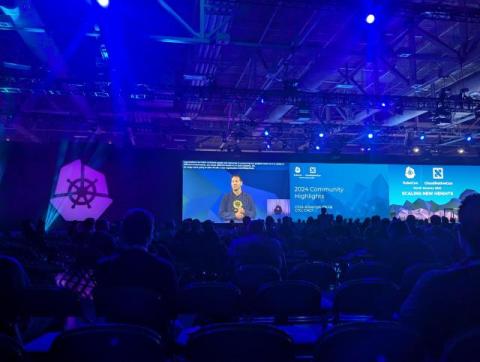
Our team's learnings from Kubecon: Use Exemplars, Configuring OTel, and OTTL cookbook

A few weeks ago, members of Mezmo were at Kubecon and attended several sessions. You can see a post with my recap and session highlights. Today, though, I’m going to discuss three sessions that my colleagues found interesting for our peers in Observability.

Make NetFlow Flow Without Breaking The Network

Ever wondered how many NetFlow exporters or edge routers you have configured on your core switches? What if I told you that every exporter uses ~0.2% bandwidth in overhead? While that may not seem like much (and it has been a few years since most network engineers were worried about CPU overhead for NetFlow exports), older hardware and network OS versions may be more sensitive to having multiple flow exporters configured.

Scaling Observability on a Budget with Cribl for State, Local, and Education

Over the past year, I’ve noticed some interesting trends in my work with state and local governments. Across my conversations with organizations in this space, there’s a common thread: teams are getting creative about maximizing their limited resources. With budgets either flat or shrinking and operational demands increasing, these teams face tough choices. They’re being asked to maintain or improve services while working with the same, or in some cases, fewer resources than before.

Indicators of Compromise (IoCs): An Introductory Guide

To confirm cyberattack occurrences and build or enhance cyber-defense strategies, threat intelligence teams use a lot of information, including Indicators of Compromise (IoCs). These IoCs are actually forensic data that are critical in: The relevance of IoCs cannot be downplayed, but they're not all that’s needed in building an effective cybersecurity strategy. In this article, we’ll explore indicators of compromise, their types, and their relevance to threat intelligence teams.

Introduction to the OpenTelemetry Sum Connector

When you have a piece of data tucked into your logs or span tags, how do you dig for that bounty of insight today? Commonly this sort of data will be numeric, like a purchase total or number of units. Wouldn’t it be nice to easily turn that data into a metric timeseries? The Sum Connector in OpenTelemetry does just that, allowing you to create sums from attributes attached to logs, spans, span events, and even data points!

What Is Cloud Infrastructure?

We all know that testing new ideas on physical IT infrastructure requires a massive upfront cost. That's why businesses adopt cloud infrastructure setups. These setups offer on-demand resources, which allow you to start new projects and pay for only what you use. This eliminates the need for expensive hardware and maintenance, enabling flexibility that organizations require.


Reduce MTTD+MTTR and Improve User Experience with Observability - Customer Brown Bag - Dec 12, 2024

Please join us as Technical Account Engineer, Duncan McKendrick, teaches how Sumo Logic's observability platform empowers teams to minimize Mean Time to Detect (MTTD) and Mean Time to Resolve (MTTR) while enhancing the overall user experience. Learn how to leverage real-time insights, streamline incident response, and ensure optimal application performance through actionable data.

Data Warehouse vs. Database: Differences Explained

If you're new to working with data, you might have heard of databases and data warehouses. But do you know what sets them apart? Knowing the differences between data warehouses and databases can clear up a lot of confusion for many people, especially with the volume of data we have these days. In this blog post, I'll discuss the differences between these two types of data systems. I'll also provide some examples to help illustrate the points made.

Elastic vs Sumo Logic: Build vs buy the right logging platform

When it comes to logging tools, organizations often face a classic tech dilemma: build vs. buy. Should you invest in a robust, ready-to-use SaaS solution like Sumo Logic or dive into the customization rabbit hole with a PaaS option like Elastic? It's a debate as old as time—well, as old as software, anyway. Let's break it down in a way that actually makes sense, and hopefully, it’ll spark less drama than the pineapple-on-pizza debate.

Break down barriers to log collection with Sumo Logic's Universal Connector

Today’s dynamic multi-cloud ecosystems receive logs from countless sources. Relying on custom collectors and integrations can lead to tool sprawl, pipeline breakdowns, and time-consuming maintenance. Enter Sumo Logic’s Universal Connector, your streamlined solution for collecting logs from any source. With seamless API integrations, Universal Connector simplifies log collection and eliminates the overhead of building custom pipelines.

Incident Management for Software Engineers: Lessons from Production Fires

A notification "Critical: Payment processing down" is every software engineer's nightmare - a production incident that demands immediate attention. But the truth is that production incidents are inevitable. The question isn't whether they'll happen, but how well you'll respond when they do. In this article I explore the lessons I learned from real-world production fires.

Logrotate: Choosing Between Size-Based and Time-Based Log Rotation

Managing log files effectively is crucial for ensuring a well-performing, reliable system. Logrotate, a popular log management tool, provides a flexible way to automatically rotate, compress, and remove old logs. Among its many configurations, two common approaches to trigger log rotation are size-based and time-based rotation. In this blog, we will explore the differences between these methods, compare their use cases, and help you decide which approach (or combination) suits your needs best.

SecOps Standardization Processor

Learn how to standardize data being routed to Google SecOps About observIQ: observIQ brings clarity and control to our customer's existing observability chaos. How? Through an observability pipeline: a fast, powerful and intuitive orchestration engine built for the modern observability team. Our product is designed to help teams significantly reduce cost, simplify collection, and standardize their observability data.

Getting the Most Out of Python with SolarWinds Loggly

An audit and error trail is one of the core pillars of a well-designed software application, regardless of the programming language used to build it. This trail typically comes in the form of logging. When your application produces useful, rich logs, you are better equipped to successfully maintain a production-grade system and troubleshoot any issues that might arise. When it comes to distributed Python applications, having correlated logs for each system is important for debugging.

Enhancing Alerts with AI: Leveraging Amazon Bedrock and LLM's for Graylog

In this talk, we’ll explore the cutting-edge work InfusionPoints has done to process and enrich alerts from Graylog using Amazon Bedrock and advanced Large Language Models (LLMs) from Amazon Titan and Anthropic. Discover how we’ve harnessed the power of AI to elevate the accuracy, relevance, and actionable insights of our security alerts, transforming how we respond to potential threats.

Reducing Risk by Prioritizing Use Case Development

The session is really about customers spending their resources wisely, prioritizing use case development based on blind spots, weaknesses, or maybe even just plain audit findings. We have all been guilty in the past of spending a lot of time building clever use cases just for them to never fire or not work out the way we’d hoped; this talk is aimed at highlighting this issue and teach users to focus their resources and build a strategy for development like any other process they would internally.

About us - Sumo Logic

A log on its own is pretty simple, but they're rarely alone. Your digital applications, infrastructure and AI keep adding another, and another, and another… For some teams, this exponential data is overwhelming, causing friction, bottlenecks, and even tuning it all out. But at Sumo Logic, we’re FUELED by the atomic level of logs. The Sumo Logic Log Analytics Platform ingests each and every bit of this structured and unstructured “data exhaust,” transforming it into critical fuel for context-driven insights into your performance, availability, security status, and threats.

Is Your Telemetry Data Strategy Ready for the Next Decade?

What worked for the last 10 years won’t work for the next 10. IT and Security teams face three big challenges with telemetry data: Volume: Telemetry data is growing at a 28% CAGR, while budgets remain flat. Compliance requirements demand retaining massive datasets, straining both storage and costs. Variety: Logs, metrics, traces, configs—telemetry data comes in all shapes and sizes, making it difficult for traditional analytics tools to handle. Your tech needs to manage this complexity seamlessly.

Best Practices for Troubleshooting a Windows Server Upgrade

To upgrade, or not to upgrade. While that may not have been the question that Hamlet asked, it’s one you might be asking. You already made the mistake of asking Reddit, “should I do an in-place upgrade,” and, as expected, people had Big Opinions. A Windows Server Feature Update offers benefits, like performance and analytics. On the other hand, if you have problems, then your attempts can lead to business downtime and service disruption.

Grafana Loki Query Best Practices with LogQL (Loki Community Call December 2024)

In this December's Loki Community Call, Cyril Tovena, Senior Principal Engineer and LogQL guru walks us through a Grafana Loki query tutorial with LogQL, the Log Query Language used for Loki. He talks about the key "Dos and Don'ts" of LogQL, offering practical tips to help you write better queries, boost performance, and sidestep common mistakes. Whether you’re tuning up your current setup or just diving into LogQL, Cyril’s got you covered.

Leveraging AWS Private Image Build for a Compliant Cribl Deployment

In today’s data-driven world, ensuring the security and compliance of your data pipelines is paramount. Cribl Stream and Cribl Edge offer powerful telemetry data management and enrichment solutions. However, deploying these tools within your environment often requires careful consideration of security and compliance standards.

The Leading Synthetic Monitoring Tools

For accurate and effective performance testing, synthetic monitoring has become a staple and this is only going to continue in the coming years. This is mainly due to the fact that this process is beneficial and offers numerous advantages to organizations. With synthetic monitoring, your organization can identify performance issues before they affect real users. By continuously simulating user interactions, your team can highlight and rectify performance bottlenecks and infrastructure issues in real time.

Splunk Platform Use Cases, Written Just for You

If you're a Splunk customer, chances are high that you use either Splunk Enterprise or Splunk Cloud Platform on a daily basis. With powerful dashboards, scalable indexes, and data streaming, these core products give you immense data analysis powers and actionable insights. And that's something everybody wants! But you aren't everybody. You're uniquely you - a specific customer working in a specific industry with specific use cases.

Introducing Warm Tier: Cost-Efficient Log Storage to Simplify Observability

These days, one of the most important decisions that organizations can make as it relates to their observability strategy is: “How much data do we want to retain in Hot storage to ensure we have everything needed for real time analysis — without running up associated costs?”

Cribl: Empowering Data Freedom with Open Standards and Unmatched Flexibility

If you are familiar with Cribl’s solutions, you know that we offer our customers choice and control over their data. The entire company is built on the idea that we want to help you get your data from anywhere to anywhere using open standards and open data formats. It is your data, and you have full control over what you collect and how it is handled.

ElasticGPT: Empowering our workforce with generative AI

Like all organizations, Elastic deals with an ever-increasing volume of information and data, making it harder for our teams to keep information up to date and for employees to find answers from relevant resources. As a leading Search AI company, our approach to customer-first starts with customer zero — us. When our employees needed a better way to find the information necessary to do their jobs, we knew we could use our own technology to bring that vision to life.

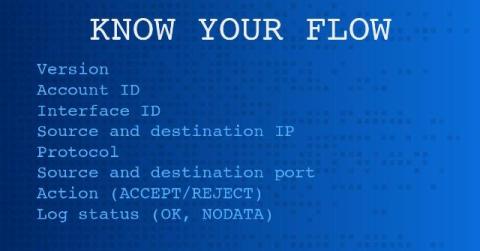
Understanding the Differences Between Flow Logs on AWS and Azure

AWS VPC flow Logs and Azure NSG flow Logs offer network traffic visibility with different scopes and formats, but both are essential for multi-cloud network management and security. Unified network observability solutions analyze both in one place to provide comprehensive insights across clouds.

Latest Product Updates and Features in Logz.io | December 2024

We’re rolling out new visualization capabilities in the Explore log management interface that are available now in some accounts and will be added to all in the coming weeks and months. With these updates you can: Warm Tier: There is now a new option for log storage and access that bridges the gap between high-performance Hot storage and the low-cost Cold Tier. Reach out to your customer success team for more information.

AI Agent RCA on Alerts: Get the Info You Need, Fast

A critical component of any monitoring and observability system is alerting. But alerts in and of themselves aren’t enough—when something goes wrong, time is of the essence, and your team needs to figure out not just what’s going on but how to fix it, and fast. Additionally, constantly chasing down alerts can be the bane of any observability practitioner’s existence.

The Why and What of AWS Lambda Monitoring

Serverless architectures are the rental tux of computing. If you’re using AWS to manage and scale your underlying infrastructure, you’re renting compute time or storage space. Your Lambda functions are the tie or cummerbund you purchase to customize your rental. Using the AWS event-driven architecture improves business agility, allowing you to move quickly. Lambda is the on-demand compute services that runs custom code driving an event’s response.

A Guide to Streamlined Troubleshooting with Intuitive Log Management Solutions

Efficient troubleshooting is a cornerstone of maintaining smooth operations in modern IT environments. Systems generate immense volumes of data, and sifting through logs without a structured approach can be challenging. Intuitive log management solutions simplify the process, helping IT teams quickly pinpoint issues and enhance system performance. This guide explores the key aspects of leveraging log management tools for seamless troubleshooting.

From ELK Stack to easy - Elastic Observability on Elastic Cloud Serverless

Announcing the general availability of Elastic Observability on Elastic Cloud Serverless — a fully managed observability solution As organizations scale, an observability solution that can handle the complexity of distributed cloud environments and provide real-time insights often feels like an insurmountable challenge often due to data- and cost-related compromises.

Unlocking Insights with Heroku Logs: Complete Guide

Heroku is a popular platform for deploying and scaling applications, and one of its standout features is its centralized logging system. Heroku logs give you visibility into your application’s behaviour, infrastructure events, and platform activities. When paired with a robust monitoring solution like Atatus, you can transform raw log data into actionable insights that keep your applications running smoothly.

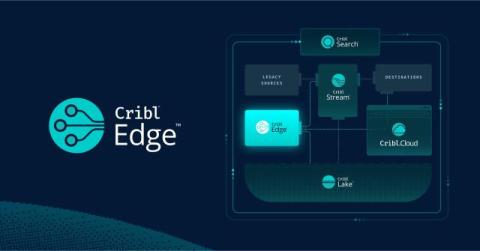
Simplify OpenTelemetry Metrics with Cribl Edge OTLP Conversion

Cribl Edge can send data to OpenTelemetry in several different ways. In this blog post, we’ll focus on the OpenTelemetry Metrics. In the blog, we’ll talk about Cribl Edge, but what we say applies to Cribl Stream, too! We will cover how to use Cribl Edge to collect Linux System Metrics, transform them into the OTLP Metrics format, and deliver them to an OTLP Destination.

The Leading SNMP Monitoring Tools

SNMP, which stands for Simple Network Management Protocol, is often viewed as a legacy protocol, with SNMP not being actively worked on anymore, which led to both Microsoft and Google pronouncing that SNMP was dead. Yet, SNMP is still commonly used by numerous industries as the advantages of SNMP, especially for network monitoring, are profound. Practically, all network components across all vendors possess built-in SNMP capability.

Why Do Organisations Choose Splunk's Observability Solution to Improve Digital Resilience?

Listen to Patrick Peeters, Observability Advisor at Splunk to learn more about how Splunk's modern observability tools are rapidly evolving to meet organisations' demands for scalability, ease of use, real-time insights, and AI to improve their digital resilience.

The future is now, introducing Dynamic Observability from AI innovations built on logs

A year ago, I shared my thoughts at re:Invent, explaining why I joined Sumo Logic as CEO and laid out the importance of logs as a key differentiator. A year later, the atomic level of logs is even more paramount. It’s not just because Sumo Logic is years ahead in technology when it comes to ingesting and analyzing structured and unstructured logs.