Operations | Monitoring | ITSM | DevOps | Cloud

Handling persistent storage problems in Kubernetes clusters

Persistent storage is the backbone of stateful applications running in Kubernetes. Whether you are managing databases, logs, or application states, ensuring transactional data remains intact despite pod restarts or node failures is a challenge. In this blog, we will discuss the most common persistent storage issues in Kubernetes and how to handle them with practical, real-world solutions.


Mastering Docker for seamless application deployment

Imagine you're developing an application on your laptop. It runs perfectly, but when you deploy it on a server, things break—dependency mismatches, configuration issues, and endless debugging. Docker eliminates these problems by packaging applications and their dependencies into portable, lightweight containers. This ensures that applications run consistently across different environments, whether it's a developer’s laptop, a testing server, or a cloud platform.

From basics to benefits: A beginner's guide to cloud computing

Cloud computing powers everything from startups to global enterprises. With it, a new business can scale quickly without investing in expensive servers, while large organizations can store vast amounts of data and run applications seamlessly across the world. Simply put, cloud computing delivers computing resources over the internet that are scalable, cost-effective, and accessible—anytime, anywhere. Let’s break down the fundamentals of cloud computing and why it matters.

Enhancing Jenkins performance: Resource optimization for high-traffic workloads

Jenkins is the backbone of many CI/CD pipelines, automating builds, tests, and deployments at scale. However, when handling high-traffic workloads, such as during peak development hours, large-scale deployments, or parallel builds and pipelines, Jenkins can quickly become a resource hog, leading to slow builds, queue backlogs, and even system crashes. Optimizing resource usage is essential to ensure smooth, efficient, and scalable performance.

Using Amazon RDS for high availability: How monitoring ensures reliable failover

Database downtime can lead to significant disruptions, revenue loss, and frustrated users. Amazon Relational Database Service (RDS) provides a managed database solution with high availability and automated failover to minimize such risks. However, continuous monitoring is crucial to ensuring reliable failover and minimizing downtime by detecting potential issues before they impact operations.

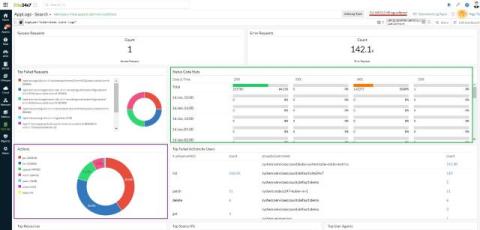
What are Kubernetes audit logs and how to monitor them?

Security and compliance: Many industries, especially those governed by regulations like HIPAA, the PCI DSS, or the GDPR, require detailed logs for compliance and to trace security incidents. Troubleshooting and forensic analysis: If something goes wrong—whether due to accidental configuration changes or malicious activity—having detailed logs helps diagnose the root cause and quickly remediate it.

Migrating to cloud: Top five reasons

Since the inception of public clouds, a lot of CXOs have considered moving their IT infrastructure to the cloud and many have already done that. If your organization is considering migration to the cloud, learn what drove this mass movement from on-premises servers to the cloud. In this article, we'll explain the major reasons why organizations prefer the cloud, the issues you should watch out for, and how you should protect your cloud infrastructure.

Free network monitoring: Full network visibility without the cost

Investing in a network monitoring tool should mean complete visibility and faster troubleshooting. But what happens when an unexpected outage occurs and your expensive tool misses the warning signs? The result: hours of downtime, frustrated employees, and lost business productivity. Many organizations face this challenge, realizing that even premium monitoring solutions can leave critical gaps. The good news? You don’t have to break the bank to monitor your network effectively.

How well-designed automations lead to efficient orchestration in AWS

Managing resources efficiently in cloud-based environments like AWS is crucial for scalability, security, and cost-effectiveness. Automation is key to eliminating manual intervention in routine tasks, while orchestration ensures that these automated tasks are executed in a structured, coordinated manner. In AWS, leveraging well-designed automation enhances orchestration, enabling organizations to optimize performance, resource utilization, and security while maintaining operational agility.

How APM and synthetic monitoring work together for better performance

Imagine this: A customer tries to log in to your app, but the page takes too long to load. Frustrated, they leave. Meanwhile, your IT team has no clue there was an issue—until complaints start pouring in. Sound familiar? Performance lags are the new downtime. Lags are not just an inconvenience—they lead to lost revenue and frustrated users. To prevent this, organizations turn to application performance monitoring (APM) and synthetic monitoring to maintain peak application performance.