Operations | Monitoring | ITSM | DevOps | Cloud

Standing on the Shoulders of Giants (and Reusing Their Queries)

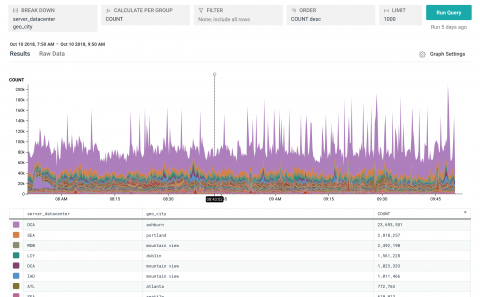
Here at Honeycomb, we spend lots of time thinking about how to help our users be more awesome at unearthing insights from their data so they can solve production issues in real-time. We think a lot about how to make running a query easy, how to guide users to wield our Query Builder effectively to find the needles in the haystacks of data that they send us.

How To Share Your Brain: Collaborate With Boards

As we are fond of saying here at Honeycomb, context is king, and one of our favorite ways to share the context in our brains is with Boards. We recommend using Boards to share query structures you’ve developed for reuse, share visual graphs for ongoing review of systems, share your brain with your colleagues…and your future self.

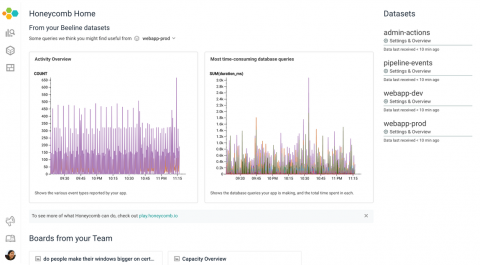
Share Context With Collaboration: Suggested Query Boards

Nobody knows your services/infra better than you, not even Honeycomb. If there’s one maxim for Honeycomb, it’s that context is king. Context determines the questions you can ask. The only way to make complex systems truly tractable is to make all questions possible. Ergo: more context. Context everywhere. Context coming out of the walls. You should be awash in context.

Level Up With Derived Columns: Bucketing Events For Comparison

When we released derived columns last year, we already knew they were a powerful way to manipulate and explore data in Honeycomb, but we didn’t realize just how many different ways folks could use them. We use them all the time to improve our perspective when looking at data as we use Honeycomb internally, so we decided to share. So, in this series, Honeycombers share their favorite derived column use cases and explain how to achieve them.

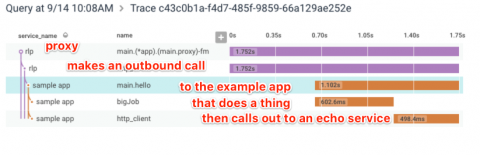
There And Back Again: A Honeycomb Tracing Story

In our previous post about Honeycomb Tracing, we used tracing to better understand Honeycomb’s own query path. When doing this kind of investigation, you typically have to go back and forth, zooming out and back in again, between your analytics tool and your tracing tool, often losing context in the process.

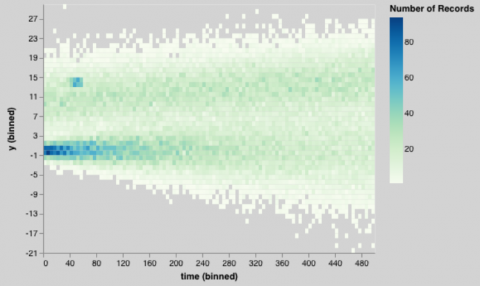
Level Up With Derived Columns: Understanding Screen Size (With Basic Arithmetic)

When we released derived columns last year, we already knew they were a powerful way to manipulate and explore data in Honeycomb, but we didn’t realize just how many different ways folks could use them. We use them all the time to improve our perspective when looking at data as we use Honeycomb internally, so we decided to share. So, in this series, Honeycombers share their favorite derived column use cases and explain how to achieve them.