Operations | Monitoring | ITSM | DevOps | Cloud

Building w/ Observability- Honeycomb & CircleCI

Do you know exactly what your builds are doing at every step of the way to prod and after they’ve been deployed? A key part of what lets you ship code to production often and quickly is having observability in your builds. Together, CircleCI and Honeycomb can help you get both speed and quality when shipping code to production. In this webinar, we’ll not only examine how CircleCI and Honeycomb work well together, we’ll also look at how Honeycomb used both products together to identify changes that impacted their build times and reduced them by 25%.

Operations - Past, Present and Glorious Future

People with infrastructure experience and operational experience like “DevOps Engineer”, “SRE”, “Platform Engineer” have started to see those two skill sets diverge. It’s not very clear what that split means for these skilled technical people as they approach the next phase of their careers.

Raw & Real Ep 7 The Tracing You Deserve So You Can Observe

Distributed tracing is key to building and operating reliable services that make your customers happy. Traces pinpoint where failures occur and what causes poor performance. With tracing and observability, you can visualize the entire life cycle of service requests and discover hidden latency, errors, and optimization opportunities monitoring can’t show you. So why doesn’t everybody do it? Setting up tracing is notoriously difficult, but it doesn’t have to be. Honeycomb Instrumentation Engineer Paul Osman has the easy-breezy steps for you to get the tracing you deserve.

New Product Updates What Does it Mean to Observe and Debug in 'Hi Res'

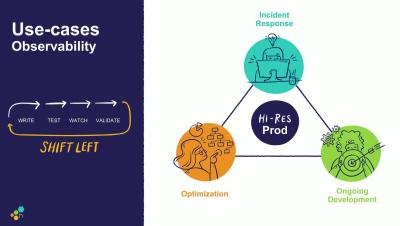
A number of Honeycomb features have been released throughout spring 2019 that, collectively, we like to say deliver “hi-res” across the Engineering and DevOps lifecycle. What do we mean? First, hi-res with Honeycomb means you get clearer visibility about how your production is behaving in real time, as you release new code. Secondly, it means once you have those insights (thanks to granular event data stored in Honeycomb), you can debug and resolve more efficiently. So, how do we do it?