As the costs of managing and maintaining owner-operated data centers rise, enterprises are reconsidering their infrastructure and attempting to minimize on-premises data center space. Colocation data center providers are an attractive and cost-effective solution, offering physical space as well as power, cooling, network, and security services for their customers.
Sustainability is one of the biggest, if not the biggest, topic in the data center industry today. A sustainable data center is a facility that can maintain operations at a high level of efficiency over time. It is important for data centers to be as sustainable as possible because they use a lot of resources which makes reducing their environmental impact and carbon footprint top priorities. It is also important because these facilities need to comply with corporate sustainability initiatives.
The recent heatwave that brought record temperatures to the UK caused cooling systems to fail at a London data center resulting in downtime for Google and Oracle. According to Oracle, “Following unseasonably high temperatures in the UK south (London) region, two cooler units in the data centre experienced a failure when they were required to operate above their design limits.
Today’s data centers generate a lot of data. Intelligent rack PDUs and other metered power infrastructure, environmental sensors, and the constant change in modern data centers all contribute towards a massive volume and variety of data. But data center professionals don’t have the time to collect all the data from its sources, analyze it, and derive insights from it that improve their data center operations.
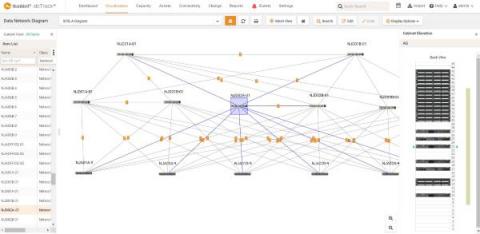
We’re proud to announce the general availability of dcTrack® 8.2, the latest version of Sunbird’s DCIM Operations software. This release includes exciting new features including a ticket connector to drive automation via integration, automatic data network diagrams for remote visualization, and asset audit via barcode scanning.
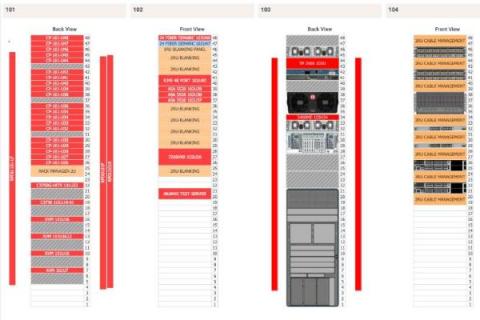
Rack diagrams, also known as rack elevations, are visual representations of the IT equipment in a server rack. They are used to track and manage what assets are in each rack and which U position they are in. Rack diagrams are very useful and commonly used for data center asset management and capacity planning. The information rack diagrams provide allow you to know what equipment you have, where you have space to deploy more, and can improve the troubleshooting process.
Power Usage Effectiveness (PUE) is the most commonly used metric for measuring data center energy efficiency. It was developed by The Green Grid in 2007 and has been widely popular ever since due to growing concerns of the sustainability of data centers and for being able to represent overall efficiency with one easy-to-understand number.
As rack densities rise and concern about the sustainability of data centers grows, data center managers need a way to not only cool their equipment but do so as efficiently as possible. To efficiently cool racks of 20 kW or more, organizations are seriously investigating liquid cooling and immersion cooling.
Tracking and managing data center cabling is one of the most overlooked aspects of data center management. However, when it’s not done properly, it can cause all kinds of problems from costly downtime to inefficient use of capacity. Don’t settle for cable spaghetti. Keep reading to find out the basics about data center cabling, understand how to track and organize it, and learn how the best data center managers in the industry are dramatically simplifying cable management.